|
|
|
|
|
|
|
|
|
 Posted: Thu Apr 26, 2007 8:20 am Posted: Thu Apr 26, 2007 8:20 am
|
|
|
|
|
|
|
|
|
|
Posted: Sat Apr 28, 2007 5:39 pm
PENNIER 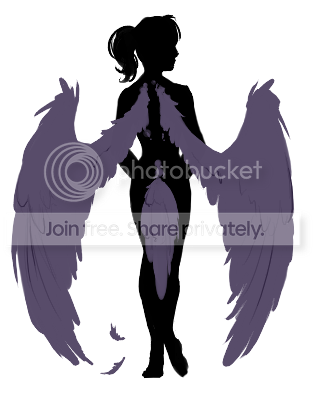 Benefits: Flight over medium distances and heights. (Without assistance a Pennier can push themselves and fly about as far as a human can run without stopping, so it depends on what kind of shape they're in. The maximum is about 50ft cruising altitude, but they can fly higher in short bursts to reach a specific point.)
Disadvantage: Frail. Itchy messy molting twice a year. Compulsive overpreening due to emotional stress or boredom can make them give themselves bald spots.
Life Expectancy: 60 - 70 yrs. Social maturity is reached in the teens. Pennier age at roughly 115% the rate of humans, however will reach puberty at ~11 chronological years at the earliest. (Chronological Age x 1.15 = Physical Age)
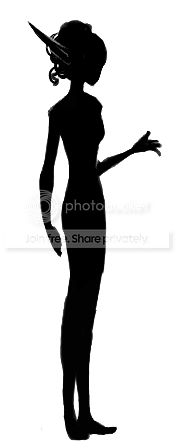
Appearance: Pennier are very humanoid, but most tend to be slimmer and a little on the petite side. Height and build is often a reflection of the species of bird they are closer to, so a canary is going to be more delicate than a raven who is going to be smaller than an eagle. Without exception they all have wings proportionate to a human and a matching set of tail feathers. Colouration varies wildly. Because of breeding between many different sub-species, very few Pennier’s wings look 100% like one of their actual avian counterparts. Hair colours match one of the colours in the avian counterparts' feathers, and eye colours can match either the feathers or actual eyes of the counterparts. Pennier have hollow bones so they are all significantly lighter than other species and they have a hard time building excessive muscle mass anywhere but their wings.
Culture: Pennier are fairly populous across the world, so the culture does vary, but there is one thing nearly every Pennier has in common. The race as a whole almost unanimously follows Aileism, a religion that they hold in very high regard. This monotheistic religion follows a female deity and accepts priests and priestesses who are allowed to marry (although it is slightly less common than non-clergy). Some particularly pious clergy don't to show their dedication, but ones from noble families often do, as well as people who were married and then, after tying the knot, went into religious service. It's a philanthropist religion that preaches helping those in need, but it's also very strict. Members are preoccupied with the idea of purification and contact with anything unclean must be ritually cleansed. Most bodily functions (including sex) are classified as dirty. Morality is very high and follows what we would see as typical western morals. Aileism states that those who don't follow it will never reach paradise and will remain grounded on the world as lost spirits, so followers are quick to push people to convert. Some more extreme sects believe that non-Pennier will never be able to reach paradise because they lack wings to fly there, but the majority say that every being has a spiritual set of wings that will carry them after their death.
Names: Pennier names sound very French and are accompanied by a family name. Examples include (F) Juliette, Lenoir, Modestine, Nadine; (M) Alphonse, Mathieu, Olivier, Raymonde.
Additional Notes:
• Pennier are often attracted to the arts, medicine and sciences and are credited with many major advancements and discoveries in a variety of fields.
• They are the 3rd most common race in the world and occupy many different climates and regions.
• There is no stigma about touching wings or preening one another. A wing is seen much like an arm in terms of intimacy, and preening is much like giving someone a back scratch.
|
 |
|
|
|
|
|
|
|
|
|
|
|
|
|
|
|
|
Posted: Sat Apr 28, 2007 5:42 pm
EJDERHA  Benefit: Can breathe minimal fire. Tough skin.
Disadvantage: Bad reputation. Prone to respiratory infections and colds. Poor adaptation to extreme temperature changes. Infertility is common.
Life Expectancy: 150-200 yrs, if they remain healthy. Ejderha age at roughly 2/3 the rate of humans and maturity (~25) is reached in ~37 human years. They do not appear young forever, just age more slowly. (Chronological Age x 0.66 = Physical Age)
Appearance: Ejderha are mostly humanoid with notable differences including scalloped ears, small to medium sized draconic wings, and horns. In terms of color, horns and wings are generally the same color, though it should be noted that horn shape can vary wildly. Ejderha's hair colors span the rainbow and their eyes come in bright jewel-toned colors with slitted pupils. The average height of Ejderha is slightly taller than humans. Ejderha fingernails are distinctly claw-like unless filed.
Culture: The Ejderha are known for being the most territorial and militaristic of the races and it is said that the sea and mountains surrounding Ejderha country do not protect the Ejderha from invaders, but other nations from the Ejderha. Strength and military service are held in the highest esteem within the Ejderha culture and all Ejderha must perform mandatory military service of at least 3 years upon their 22nd birthday, though many make a career out of military service.
In terms of religion, the Ejderha recognize an Ares-like goddess of war named Esma and while offerings are made to her to protect cities and do well in battle, the Ejderha as a whole are not a terribly religious people. There are few greater honors to the Ejderha than dying in battle so that they can ascend to join Esma's army. That said, the followers of Esma are not generally noble honor-bound warriors and instead the Ejderha are generally taught to believe that winning is most important, no matter the cost.
Most Ejderha have little contact with the other races outside of trading and due to recent events, most are inherently suspicious of humans. Unsurprisingly, Ejderha are most interested in trading in military goods.
Names: Ejderha names are heavy on A's, I's, E's, K's, Y's, and Z's. Within their own culture they do not have surnames, but those who have assimilated into mainstream culture are known to take them. Examples include (F) Zekiye, Meliha, Nadire, and Kajdaya; (M) Fikri, Kiranz, Pazil, and Calayan.
Additional Notes:
• Legend has it that many centuries ago, humans and dragons intermingled to create the Ejderha. However, all Ejderha nowadays are full-blooded Ejderha and will be horribly insulted if you insinuate they're Half-Breeds.
• The legends have more truth to them than the Ejderha would like to admit and they are essentially a race of Half-Breeds who managed to adapt and survive. Their numerous medical issues are a result of their Half-Breed origins.
• The Ejderha are the youngest race to appear in Aludra, being younger than five hundred years old.
• Despite their potentially lengthy lives, the Ejderha have a small population, primarily due to sickness and early infertility.
• Ejderha cannot turn into full dragons, as it is simply not a racial trait of theirs.
• Commonly, Ejderha can breathe enough fire to light a candle. If you wish to have a more impressive breath ability, allot points to magic/other.
• Ejderha are unable to support themselves for full flight using their wings, however many are able to at least hover a few inches off the ground.
|
|
|
|
|
|
|
|
|
|
|
|
|
|
|
Posted: Sat Apr 28, 2007 5:59 pm
|
|
|
|
|
|
|
|
|
|
|
|
|
Posted: Sat Apr 28, 2007 6:00 pm
LAMIA  Benefit: Poisonous. The bite from a Lamia hurts very badly, but the poison takes about 25 minutes to kick in and isn't lethal unless you're allergic to Lamia. In many ways it's similar to a really big bee sting.
Disadvantage: Difficulties with stairs. Cold-blooded and become lethargic and ill if they get too chilly.
Life Expectancy: 90 - 100 yrs.
Appearance: Lamia are human from the waist up, but below that they're very much a snake. They move by slithering on tails that are usually about 4-5 times the length from the individual's head to pelvis. The colours of a Lamia are always very natural, and they don't get any more colourful than what's already found on our Earth, which is to say that we will have no purple Lamia unless you can bring us proof of a naturally occurring purple snake. Lamia typically have black or brown hair, but may on occasion have hair matching the colour of their tail. The same goes for their eyes, which are typically (but not always) brown, gold or green. Their skin is medium-to-dark, never Caucasian. They have fangs, and pointed but slightly down-turned ears.
Culture: To our modern eyes, the Lamia bring about associations with folkloric gypsies with their behaviours, clothing and lifestyle, and they have about the same reputation. Their culture is eclectic and outgoing, and can therefore be a little overwhelming for some of the more proper races and social classes. Especially so when among the Lamia, it is verbal aggression, forwardness, seizing the moment and a love of life (and all material pleasures that come along with it) that they value above politeness and propriety. In fact, someone who is too polite and dances around problems is seen as rude and untrustworthy. This isn't to say that lying is frowned upon, however. Morality isn't valued nearly as much as protecting oneself and the interests of the family. While they are almost honourable amongst other Lamia, these snake people have little respect for other races, and most of them have been raised to feel a certain kind of superiority and entitlement. However, in civilized areas, Lamia very rarely hold positions of political power because they have a reputation for being cheats, thieves and liars at worst, penny-pinching and greedy at best.
While they have moved past a tribal lifestyle, their access to technology is limited and their lives are simple. They travel up and down the edge of the Relinswood in large caravans, each caravan identifying itself with a colourful name. These caravans do trading with each other and other races, and the goods they get their hands on can be very exotic (and illegal). These caravans separate the Lamia into tribes of sorts, though they are cooperative with one another and fighting amongst tribes is very rare. It's unusual to see a huge amount of Lamia outside of their usual territory, though it's equally unusual to see only a couple. Lamia are a very communal race and the "family" is very important to them, so inside larger cities, there will usually be a small and very tightly-knit community of Lamia that is difficult for outsiders to enter. Within the community, they usually know one another's names, where they're employed, who they're related to and more. This level of intrusion into peoples' lives is usually an accepted part of Lamia culture, but it can bleed over into their interactions with others. Many Lamia find their neighbours to be far too secretive.
Names: Lamia names sound mostly Greek and consist of a first name followed by a family name. Examples include (F) Nyssa, Clio, Iphianassa, Semele, Megare, Deineira; (M) Aristaeus, Laertes, Isidor, Silanos, Orthaeus, Tydeus.
Additional Notes:
• You will never see a half Lamia, because Lamia cannot reproduce with other races.
• Lamia consider Muscherons to be a delicious, delicious delicacy. They periodically go on hunting trips into the Relinswood to find them.
|
|
|
|
|
|
|
|
|
|
|
|
|
|
|
Posted: Sat Apr 28, 2007 6:07 pm
MUSCHERONS  Benefit: Able to climb extremely steep surfaces (trees, walls). Resistant to poisons. Fit in small places. Extremely fertile.
Disadvantage: Short. Fragile. Delicious.
Life Expectancy: 40 - 50 yrs. Muscherons age at roughly 130% the rate of humans, however will reach puberty at ~10 chronological years at the earliest. This is because their superior breeding capabilities need extra time to, uh, germinate. (Chronological Age x 1.30 = Physical Age)
Appearance: All Muscherons have the short slim statures of human children, with the tallest among them still standing under 3'5" tall, but still show the appropriate signs of ageing (i.e. secondary sex characteristics after puberty, wrinkles and white hair in old age, etc.). Most adult Muscherons are 2'5" - 3'0" feet tall with no significant difference between male and female heights. Their most distinctive trait is the large mushroom cap growing from the top of their head, which come in many varieties, such as crimini and portabello. Hair and eyes come in a variety of colours, but skin is natural (although pale milky skin tones are less rare than they are with humans).
Culture: The Muscherons generally avoid human towns and cities, finding them large and lifeless, and instead dwell in the forest. Any forest. Accordingly, their level of technology is primitive compared to other races, and most Muscherons hail from large tribes headed by a single leader. Different tribes will choose their leaders based on different criteria, as Muscherons as a whole are not very strict about these kinds of things. They are fond of travel, and are extremely welcoming to Muscherons of other tribes — one might be surprised by the variety of mushroom caps and colourful family histories in any tribe.
They don't have any form of religion beyond a general reverence for the circle of life. Their clothing is made of non-processed natural materials such as animal hides, leaves and twigs — the exception being Muscherons who have spent a long time mixing with human civilization. Centuries ago, their regard for nature resulted in aggressive behaviour toward travellers, as most foreigners would only disturb the forest with their presence. This attitude has softened a little since then, but heckling travellers with thrown acorns (among other things) is the typical rite of passage for Muscheron youths.
On the island, they have a relatively large population which sometimes bands together to compete with the Asterion League. Again, historically, this was due to a conflict of ideals: not only did the leaguers disturb the forest, but they also didn't treat their fallen marks with the proper reverence. As time went on, the Muscherons learnt it wasn't a half bad moneymaker either. A segment of the population believes that they can deal with Asterion through cooperation instead of competition, and encourage Muscheron hunters to join in order to make sure the environment is respected by the League.
Despite all this, Muscherons are generally considered by other races to be a playful, easygoing people with simple needs and desires. (Except for the Lamia, who also consider them lunch.)
Names: Muscheron names are generally one-to-two syllable nouns found in nature. They do not have last names and instead identify themselves by where they were born. Examples include Toad of Oruliha, Bluebell of Ehalel, and Plum of Cacumi.
Additional Notes:
• Most other races refer to the Muscherons as Mushkins. They don't find it funny.
• Muscherons are the second most populous of the races, and can be found pretty much anywhere you can find mushrooms in our world.
• Muscherons tend to have extremely large families. Twins and triplets are more common than with humans.
|
|
|
|
|
|
|
|
|
|
|
|
|
|
|
|
|
|
Posted: Sat Apr 28, 2007 6:08 pm
HALF-BREEDS Benefit: Usually have a weakened form of one parent's benefit.
Disadvantage: Sickly, weak, unable to reproduce, high mortality rate.
Life Expectancy: Significantly shorter. Half-breeds rarely live to be much older than physically 40 or 50.
Appearance: Somewhere in-between human and the other race.
Culture: In general, half-breeds have difficulty fitting in with the rest of society. Most find it nearly impossibly to integrate into any culture but that of the humans, who are much more welcoming than the other races. That's not to say that prejudice against mixed breeds doesn't also exist in human culture, though.
Names: Generally matches the trend of wherever the child was raised.
Additional Information:
• Humans are the ONLY race that can reproduce with other races; so, a Muscheron cannot mate with a Duszek. It is impossible.
• Half-Pennier have small flightless wings that are usually deformed. This typically means the wings are of unequal size but otherwise just miniature versions of the Pennier parent's, but it can be as bad as the wings never growing feathers.
• The few instances on record of Half-Ejderha have had significant vocal cord damage and poorly developed wings, often to the point of merely having stumps. They typically don't survive past adolescence.
• Half-Duszek are easily the most heavily stigmatized by all of Aludra, suffering the brunt of their discrimination in the Duszek homeland itself. They are forever ill-looking, with grayish blue-green skin. The elegant features of the Duszek are no longer present - elongated ears manifest but they are considerably shorter than that of a normal Duszek. Half-Duszek are prone to having disproportionate limbs that often grow unevenly. They also have serious problems with physical development, and seem to develop slower than their bodies age.
• Half-Lamia are impossible.
• Half-Muscherons frequently have dry, flaky skin and suffer from migraines.
• Also worth noting is that Half-Breeds are frowned upon. The only reason they're listed as a race is to establish restriction for them.
|
|
|
|
|
|
|
|
|
|
|
|
|
|
|
Posted: Thu May 17, 2007 9:21 am
GENERAL NOTES ON THE RACES 01. No jobs are limited by race. Ejderha mages exist just as Duszek knights exist. That said, some jobs are limited by setting. Someone who grew up in the Relinswood and has never left it would probably not utilize guns or other high technology.
02. You may play as many characters of a certain race as you'd like. Concepts are approved and accepted based on creativity, not what race you already play.
|
|
|
|
|
|
|
|
|
|
|
|
|
|
|
|
|
|
|




 Reply
Reply