|
|
|
|
|
|
|
|
|
 Posted: Fri Apr 06, 2007 10:25 pm Posted: Fri Apr 06, 2007 10:25 pm
The History of Vana'diel
Prologue
The world of Vana'diel is a crossroads of magic, swords, and technology.
It is also a battlefield where those who believe
in light face monsters that thrive in darkness.
The struggle centers on the control of crystals:
sacred stones that are the fundamental source of all creation.
The monsters showed no mercy as they laid waste to
beautiful towns, ravaged the land,
and polluted the streams and rivers of Vana'diel.
But the people united to seize victory from the jaws of the beastmen,
earning themselves temporary respite from a life-and-death struggle.
Twenty years have passed since the people's great victory.
But now, even as the memories of battle have begun to fade,
a new evil grows inside Vana'diel...
And it hungers for the power of the crystals.
Anchent Memories
Long, long ago, an ancient race, descended from the gods,
flourished in Vana'diel.
They traveled through the sky, extracted gold from stones,
and gave birth to grasslands across the world.
But one day,
they decided to build a pathway to the divine entrance of paradise.
Enraged by such a brazen display of insolence,
the holy gatekeeper destroyed their path and cast their homes to
the bottom of the sea.
Shortly thereafter,
the goddess Altana awakened and saw the ruin that had once been Vana'diel.
Saddened, She wept five divine tears.
When the five tears fell upon the earth,
they gave life to the five races of Vana'diel.
But the god Promathia saw this from His place in the shadows.
Promathia saw fit to condemn Her work,
cursing the people with eternal conflict amongst themselves.
He created terrible beasts and spread them across the world,
commanding them to fight the people of Vana'diel and occupy their minds.
Never again would they think to open the gate of the gods.
The Age Of Beasts
The beastmen thrived in the ensuing era of darkness.
But the demihuman Galka and Mithra,
blessed with bodies powerful enough to resist the advances of the beastmen,
grew in number as well.
They fought tooth and nail to cast the hordes from their homelands in
an age of unending battle and chaos.
The Age Of Magic
The Tarutaru race grew weary of the never-ending conflict,
and wandered the world in search of peace.
After discovering an uncharted continent,
they named the land Windurst and settled down to
build a brighter future for their kin.
Several decades after the Tarutaru's long journey had come to an end,
a young Tarutaru girl lost her way in one of
the mysterious towers scattered across
the outskirts of Windurst.
It was there that the secrets of magic were revealed to her,
and this knowledge would spread to her entire race.
The Tarutaru worked as one to harness and understand
the mysterious power that had been given to them.
So began the Great Age of Magic.
Empowered by their expanding magical abilities,
the Tarutaru united themselves as the Federation of Windurst,
and worked to drive the hordes of Yagudo beastmen from their lands.
The Tarutaru prospered, unified by their knowledge of magic and
the solidarity of a new federation.
It was a glorious age for their people.
But revealed secrets cannot be suppressed,
and the knowledge of magic slowly spread to
all the people of Vana'diel.
Within a short time, other races - and even beastmen - began to
employ magic techniques for themselves.
Filled with regret,
the Tarutaru entered an era of isolation.
They closed their borders to all but their longtime friends,
the Mithra. And so, a once-proud civilization became more
and more out of touch with the rest of the world.
The Age Of Power
The use of magic brought both happiness and conflict to
the other races of Vana'diel.
Perhaps the most satisfied were the proud Elvaan,
who made their home in the Kingdom of San d'Oria in
the northern reaches of the old continent.
With the Tarutaru monopoly on magic broken,
the Elvaan were able to create powerful orders of
knights who feared no adversary.
Beastmen strongholds and Tarutaru villages alike fell before
the power of the knights of San d'Oria. Within a short time,
nearly the entire Quon continent had come under San d'Orian control.
But pride comes before the fall.
The nation of Bastok, founded by the Hume and Galka races,
lay on the southern edge of the Quon continent.
Fortified by the growing economic and
intelligence-gathering abilities of the Hume race,
Bastokan forces crushed the elite San d'Orian knights at
the Second Battle of Konschtat.
Cutting-edge firearms technology turned the tide of
battle and cemented victory for the people of Bastok.
This humiliating defeat sent the Kingdom of
San d'Oria into an age of internal turmoil and civil war.
Piece by piece, territories that the Elvaan had conquered slipped from their grasps.
The age of Technology
The fall of the Kingdom of San d'Oria ushered in
an era of prosperity for the republic of Bastok.
Hume tradesmen spread across Vana'diel in
an unprecedented era of economic development.
Bastok's fortunes grew as Humes sold products forged from
the precious metals and rare ores extracted from their mines.
The trend only accelerated with the appearance of
the engineering genius named Cid.
Ever practical, the Humes set about creating another nation-state:
the Grand Duchy of Jeuno. Jeuno had long been a tiny fishing town on
an isolated island between the two continents.
The construction of great bridges transformed
the sleepy village into a teeming metropolis of trade and industry.
The End of the Age of People
The one known only as the Shadow Lord appeared without warning,
and his name remains synonymous with terror to this day.
Consumed by hatred of all living things,
he enlisted the beastmen and employed them in simultaneous attacks against
the nations of Vana'diel. So began the Crystal War.
After years of peace and prosperity,
the nations fell one after another,
unable to halt the relentless onslaught.
The nightmare spread across the lands of Vana'diel like hellfire.
In response to the seemingly unstoppable beastmen assault,
Grand Duke Kam'lanaut of Jeuno convinced the people of San d'Oria,
Windurst, and Bastok to unite as the Allied Forces of
Altana - and defeat the beastmen once and for all.
A stalemate ensued for some time.
Finally, at the legendary Battle of Jeuno,
the Allied Forces of Altana were able to gain the upper hand.
They claimed total victory over the beastmen at
the merciless Battle of Xarcabard.
Finally, the heroes of the five races cornered
the Shadow Lord in his stronghold of Castle Zvahl,
where Volker, champion of Bastok, delivered the final coup de grace.
Thus the Crystal War drew to an end,
with victory marred by the uncountable corpses scattered throughout
the devastated lands and cities of Vana'diel.
The Dawn of the Age of Adventurers
Although the war had ended,
the long-suffering nations of Vana'diel pledged to
maintain their alliance. Each nation built a consulate in their sister countries.
The Duchy of Jeuno unveiled enormous airships based on ancient technology,
bringing the nations of Vana'diel closer together,
and promising a new era of peace and prosperity.
Or so the nations of the world had hoped.
In reality, the beastmen had regrouped and continued to
construct strongholds throughout the world.
Although they lacked the organization of previous eras,
they launched a new campaign of looting, plundering,
and terror against the people of Vana'diel.
Still, the three great nations continued to mistrust one another.
rather than dispatching their own forces to
deal with the beastmen threat,
they began to employ a new generation of independent youth to
deal with the situation on an individual level.
These stalwart people are called adventurers.
They are intrepid souls who follow their own beliefs,
moving freely from city to city in spite of their own national allegiances.
Truly, it is the dawn of a new era in Vana'diel history.
|
 |
|
|
|
|
|
|
|
|
|
|
|
|
|
Posted: Fri Apr 06, 2007 10:53 pm
The Five Races. Hume Originating from the Bastok region, Humes have spread to the farthest reaches of Vana'diel. This race is characterized by its equally balanced abilities, moderate intelligence, and high level of skill in numerous areas. This combination of traits has played a large role in Bastok's growth into a prosperous nation of technology and industry. 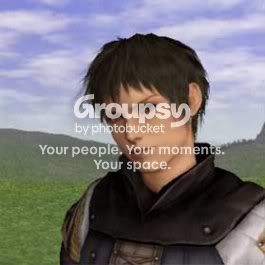 Elvaan A race of proud warriors, The Elvaan are the founders of two legendary orders of knights in the nation of San d'Oria. Physically, they are characterized by their tall, slender bodies and pointed ears. Their unshakable pride and faith in their beliefs is visible in each of their determined faces. Both males and females of the race excel in swordsmanship. Most Elvaan seem to eschew the business world, preferring an austere lifestyle as skilled swordfighters. 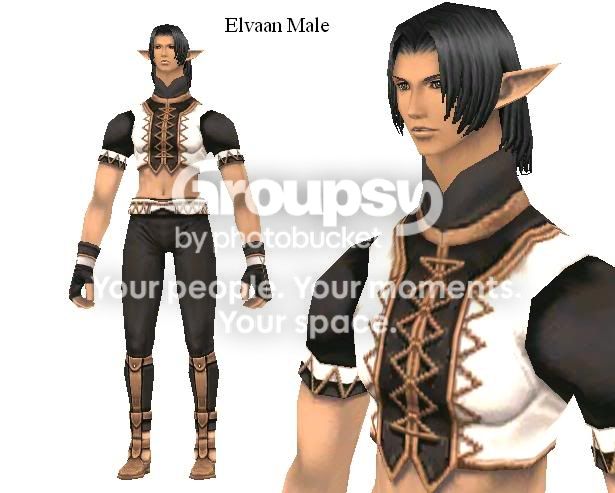 Tarutaru The Tarutaru are a race of skilled magic users who call Windurst their home. Although the Tarutaru physically resemble children, their size does not reflect their age. Masters of the magical arts, the Tarutaru have honed their abilities through dutiful study of the world around them. Their dedication and hard work fueled the rapid reconstruction of Windurst after its destruction in the Crystal War. The Tarutaru enjoy a friendly relationship with the Mithra, who call Windurst their home as well. 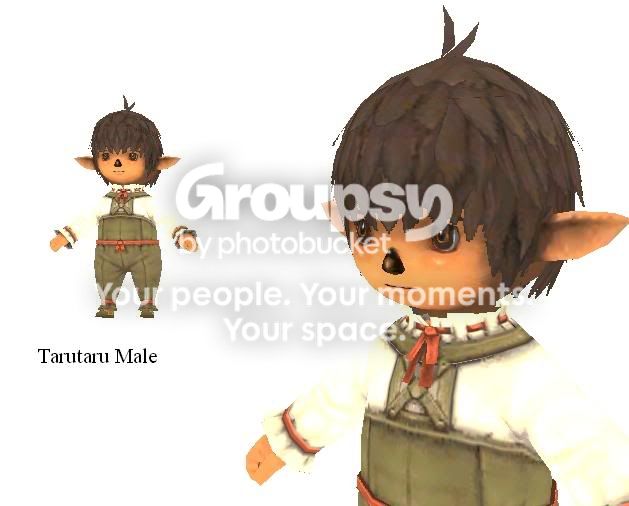 Galka The Galka are a hulking race of powerful warriors. The Galka's capital city, located in the Altepa desert of Zepwell Island in the southwest corner of the Quon continent, fell to an attack from giant ant creatures six hundred years ago. The surviving Galka spread throughout Vana'diel, and a large number of them eventually settled in Bastok. The sheer strength of their powerful physiques is second to none. They have used their skills to contribute to the construction and development of the numerous mines in Bastok. However, it seems that some Galka have less than fond feelings for members of the Hume race. 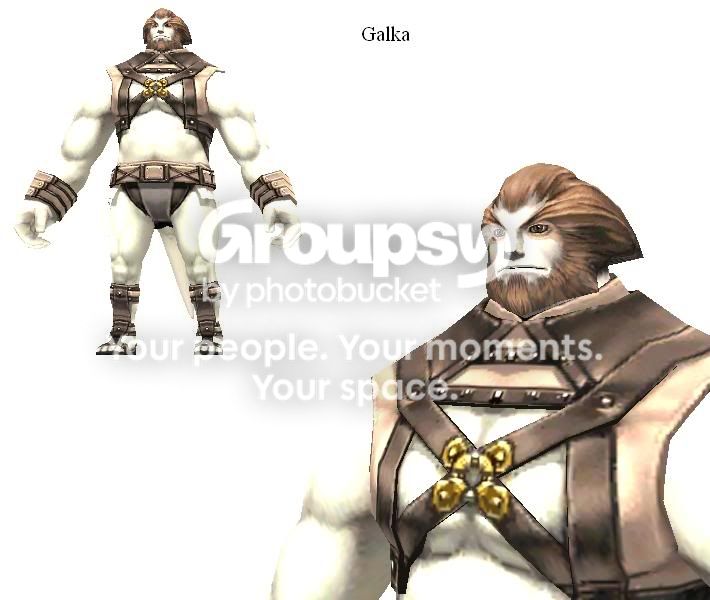 Mithra The Mithra are a predominantly female race of hunters who live alongside the Tarutaru in Windurst. They are easily identified by their characteristic ears, which give them spectacular hearing ability, and their long tails, which result in an unparalleled sense of balance. They are known for their energy, curiosity, and their penchant for causing playful mischief. The Mithra enjoy a friendly relationship with the Tarutaru, and this attitude of mutual cooperation has made Windurst a nation of peace and prosperity. 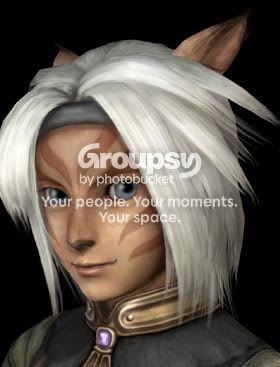
|
|
|
|
|
|
|
|
|
|
|
|
|
|
|
|
|
|
Posted: Fri Apr 06, 2007 10:55 pm
Jobs
Warrior
Specializing in the arts of battle, warriors act as shields, protecting their comrades from the enemy attacks.
Monk
With their bodies that double as deadly weapons, monks attack enemies with explosive strength.
White Mage
By using recovery spells, white mages can ensure a party's survival.
Black Mage
Through devastating magic spells, black mages bring tremendous firepower to the battlefield.
Red Mage
These fighter-mages can utilize both black and white magic, as well as the arts of the sword.
Thief
Specializing in covert actions, thieves aim for the perfect opportunity to attack from behind.
Extra Jobs: By completeing quests you can aquire these jobs as well as your main job as well.
Paladin
Paladins specialize in close-range combat, just like warriors.
However, through long hours of spiritual training, paladins have acquired the ability to cast white magic spells, making them even more valuable on the battlefield.
Dark Knight
To strengthen themselves in battle, not only have these outlaw warriors mastered the ways of numerous weapons, but they have also acquired certain black magic spells to torment their enemies.
Beastmaster
These experts in monster research have trained tirelessly to communicate with--and even control--the animals of Vana'diel.
Bard
A bright tune to soothe a party's wounds... A brisk march to raise a party's spirits... A forbidden chant to weaken a party's foes... The bards of Vana'diel use music as their weapon.
Ranger
With unparalleled tracking abilities and skill with the bow and arrow, rangers are experts in the field of hunting.
Samurai
Through the study of Far Eastern martial arts techniques, these lone warriors have learned to devote their lives to their cause and to their blades, the mighty katana.
Ninja
Strict training in the forbidden arts of the Far East have transformed these fighters into cold, hard killing machines.
Dragoon
With their lances in hand and their faithful wyverns by their sides, dragoons surprise their enemies with their extraordinary jumping abilities.
Summoner
By making pacts with the legendary "avatars," these heretic mages have unlocked the secrets to the forbidden magic of Vana'diel.
|
|
|
|
|
|
|
|
|
|
|
|
|
|
|
Posted: Fri Apr 06, 2007 11:33 pm
Avatars
Carbuncle
A mysterious ruby that is said to bring good fortune to its bearer. Takes the form of a small, furry creature that leads the summoner to the other avatars.
Ifrit
A blazing incarnation wreathed in the flames of retribution. Ifrit aids the summoner with its command over heat and fire.
Shiva
The queen of winter, said to have dominion over the glaciers of the north. Shiva aids the summoner with her command over cold and ice.
Ramuh
A secretive hermit said to be hoarding the wisdom of ages. Ramuh aids the summoner by using his staff to call forth electricity and lightning.
Titan
A legendary giant said to bear the world in its arms. Aids the summoner by shifting earth and rocks with its enormous strength.
Leviathan
A great serpent said to rule over the rivers and the seas. Leviathan aids the summoner with its command over waves and water.
Garuda
The queen of avians, said to soar through the heavens on immeasurable wings. Garuda aids the summoner with her command over air and wind.
|
|
|
|
|
|
|
|
|
|
|
|
|
|
|
|
|
|
Posted: Fri Apr 06, 2007 11:34 pm
Transportation
Chocobos
These large, herbivorous birds are unable to fly, but their powerful legs allow them to run at high speeds. In the past, the Elvaan primarily used chocobos as mounts--but as of late, chocobos have been raised all over the world and are a popular form of transportation. Great skill is required to ride them due to their wild nature.
Chocobos were originally native to the La Theine Plateau, but the untamed members of the species have long since become extinct. These birds are very fond of gysahl greens.
Selbina-Mhaura Ferry
This ferry is actually a cargo ship that carries adventurers across the Bastore Sea from Selbina (on the continent of Quon) to Mhaura (on the continent of Mindartia). The ferry runs three times a day. Though these ferry ships once relied on the ever changing winds to power their sails, the three-vessel fleet now moves with the speed of internal combustion engines, thanks to the technology of Bastok.
The Selbina-Mhaura Ferry's main purpose is to transport goods, but the boats are not exactly equipped for moving passengers. However, the ferry features a small shop to provide the bare bones essentials for those who are making the journey.
Airships
These skyfaring vessels were built under the direction of Cid, the genius engineer. Based on an old set of blueprints, the airships of today are fitted with crystal-powered engines that were reintroduced by the Archduke of Jeuno. With lift provided by unique revolving wings and propulsion supplied by the crystal engine, airships are capable of nearly vertical takeoffs and landings from their waterfront ports.
Towards the end of the Great War, in the year 864 of the Crystal Era, the first airship was constructed as a secret weapon of the allied forces. After several successful test flights, the airship was expected to play a major role in the final battle. However, due to the sudden conclusion of the war, it was never used in actual combat.
After the war, there was a drive towards the strengthening of relations between the four countries. Under the auspices of the Archduke of Jeuno, the air travel agency was founded in 873 CE to provide a fast, reliable mode of transport for both travelers and cargo. The refitting of Port Bastok began at the same time that plans were revealed to build larger airships.
A regular airship route between Jeuno and Bastok was established in 875 CE. Upon witnessing the successful operation of the Bastokan airship service, the previously skeptical nations of San d'oria and Windurst raced to refit their own ports for airship use. These developments led to the birth of a new large-scale, high-speed transportation service for each country.
As well as triggering a revolution in the distribution of goods, the appearance of the airship is seen as an indirect cause for the emergence of modern adventurers, who do not choose their friends on the basis of nationality.
The reopened route to Kazham has recently seen an explosive increase in the number of passengers.
|
|
|
|
|
|
|
|
|
|
|
|
|
|
|
Posted: Sat Apr 07, 2007 11:10 am
Crystals and Synthesis
Crystal Synthesis
There are instances when the energy flowing through Vana'diel becomes concentrated and changes into a crystalline form. Combined with an image made by the user, the energy of these crystals can be focused onto other ingredients, resulting in new products. This process is known as crystal synthesis.
The Attributes of Crystals
Each type of crystal has different attributes:
Fire crystal: Heat Ice crystal: Congeal
Water crystal: Dissolve Lightning crystal: Split
Earth crystal: Bond Light crystal: Restore
Wind crystal: Carve Dark crystal: Decay
|
|
|
|
|
|
|
|
|
|
|
|
|
|
|
|
|
|
Posted: Sat Apr 07, 2007 11:19 am
Facilities
Mog Houses
These one-room apartments have been set aside in the residential areas of each nation for the sole use of adventurers. Those who rent a private Mog House are free to furnish the rooms as they please, and all rental fees are subsidized by the four nations as a part of the conquest policy taken up after the Great War.
Also, as the name implies, a Moogle is present in each Mog House. These Moogles have been dispatched by the Mog House Management Union (MHMU) to support adventurers by dealing with the matters of each individual Mog House. The Moogles' jobs include the management of the renters' goods, upkeep of the room, and various other required services. Finally, in addition to Mog Houses, rent-a-rooms are available for adventurers who travel far from their home nations. These fully equipped rooms are also offered free of charge; however, the completion of an application form is necessary before an adventurer may enter.
Auction Houses
Private investors are responsible for the establishment of the auction houses. These centers of commerce exist in the heart of each nation, and are truly vital for adventurers. The main purpose of the auction house system is to provide a means of circulating goods required for successful adventuring. This system works on the principle of awarding goods put up on auction to the highest bidder.
It is said that the lack of readily available supplies after the Great War is what gave rise to Jeuno's black market. However, with increasing numbers of adventures, the auction house business prospered--and new auction houses sprung up everywhere as each country sought to gain a piece of the profits. With the addition of delivery services and a revolutionary style of management utilizing linkpearls (allowing business to be conducted in remote areas such as Kazham), the auction houses have truly become a convenient form of trading.
The windows of the auction houses are constructed in such a way that the staff are not visible to the customers. This is a security measure for the safety of the employees, and a deterrent to thieves.
Consulates / Embassies
After the Great War, the four nations of the Allied Army began negotiations aimed at strengthening their relationships. With the conclusion of these negotiations came the establishment of the new consulates.
The consuls and consul guards have many responsibilities, such as ensuring the safety of their nation's adventurers and the profits of their merchants, as well as acting as a bridge between nations.
Finally, during the Great War, many battles were lost due to the indecisiveness of the four nations. Learning from this dilemma, embassies (not consuls) have been established in Jeuno. These embassies have been given high levels of authority, and are allowed to act in times of emergency without the direct authorization of their nations.
Gatehouses
These are areas within the city gates where several guards are stationed. There are always high-ranking border guards and other soldiers on duty to keep beastmen and monsters at bay. Adventurer-oriented services, such as bestowing Signet and issuing conquest orders, are often conducted here.
Shops
There are many types of shops in Vana'diel, ranging from well-established private and guild-run stores to open-air stalls and merchants that ply their wares from any available space. Shops run the gamut from weapon, armor, magic, and music shops to taverns, milliners, and apothecaries. Adventurers can also be seen peddling their wares, and a wise shopper compares the prices of all the different shops, merchants, and auction house goods to get the best buy.
Border Guards
Border guards are elite soldiers that are dispatched to both foreign consulates and territories under their nation's control. These soldiers have many duties beyond simply patrolling borders. These include casting Signet on adventurers, protecting consulates, and contributing towards the conquest efforts of their respective nations. Border guards belong to the military organizations of each country. Their titles and abbreviations are as follows:
-San d'Oria.
R.K. (Royal Knights)
T.K. (Temple Knights)
-Bastok
I.M. (Iron Musketeers)
-Windurst
W.W. (War Warlocks)
Outposts
Border guards are assigned to these wilderness posts to oversee conquest efforts and provide support for adventurers. Some of these outposts are constructed with simple guardhouses and defensive walls.
|
|
|
|
|
|
|
|
|
|
|
|
|
|
|
Posted: Sat Apr 07, 2007 11:28 am
Locations
Vana'diel is a world comprised of many territories known as regions. Each region is further divided into three types of areas: fields, dungeons, and towns.
Quon
The largest continent of Vana'diel. Climates vary from the frigid cold of the northern glaciers to the sweltering heat of the southern deserts. This land has an abundance of plant and animal life, and a large variety of mammals make Quon their home. The Quon continent is populated by the Hume, Elvaan, and Galka races at a ratio of 6:3:1. The main nations are the Elvaan Kingdom of San d'Oria, situated in the central northern forest belt; the southern Hume Republic of Bastok, surrounded by mountains and desert; and the Hume-governed Duchy of Jeuno, built upon the bridges that connect Quon to the continent of Mindartia. The staple food of San d'Oria is wheat, while Bastok relies on harvesting rye and popotoes. Many regions also herd giant sheep as livestock.
The advance troops of the Orcish Empire to the north and the stronghold of the Quadav in the swamplands to the east comprise the two main beastmen powers on the continent.
Mindartia
This continent is situated to the east of Quon. With the exception of Sarutabaruta in the south, Mindartia is mainly comprised of dry, rocky badlands. The vegetation here has adapted to suit the arid conditions, and animal life is dominated by reptile and insect species. The main races of people are the Tarutaru and the Mithra at a ratio of roughly 8:2. The Federation of Windurst is the homeland of the Tarutaru, and features the magical city of Windurst and the port town of Mhaura as its centers of civilization.
Corn and popotoes are the staple food source of Windurst, with dhalmels and rarabs kept as livestock. The beastmen presence takes the form of the Yagudo Theomilitary, a race that makes its home to the west of the continent and maintains a pretense of friendly relations with Windurst.
|
|
|
|
|
|
|
|
|
|
|
|
|
|
|
|
|
|
Posted: Sat Apr 07, 2007 11:38 am
The Kingdom of San d'Oria
This kingdom of proud Elvaan warriors is situated to the north of the
Quon continent and was built on the ashes of a brutal civil war.
It has been ruled by a succession of kings from the d'Oraguille royal family
for a span of more than five hundred years.
The kingdom's capital of San d'Oria is a walled city defended by two orders
of knights: the Royal Knights, who patrol the country's borders and seek to expand
its territories, and the Temple Knights, responsible for protecting the city
itself and maintaining domestic tranquility. Life in San d'Oria Culture Despite the fact that San d'Oria's culture revolves around the use of iron, it is a technologically stagnant society. However, with traditional methods passed down over generations, San d'Orian bladesmiths forge weapons that rival the swords of the East and are known throughout the world for their quality. Living Standards The ancient forest capital shows signs of deterioration, but with population growth in a state of gentle decline and many residences left vacant, overcrowding has not become an issue. The region is also blessed with an abundance of fertile land for crops, and food is plentiful. However, heavy taxes and long military tenures leave few hands to work the fields, making life a challenge for the citizens of San d'Oria. Climate Even though it lies in a relatively cold region, San d'Oria has long been able to export its verdant crops of wheat and rye, along with shipments of lumber, through the independent town of Selbina. Also, large imported Selbina sheep can be seen grazing in the furthest reaches of the kingdom. Military Organization The San d'Orian army is divided into two arms: the Royal Knights and the Temple Knights. As well as having different duties, both orders are structured in different ways. The Royal Knights The Royal Knights are under the direct command of the king, forming the backbone of the San d'Orian army. Their main duties include regular punitive expeditions against the beastmen, along with patrolling and defending the country's borders. The order consists of around one hundred units led by a general. A single unit is headed by one Royal Knight, with a retinue of two to three Royal Swordsmen and four to five Royal Squires of the same bloodline. The body of the unit is made up of around sixty Royal Archers and Royal Spearmen. A Grand Knight of the Realm has ten Royal Knights as subordinates, and accordingly commands a force ten times the strength of a normal unit. The Royal Knights are generally well-trained Elvaan nobles or Elvaan adventurers with extensive battle experience--men and women of unfailing morale and unquestionable loyalty to the crown. In times of war, numbers are bolstered by provincial troops from all corners of the kingdom. TheTemple Knights The Temple Knights are a religious order charged with maintaining civil harmony within the capital. In times of peace, the Temple Knights are responsible for arresting criminals and heretics, providing security for the Chateau d'Oraguille and the cathedral, and putting down civil strife. When war engulfs the kingdom, they are often sent to the battlefield; in war, their duties extend to holding prayers for victorious outcomes and punishing crime and acts of immorality within the San d'Orian army. The Order of the Temple Knights consists of around sixty units led by a general. An average unit is formed by thirty Myrmidons under the command of a Temple Knight and ten Temple Squires who have been baptized by the papsque. A Grand Temple Knight has ten Temple Knights as subordinates, and accordingly commands a force ten times the strength of a normal unit. All funding for Temple Knight activities comes from the San d'Oria Cathedral, so while they are theoretically under the command of the king, any large-scale mobilization requires the permission of the papsque. The Royal Guard The Royal Guard is unit of knights responsible for the protection of the king and the royal family. Exact numbers are unknown, but this unit is thought to hold close to one hundred members, traditionally chosen from the two orders of knights. It is considered to be an extremely high honor to be offered a position in the Royal Guard, and recently many adventurers of remarkable achievements can be found within their ranks. The Reserve Knights This title is given to mercenary and volunteer groups that have been officially sanctioned by the King of San d'Oria. Since they are only paid during times of war, most members of these groups take up adventuring while waiting for the call to arms. Near-by Regions The Norvallen Region The Kingdom of San d'Oria still claims that the Norvallen Region is under its reign--though it may not necessarily be under its control. Located on the Mossoulie Peninsula, this region is home to numerous locations that have played great roles in Elvaan history. The Eldieme Necropolis, for example, is considered by them as a holy land. However, war has taken its toll on the region, altering the landscape in a dramatic fashion. In contrast to the lush woodlands that are found in the Jugner Forest, Batallia Downs is a nearly barren wasteland. This fate became the downs when, over twenty years ago, nearly all of its trees were cut down and the lumber was used to construct bulwarks to fend off beastman attacks. Batallia Downs During the Great War, the Batallia Downs were the location of the infamous Battle of Jeuno. The scars left from this epic confrontation still litter the region. The looming Achaque Mountains situated in the northern part of the area prevent possible intruders while hampering the travel of adventurers. Finally, the Artisan Bridge connecting the Norvallen Region and the Grand Duchy of Jeuno is located on the downs' far eastern shore. Jugner Forest Located to the east of the Kingdom of San d'Oria, this vast, dense woodland is often shrouded in darkness--even during the day. Before the construction of a main road that connected the adjoining areas, travelers and merchants often shunned the Jugner Forest; all would fear the ferocious beasts that lurked in the shadows of the mighty trees. Even today, only a large caravan protected by hired mercenaries could survive an attack from the Orcs and Goblin raiders that prey on passersby. The Eldieme Necropolis The ancient Elvaan built these burial mounds, also known as the Coveffe Barrows, in an attempt to bring themselves closer to the Goddess Altana in death. Within the San d'Orian Church, to spend one's final days on Vana'diel within these tombs was often considered the greatest blessing before departing to the afterlife. This resulted in a wave of followers traveling to the barrows and constructing the underground necropolis that remains there to this day. However, during the Great War, these catacombs were also the sites of fierce battles that left thousands dead or injured. The spirits of these lost souls still roam the tombs below... Davoi After the conclusion of the Great War nearly twenty years ago, an attack by the remaining Orcish troops on this peaceful Elvaan monastery left the tiny sanctuary in ruins and under the control of the beastmen. Years later, the Orcs transformed the area into their main stronghold, delighted by the layout of the surrounding area, as well as the protection that the monastic caverns provided. While there have been many attempts by the San d'Orian Royal Knights to reclaim this area, the ever-weakening forces of the kingdom remain powerless in this fight and often rely on hired adventurers to assist them in their campaigns. The Ronfaure Region This region mostly consists of the vast woodlands that surround the Kingdom of San d'Oria. Once a race predominately made up of hunters, the Elvaan still value their ties to the forest by protecting it--even though the thick foliage leaves them vulnerable to sneak attacks by enemies who lurk in its shadows. When the kingdom was at its peak, the knights would lead patrols through the trees, maintaining peace throughout the land. But now, the weakening lion of San d'Oria no longer has the power to assure the safety of those who travel through the forest; the region has become a hiding place for ravenous Orcs and thieving Goblins. West Ronfaure This wooded area lies to the west of San d'Oria's gates. Many years ago, the Orc forces captured the area surrounding Mount Ghelsba, then proceeded to relentlessly dispatch troops into the surrounding region from their newly constructed fort. Not a day goes by without the Royal Knights exchanging blows with the beastmen hordes. East Ronfaure This lush evergreen forest, set aside by the d'Oraguille family for hunting festivals, lies to the east of the Kingdom of San d'Oria. Blessed by the abundant waters of the Cheval River, the wildlife in these woodlands has flourished for centuries. However, extensive logging by Orcish troops--and an astounding increase in the number of wild sheep--have resulted in a significant reduction in the area's wildlife. San d'Orian officials are currently pondering over a solution to this new dilemma. Fort Ghelsba This massive fort, reinforced with towering logs cut down from the surrounding forests, is home to the frontline troops of the Orcish Empire. Here, the Orcs continue their preparations for battle with San d'Oria by constructing various siege weapons, such as long-range catapults and battering rams. Ghelsba Outpost This vanguard outpost for the Orcish Empire is home to the Vilebloods, who are led by the merciless Warchief Vatgit. Only the most fearless, vicious, bloodthirsty Orcs are selected to be a part of the Warchief's ranks. Many knights travel to this area to engage the enemy, but never return home. Yughott Grotto The Orcs once used Elvaan slaves to dig this tunnel, which was originally intended to lead all the way under the walls of the San d'Orian citadel. However, the short-tempered Orcs soon found that their plan would be far more difficult to carry out than they previously thought, so they simply gave up their pursuit of the project. King Ranperre's Tomb Somewhere deep within this enormous expanse of catacombs lie the remains of the 24th heir to the throne of San d'Oria: Ranperre, the Dragon King. It is said that the king--who was a dragonslayer--had entrusted the protection of the tomb to a black dragon that had been spared in exchange for its services.
|
|
|
|
|
|
|
|
|
|
|
|
|
|
|
Posted: Sat Apr 07, 2007 11:45 am
The Grand Duchy of Jeuno
A booming city-state built upon Heavens Bridge, a structure that allows passage between the
Quon and Mindartia continents.
Jeuno's national policy is one of neutral mercantilism, and is governed
by a set of relatively loose regulations.
This encourages a constant flow of traders of all races, from Hume
shopkeepers to Goblin merchants, to visit this colorful, cosmopolitan town.
Jeuno is also the only country to retain the ancient skills required to
construct airships, which provides a rapid method of travel between nations.
At the time of the beastmen invasion several decades ago,
this small nation took leadership of the countries of Vana'diel.
Jeuno forged those countries into the Alliance of Altana, and succeeded in repelling the onslaught. Nearby Regions The Derfland Region This massive peninsula, located on the eastern side of the Quon continent, jets out into the Bastore Sea. It nearly reaches the Grand Duchy of Jeuno at its tip. However, far from the reach of Jeuno and within the marshlands at the base of the peninsula, the Quadav continue the construction of their new city of Beadeaux. Rolanberry Fields For centuries, this area has been used to cultivate fields of the sweet fruit known as the rolanberry. Considered a delicacy by Humes and the Elvaan, the farmers in this region have perfected their methods of agriculture and are now able to harvest the sweet berries year round. Three great bridges at the Rolanberry Fields' northeastern tip connect the region with its neighboring areas: the Lord Bolicevre Bridge leads to the Batallia Downs, the Market Bridge leads to the Grand Duchy of Jeuno, and the Great Jeuno Bridge grants access to the Sauromugue Champaign. Pashhow Marshlands In direct contrast to the highlands that surround it, the Pashhow Marshlands are located near sea level, resulting in a wet, swampy landscape. The countless bogs and floating islands of vegetation make the area extremely difficult to traverse. However, the presence of the Quadav is what causes many travelers to shun this dangerous territory. Beadeaux Located deep within the Pashhow Marshlands, far from the reach of Bastokan and San d'Orian forces, the Quadav began building their main stronghold after their defeat in the Great War. To continue the construction of their city, they have relentlessly stolen large quantities of the non-rusting mythril from Bastok, as well as the techniques used by the republican craftsmen. Crawlers' Nest This web-filled cave plays home to the pests that plague the Rolanberry Fields: the crawlers. While the extermination of these insects by adventurers is approved and rewarded, not once has the Jeunoan military led a full-force attack on the nest. Theories suggest that the lack of support from Jeuno is due to the economic benefits the duchy receives from the sale of silk, a valuable commodity that often accompanies the yellow and black pests.
|
|
|
|
|
|
|
|
|
|
|
|
|
|
|
|
|
|
Posted: Sat Apr 07, 2007 11:56 am
The Republic of Bastok
In the southern reaches of Quon lies the Republic of Bastok, a nation founded
by the technologically gifted Humes.
The president, elected from among the Hume population every few years,
takes an active role in leading the government.
Bastok was originally built on the wealth gained from the
mining of mythril, a precious metal.
But with recent developments in metal refining and processing techniques,
Bastok has become famous as a craftsman's town.
The southern area of the city is home to many Galka, a race of hulking humanoids.
They have made valuable contributions to the expansion of the mines,
but despite this, there is a deep-seated tension between the Galka and the Humes.
Surrounding the city of Bastok is the inhospitable Gustaberg region,
an unforgiving land of sparse vegetation. Life in Bastok Culture Beyond the refinement of iron, the craftsmen of Bastok have made numerous breakthroughs with new kinds of metal, such as mythril, darksteel, and cermet. The research of Cid, a genius engineer, has led to the development of engines that utilize crystal energy and allow rapid advances in technology. The rich, spiritual culture of the Galka is rapidly being assimilated by the materialistic Hume lifestyle. To say that Bastok's culture has become predominantly Hume would not be far off the mark. Living Standards In recent years, the remarkable nation of Bastok has had the largest population explosion of any country (most notably in the Hume population), but due to limited space for residential buildings, the average citizen's home is small and uncomfortable. Also, most of the profit made from ore export is consumed by the need to import large quantities of food. For most inhabitants of Bastok, daily life can be a struggle--and food shortages are becoming a serious problem. Climate With practically no rainfall during the course of the year and all of the ground water concentrated under the city of Bastok, the surrounding environs are a barren, desolate landscape. Besides popotoes, very little can be grown; the Republic of Bastok must rely heavily on imported foodstuffs. However, a ready supply of copper, iron, silver, gold, and mythril ore provides a bountiful source of wealth for the industrial town. Military Organization The Republican Army is an organized militia where the president serves as high commander. The army is formed by citizens and adventurers who join as part of a voluntary conscription system. Even the legions that make up the core of the army are generally not career soldiers. The Republican Legions A military organization led by the Strategic Command of the Department of Defense. The legions, of which there are four (including a naval legion), are the main fighting forces of the Republican army. The smallest unit of the legions is called a contubernium, and consists of ten foot soldiers led by a Decurion. Ten contuberniums form one centuria (led by a Centurion), and a cohors (led by a Praefectus) is formed by nine Centuria plus a unit of engineers. A single legion (led by a Legatus) is formed with seven cohors plus three thousand extra soldiers, including heavy infantry, cannoneers or cavaliers, and supply troops. In all, the Republican Legions have close to forty thousand soldiers, a military force that surpasses that of any other nation. This number is only a basic calculation, however. In times of peace, one infantry legion and one naval legion are on active duty, while all other soldiers of less than Decurion rank are held in reserve. Also, there are various ways to avoid military service, which cut the actual number of soldiers on active duty down to less than two-thirds of the usual legion strength. It is possible to have someone take your place for active duty, and there are many cases of Humes offering to pay the often poverty-stricken Galka to stand in for them. In effect, these Galka become career soldiers, and the overall strength of the legions is ultimately increased. The Iron Musketeers The Iron Musketeers are a permanent unit commanded by the Trade Defense Section of the Department of Industry. This unit was originally formed by the Department of Industry to secure trade routes in and out of Bastok, but is currently deployed on a regular basis to deal with the Quadav. A single company, led by a Musketeer Commander, consists of ten Senior Musketeers and thirty Junior Musketeers. There are presently around one hundred companies in existence, and their members are drawn from the best soldiers of the Republican Legions. Provided with the latest equipment and possessing extensive battle experience with the beastmen, the Iron Musketeers are an elite fighting force. The Gold Musketeers Gold Musketeers are a permanent investigation unit commanded by the Surveyor Section of the Department of Mining. Charged primarily with discovering promising seams of ore, the Gold Musketeers are called upon to scout foreign lands and enemy territories--either secretively or by using force. As they often find themselves in remote areas where supplies become scarce and communication with Bastok impossible, each separate company and soldier within that company is rigorously trained to act independently. The structure of the Gold Musketeers is identical to that of the Iron Musketeers, with sixty companies currently in existence. Nearby Regions
The Zulkheim Region This vast area lies at the heart of the Quon continent. It is divided into the upland region, which consists of the Konschtat Highlands and La Theine Plateau, and the lowland region, which is made up of the Valkurm Dunes. Though this area has frequently been tested by the tides of war, the region is also known as a crossroads for the cultures of the northern and southern civilizations. La Theine Plateau The grasslands that make up the La Theine Plateau are located high above the surrounding areas. Once known for the flocks of wild chocobos that dotted the meadows, the plateau is now overrun with giant sheep that are herded by the local Elvaan. The area is also characterized by deep crevices that seem to tear apart the land; torrential rainfall is also common. As a result of the heavy precipitation, rainbows can frequently be spotted while traveling through the plateau. Konschtat Highlands These vast grasslands are situated just to the north of the Republic of Bastok. In contrast to the surrounding Bastok Mountains, the Konschtat Highlands are abundant with an array of alpine wildlife. Also, in order to harness the powerful winds called "Odin's Wrath" that constantly blow through the area, Bastok has constructed numerous windmills throughout the highlands. According to a treaty, San d'Oria provides a portion of their grain crops in exchange for the use of Bastok's windmills to produce flour. Valkurm Dunes This enormous expanse of dunes can be found along the Bhefhel Gulf. While a majority of the surrounding coastline is too shallow for larger sea vessels, one natural harbor does exist. Near this harbor lies the independent port town of Selbina. Ordelle's Caves This is a beautiful set of limestone caves discovered by Lord Ordelle, the famed Elvaan explorer. When the map of the area was completed, the shape of the tunnels closely resembled a person's body; this resulted in the alias "the Body Caves," which is still used by the local Elvaan. Gusgen Mines Large amounts of mythril were extracted from these twisting caverns long before the discovery of the Palborough Mines. Complete with a railway system for mine carts, Gusgen was heavily mined for many years. However, as the veins of ore were depleted, the miners packed up and moved away. Now the mines remain abandoned. The Gustaberg Region The City of Bastok lies in the center of this rocky, desertlike region. While devoid of most forms of plant life, the area is abundant with various types of ore. It is this surplus of ore that has transformed Bastok into a mighty republic. North Gustaberg Situated to the north of Bastok, this valley is surrounded by steep mountains. Separated into east and west areas by towering cliffs, this rocky region remains desolate due to various mineral run-offs which contaminate the river water. However, the spectacular Drachenfall, located to the north, is considered to be one of the wonders of Vana'diel. South Gustaberg Spreading out to the south of Bastok is the rocky terrain of South Gustaberg. Plentiful with ore, hundreds of tunnels and mine shafts have been dug beneath the earth by Humes and Quadav alike. To the east, the Morhen Lighthouse can be found on the cliffs lining the Bastore Sea, its light guiding the way for the ferries and airships that traverse the area. Palborough Mines These caves were once a Quadav settlement until mythril, a rare ore, was discovered in its walls. It was not long before the Republic of Bastok sent its soldiers to drive the beastmen out of these caves. After the Quadav had been vanquished, the Humes used their newly invented explosives to transform the caves into a system of mines that would become the largest producer of mythril ore in the whole of Vana'diel. However, the Quadav recently retaliated by sending their own forces to reclaim their former home. They remain in control of the mines to this day. Dangruf Wadi The Dangruf Wadi is a small gorge located near Mount Dangruf, an active volcano. Due to the extreme heat caused by the magma under the surface, numerous natural geysers can be found in this area. Long ago, the Galka often would come to bathe in the hot springs here to relieve the aches and pains caused by the long hours they worked in the mines. Zeruhn Mines These mines were recently dug out of the large rock formation that lies in the Mines District of Bastok when a vein of darksteel ore was discovered within. Due to the high market value of darksteel, the Zeruhn Mines is quickly becoming one of Bastok's main sources of income.
|
|
|
|
|
|
|
|
|
|
|
|
|
|
|
Posted: Sat Apr 07, 2007 12:04 pm
The Federation of Windurst
Tribes of Tarutaru from the sweeping grasslands and neighboring islands of
southern Mindartia united to form this league of states.
It is governed by a council of representatives from the five ministries of magic,
legacies of the five founding tribes.
Their decisions are based on the prophecies of the mystic
Star Sybil who resides in the fabled Heavens Tower.
In one section of the city live the Mithra, a race of natural hunters
whose skills have brought a new source of wealth to Windurst.
The capital, Windurst City, was razed in the war twenty years ago,
but this prominent center of learning has since been restored to its former glory.
Windurst is surrounded by the vast fields of Sarutabaruta,
a wild grassland home to many unique species of plants. Life in Windurst Culture A highly advanced form of magical energy is used in many aspects of Windurstian life. The doll-like Cardians and brightly glowing fluoro-flora are just a few examples of this power put to practical use. Industry in Windurst also includes the refinement of bronze, but the use of metallic substances is generally not favored. The individual cultures of the Tarutaru and Mithra tribes are respected and treasured, and evidence of this can be seen in every area of the city. Living Standards The Federation of Windurst was the hardest hit by the ravages of the Great War, but with the assistance of the Mithra, the damage has been completely repaired. Tarutaru culture is far from materialistic. In relation to the Tarutaru's small size, their residences are spacious and comfortable. The city always has an abundance of food; Tarutaru magic enhances crop yields, and the Mithra use their hunting and fishing skills to keep the markets overflowing with meat and fish. Climate The environment surrounding Windurst does not receive large amounts of precipitation, but nevertheless features numerous rivers and streams. The warm climate has encouraged the Tarutaru to grow a wide variety of crops, which they cultivate and harvest with the help of magical techniques. Many of these crops are exported to other countries. Tarutaru farmers also raise rabbits knowns as "rarabs," while the Mithra in Windurst Woods raise towering dhalmels. This livestock provides Windurst with a source of milk, meat, and leather. Military Organization The Federation Forces of Windurst are led by a Warlock Warlord, chosen once a year from the Parliament of Patriarchs, and consist of twelve brigades of War Warlocks and four brigades of Mithra Mercenaries. The War Warlocks The body of the Federation Forces is comprised of twelve brigades. Each brigade is led by a Master Caster, who is advised in strategy and command matters by several Wise Wizards. The actual fighting is carried out by the eight Caster Companies, each headed by a Caster Captain who commands thirty veteran soldiers known as Combat Casters. A Caster Company is further reinforced with one hundred Cardians controlled by a group of Tactician Magicians. Combat Casters must undergo several grueling testing procedures before being accepted into the War Warlocks, so their level of expertise in the magical arts is exceptionally high. While the number of War Warlocks is relatively low, their power can turn the tide of a battle. The Mithra Mercenaries A mercenary organization comprised chiefly of Mithra. There are four brigades in the Mithra Mercenaries, and, unlike other nations, they are not a permanent part of the Federation Forces. The free-spirited Mithra, despite being the central element of the army, did not wish to become a regimented force; the Mithra selected to choose the looser structural organization of a mercenary force. The Mercenary Major has several Mercenary Companies under her command, but this number can rise or fall depending on the hunting season. Each Mercenary Company is led by a Mercenary Captain, with around one hundred mercenaries assigned to each company. These companies are often joined by an extra fifty or so Freeswords, inexperienced soldiers that come under the tutelage of the veteran mercenaries. Patriarch Protectors A unit charged with the protection and security of the various ministries and the Parliament of Patriarchs. For the sake of security, their numbers and equipment have not been made public, though the unit is thought to hold close to one hundred members. Nearby Regions
The Aragoneu Region Found on the northwestern edge of the Mindartian continent near Quon, this dry region is inhabited by many of the same wildlife found on the neighboring continent. In addition, to the northeast of Aragoneu is a region known as the Sanctuary of Li'Telor. Sauromugue Champaign These windswept, desolate plains are situated on an arid peninsula that juts out into the Bastore Sea. Located near the Strait of Jeuno, this area is considered a gateway between the Mindartia and Quon continents. Due to this prime location, numerous kingdoms and various beastman forces have struggled for control of the terrain. The struggle continues to this day--even with the advent of the airship and its revolutionary impact on travel. Meriphataud Mountains Unrelenting dust storms and a severe climate make for a harsh environment that is inhabited by few. Also known as the symbol of the Meriphataud Mountains, the colossal structure known as Drogaroga's Spine spans the area from west to east, severing it in the middle. Castle Oztroja, the Yagudo stronghold, can be found here, and its guards relentlessly patrol the surrounding hills. Garlaige Citadel During the Great War, the armies of Altana, led by the first order of the Royal Knights of San d'Oria, reconstructed this underground fortress in hopes of taking the beastmen armies in Sauromugue by surprise. Outfitted with hundreds of troops from all three nations, the forces of Altana were successful in their attacks on the beastmen--until an enemy unit discovered a secret entrance to the citadel. This miscalculation resulted in the slaughter of all within the fortress, dealing a severe blow to the allied forces. Castle Oztroja The birdlike beastmen known as the Yagudo spent decades carving this stronghold out of the mountains in the Meriphataud Range. In addition to being strictly guarded, the interior of the castle is extremely complex and littered with traps and curses that only members of the Yagudo Theomilitary have been informed of. The Kolshushu Region This vast expanse of arid wasteland is situated in the center of the Mindartian continent. In the ancient language of the Tarutaru, the word "Kolshushu" means "the land of decision." Many centuries ago, when the Tarutaru made their epic journey from the continent of Quon, countless lives were lost in this region due to a lack of water and the perilous terrain. It was then that the tribes held a great meeting to decide whether they should continue their journey or head back to their homeland. Buburimu Peninsula This relatively small peninsula is located on the east side of the Pamtam Straits. In comparison to the dry weather that plagues much of the Kolshushu Region, Buburimu is often visited by occasional squalls that provide enough water for certain grasses to grow. Also, on the eastern tip of the peninsula, a strangely shaped rock formation can be found. At night, the ore deposits within the formation give off a fluorescent light that acts as a marker for passing ships. The Tarutaru call this place the Kibubu Lighthouse. Tahrongi Canyon The twisting canyons of the Tahrongi were carved out of the surrounding mountains thousands of years ago when powerful rivers ran through the region. While this spectacle of nature awes all who pass through, the danger that lurks within its walls should not be underestimated. Maze of Shakhrami This natural labyrinth was formed long ago, when water from the rivers above seeped through the crust and ate away at the rocks below. The fossils of great ancient beasts can often be found deep within this natural wonder. The Sarutabaruta Region The capital of the Federation of Windurst is situated within this vast steppe region. Windurst City boasts the lushest vegetation in Sarutabaruta thanks to a vast subterranean water supply, and wildlife thrives in most grassland areas. In the ancient Tarutaru language, "Sarutabaruta" means "the land of prophecy." West Sarutabaruta These grass-covered plains lie on the western side of the capital of Windurst. Ruins of an ancient civilization dot the area, indicating that Sarutabaruta was inhabited long before the Tarutaru arrived. Also, a mysterious place known as Starfall Hillock can be found in the north of this region. It is said that in this mystical spot, stars fall from the heavens on cold nights... East Sarutabaruta As its name implies, East Sarutabaruta is comprised of the savanna situated to the east of the capital of Windurst. While the Zanbibi and Nompipi rivers that run through this area provide a bounty of water for the surrounding wildlife, aftereffects of the Great War have left their mark on the environment and the weather. A land that was once praised by the Mithra as a hunter's paradise now remains home to only a few scattered prey. The Horutoto Ruins The term "Horutoto Ruins" refers to the set of ancient towers that are spread across the plains of Sarutabaruta. While no one is certain why these massive structures were built, the powerful magical energy that emanates from them has been the center of Tarutaru scientific investigation for decades. Giddeus Centered around the Yagudo's temple, this area also serves as a theological haven for the race known as the Yagudo. Using their claws and sharp beaks, the beastmen carved caves out of the surrounding cliffs to serve as their homes. Though they may appear to be randomly placed, the locations of the caves have been carefully planned out and follow the teachings of the Yagudo religion. On a daily basis, the residents of Giddeus perform short pilgrimages around the area, stopping at every one of the numerous altars.
|
|
|
|
|
|
|
|
|
|
|
|
|
|
|
|
|
|
Posted: Sat Apr 07, 2007 12:10 pm
(This takes time ok. I have to put in the Sub-Reigons then the Adversairys then I can make everything look pretty. So don't post yet. Also If you guys want to help me out I need Charater sheets made.) Name: Race: Alliance: Job: Hair: Wepon: Other Regions
The Kuzotz Region Located just off the southwest coast of the continent of Quon, the Kuzotz region is made up of a number of tiny islands, the largest being a desert-covered landmass known as Zepwell. Many centuries ago, this region was controlled by the Galka. However, after an invasion by the Antican Empire, the Galka were forced to flee their homeland. Now the sands are ruled by the overwhelming power of the Empire's armies. Eastern Altepa Desert The eastern half of Zepwell Island is made up of this arid desert wasteland. While remnants of the ancient Galkan civilization that once thrived here dot the landscape, one may travel many malms without finding a trace of plant or animal life. Western Altepa Desert This enormous expanse of desert covers the entire western half of Zepwell Island. Out of its center rises Revelation Rock, which was once used by the Galka as a location for spiritual training. To the northeast, one can find the largest oasis of the desert-Rabao. Quicksand Caves Once a thriving metropolis for the proud Galka, these caves still house numerous monolithic pillars and statues that, in many places, remain untouched by the sands of time. However, long ago, the Antica drove the Galka from their homes, and the tunnels were transformed into a giant nest. As a result of the constant digging of entrances and exits by the insect-like beings, the caves are relentlessly bombarded with a flow of sand from the desert above. It will not be long before the caves are completely filled and a piece of Galkan history is lost forever. However, this is of no concern to the Antica... Chamber of Oracles This mysterious chamber lies deep beneath the sands of Zepwell Island. The white, bone-like walls and pillars closely resemble those found scattered about Vana'diel. The Elshimo Uplands Region This region rests on the upper eastern half of Elshimo Island. Aside from a volcanic area in the north, the landscape is mostly blanketed with a tropical rainforest that is home to the deadly Tonberries. The mere presence of these beastmen is enough to shun away all but the bravest adventurers. Yhoator Jungle The tropical Yhoator Jungle covers most of the Elshimo Highlands. While similar to the Yuhtunga Jungle, the overall altitude increase results in slight wildlife differences. Also, this jungle is teeming with the ruthless Tonberries. If a Mithra's prey escapes into this deadly jungle during a hunt, she will not follow, recognizing that the animal has chosen death over capture. Temple of Uggalepih Hidden deep within the dense jungle of Eastern Elshimo lies a dark, ancient temple. While it is not known by whom, or for what reason this temple was built, it is currently occupied by the Tonberries, who use it as a place to worship the evil deity Uggalepih. The local Mithra fear this "temple of misery," and advise that all keep their distance. The technology used to construct its walls and pillars suggest that a high level of civilization was once centered in the surrounding jungles. However, nature has taken its course over the centuries, and now giant trees and plants slowly eat away at this once mighty structure. Den of Rancor Dug by the Tonberries, this stretch of tunnel extends deep beneath the Temple of Uggalepih. It is said that the Tonberries chanted curses while digging, and that these curses still remain, embedded within the walls of the caves. Every night, the Tonberries gather here to pledge their hatred towards the five races of Vana'diel. They inflict cuts upon themselves and pour their blood onto altars, hence strengthening their rancor. Ifrit's Cauldron Ifrit's Cauldron is another name for the lava-filled crater located atop Mount Yuhtunga. It is within this crater that the monsters known as "bombs" are thought to be born. In exchange for protection against eruptions, for centuries the Mithra in Kazham have offered sacrifices to appease the cauldron's dwellers. Due to the large amount of volcanic gas that fills the area, extended trips to Ifrit's Cauldron are not recommended. The Elshimo Lowlands Region Compared to the Elshimo Uplands, this region rests fairly close to sea level. With the exception of the volcanoes in the north, the area is characterized by its wide expanses of thick jungle. Due to the conflicting motives of the three main inhabitants of the region-the Mithra of Kazham, the pirates of Norg, and the savage Sahagin-the lowlands are often wrapped in turmoil. Yuhtunga Jungle The tropical rainforest known as the Yuhtunga Jungle comprises the majority of the Elshimo Lowlands. Due to the hot and humid conditions found throughout the area, a variety of plant life, from giant vines to carnivorous flowers, has evolved over the centuries. In the southernmost part of the jungle, a number of small waterfalls can be found in a place known as the Hidden Valley. According to local legend, faeries gather around the falls, and the Mithra of Kazham often travel here as part of their purification rituals. Sea Serpent Grotto This giant sea cave was dug out of the western Elshimo cliffs by the amphibious beastmen known as the Sahagin. The cave is supposedly named after the central figure of the Sahagin religion-a sea serpent that once lived within the grotto. The stench of rotting fish and the whale oil used to light the torches often keep adventurers with weak stomachs at bay.
|
|
|
|
|
|
|
|
|
|
|
|
|
|
|
Posted: Sat Apr 07, 2007 7:02 pm
Outposts Selbina Selbina was once a prosperous town that acted as a strategic port for the navy of Mindartia and a waypoint for travelers. But with the resurgence in the popularity of air travel, the town is slowly returning its focus to the local industry of fishing and stock farming. Mhaura Carved out of the cliff that faces the Strait of Pamtam, Mhaura is a peaceful port town that is part of the Federation of Windurst. Mhaura was originally a Tarutaru town, but thanks to the tolerant stance of the governor, many craftspeople of all races and nationalities have gathered here.
|
|
|
|
|
|
|
|
|
|
|
|
|
|
|
|
|
|
|



 Reply
Reply
