





Quote:
:: Important ::
• Fighting styles are martial arts that your character can use in order to enhance their combat abilities.
• Fighting styles take 1000 words to attain one level, regardless of the class or location.
• The first level must be learned in this topic (Daisuke's Dojo) through RPing like any other technique, but the following levels from 2 through 100 may be learned outside of the Dojo.
• Fighting styles have a limit cap: any martial art may only reach a maximum level of 100. This is to prevent abuse, as well as making sure that nobody relies so heavily on one thing.
Daisuke's Dojo
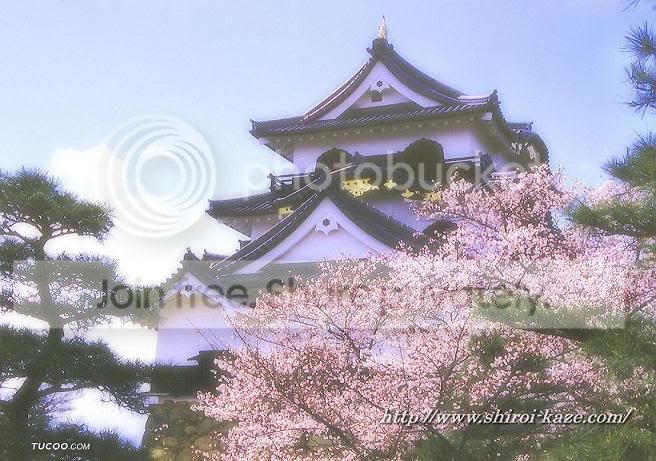
A Dojo built by Spirit Ancestor, Daisuke Hi from the Hi clan in order to share his ideals and beliefs. He has trained himself day in and day out in order to learn different fighting styles in order to spread the Hi clan's name and his techniques with everyone. Daisuke allows all comers who wish to learn fighting styles that differ from the ones on Earth. Located just outside the reach of the 12th division.
Quote:
1 ) Tai Shing Pek Kwar - (+2 Spd, +1 Str, +1 Def, +1 Sta)
Tai Shing Pek Kwar, more commonly known as Monkey Kung-Fu, is a Chinese martial art where the movements imitate monkeys or apes in fighting. One of the more acrobatic kung fu styles, movements often include falling, lunging, grabbing, jumping, and tumbling. The staff features prominently in its weapons training, with practitioners using it for attack, defense, and even climbing it like a pole to gain height in combat.
Tai Shing Pek Kwar, more commonly known as Monkey Kung-Fu, is a Chinese martial art where the movements imitate monkeys or apes in fighting. One of the more acrobatic kung fu styles, movements often include falling, lunging, grabbing, jumping, and tumbling. The staff features prominently in its weapons training, with practitioners using it for attack, defense, and even climbing it like a pole to gain height in combat.
Quote:
2 ) Northern Shaolin - (+3 Spi, +2 Str)
Northern Shaolin style of kung fu is one of the most prominent traditional northern styles of Chinese martial arts. The northern styles of kung-fu generally emphasize long range techniques, quick advances and retreats, wide stances, kicking and leaping techniques, whirling circular blocks, quickness, agility, and aggressive attacks.
The system teaches empty-hand techniques and weaponry through predetermined combinations, known as forms, routines, or movement of sets. The students learn the basics by practicing the routines until the movements in the routines can be executed naturally based on instinct. Then, two or multiple man sets are practiced to train responses and applications of techniques learned from the sets. The practice sets/routines are not only practical in applications but are also graceful and artistic in nature. The fluidness of the movements combined with acrobatic techniques are trademarks of the Northern Shaolin Kung-Fu sets.
Northern Shaolin style of kung fu is one of the most prominent traditional northern styles of Chinese martial arts. The northern styles of kung-fu generally emphasize long range techniques, quick advances and retreats, wide stances, kicking and leaping techniques, whirling circular blocks, quickness, agility, and aggressive attacks.
The system teaches empty-hand techniques and weaponry through predetermined combinations, known as forms, routines, or movement of sets. The students learn the basics by practicing the routines until the movements in the routines can be executed naturally based on instinct. Then, two or multiple man sets are practiced to train responses and applications of techniques learned from the sets. The practice sets/routines are not only practical in applications but are also graceful and artistic in nature. The fluidness of the movements combined with acrobatic techniques are trademarks of the Northern Shaolin Kung-Fu sets.
Quote:
3 ) Ba Gua - (+5 Def)
Ba Gua Zhang is recognized as one of the three orthodox "internal" styles of Chinese martial art (the other two being Xing Yi Quan and Tai Ji Quan). Ba Gua literally translates to Eight trigrams. These trigrams are symbols which are used to represent all natural phenomena as described in the ancient Chinese text of divination, the Book of Changes (Yi Jing). Zhang means palm and designates Ba Gua Zhang as a style of martial art, which emphasizes the use of the open hand in preference to the closed fist. Ba Gua Zhang, as a martial art, is based on the theory of continuously changing in response to the situation at hand in order to overcome an opponent with skill rather than brute force. It's most basic technique is known as "turning the circle", forming a continuous circular movement in your defenses.
Ba Gua Zhang is recognized as one of the three orthodox "internal" styles of Chinese martial art (the other two being Xing Yi Quan and Tai Ji Quan). Ba Gua literally translates to Eight trigrams. These trigrams are symbols which are used to represent all natural phenomena as described in the ancient Chinese text of divination, the Book of Changes (Yi Jing). Zhang means palm and designates Ba Gua Zhang as a style of martial art, which emphasizes the use of the open hand in preference to the closed fist. Ba Gua Zhang, as a martial art, is based on the theory of continuously changing in response to the situation at hand in order to overcome an opponent with skill rather than brute force. It's most basic technique is known as "turning the circle", forming a continuous circular movement in your defenses.
Quote:
4 ) Hung Gar - (+3 Str, +1 Spd, +1 Spi)
Hung Gar is a traditional Chinese martial arts system, the most widespread of the five prevalent southern systems. Its origin is from the "fighting monks" of the first Shaolin Temple in Henan province. The Shaolin system derived from Chuan (Zen) Buddhism, a hybrid of Dharma Buddhism and Taoism. As early as 500 AD, Da Mo, the legendary Bodhidharma, taught breathing exercises (qi-gong) to the monks. This helped them improve their physical health so they could endure longer periods of meditation. The breathing exercises evolved into a fluid self defense system that was much softer in execution of movement than what developed later. It included techniques, mimicking five animals - tiger, white crane, dragon, snake and leopard. These were developed, in an effort to protect the Henan temple, the most splendid of all the monasteries, from bandits and invaders.
Hung Gar is a traditional Chinese martial arts system, the most widespread of the five prevalent southern systems. Its origin is from the "fighting monks" of the first Shaolin Temple in Henan province. The Shaolin system derived from Chuan (Zen) Buddhism, a hybrid of Dharma Buddhism and Taoism. As early as 500 AD, Da Mo, the legendary Bodhidharma, taught breathing exercises (qi-gong) to the monks. This helped them improve their physical health so they could endure longer periods of meditation. The breathing exercises evolved into a fluid self defense system that was much softer in execution of movement than what developed later. It included techniques, mimicking five animals - tiger, white crane, dragon, snake and leopard. These were developed, in an effort to protect the Henan temple, the most splendid of all the monasteries, from bandits and invaders.
Quote:
5 ) Xing Yi Quan - (+2 Str, +2 Def, +1 Sta)
Xingyiquan (Chinese: 形意拳; pinyin: Xíng yì quán; Wade-Giles: Hsing I Ch'üan) is one of the major "internal" (nèijiā) Chinese martial arts. Xingyiquan translates approximately to "Form/Intention Boxing", or "Shape/Will Boxing", and is characterised by aggressive, seemingly linear movements and explosive power.
Its origins are traceable to the 18th century[citation needed]. There is no single organisational body governing the teaching of the art, and several variant styles exist.
A Xingyiquan fighter uses coordinated movements to generate bursts of power intended to overwhelm the opponent, simultaneously attacking and defending. Forms vary from school to school, but include barehanded sequences and versions of the same sequences with a variety of weapons. These sequences are based upon the movements and fighting behavior of a variety of animals. The training methods allow the student to progress through increasing difficulty in form sequences, timing and fighting strategy.
Xingyiquan (Chinese: 形意拳; pinyin: Xíng yì quán; Wade-Giles: Hsing I Ch'üan) is one of the major "internal" (nèijiā) Chinese martial arts. Xingyiquan translates approximately to "Form/Intention Boxing", or "Shape/Will Boxing", and is characterised by aggressive, seemingly linear movements and explosive power.
Its origins are traceable to the 18th century[citation needed]. There is no single organisational body governing the teaching of the art, and several variant styles exist.
A Xingyiquan fighter uses coordinated movements to generate bursts of power intended to overwhelm the opponent, simultaneously attacking and defending. Forms vary from school to school, but include barehanded sequences and versions of the same sequences with a variety of weapons. These sequences are based upon the movements and fighting behavior of a variety of animals. The training methods allow the student to progress through increasing difficulty in form sequences, timing and fighting strategy.
Quote:
6 ) Katsujin-ken - (+2 Spd, +2 Def, +1 Spi)
Katsujin-ken ["the One who preserves Life, the Sword of the Victor"] teaches that, if one's sword does not stop the movement of the enemy, then one may try to fit to the opponent's rhythm, thus entering into the mind of the adversary to find his weakness. For instance, to utilize the technique named empi, one must understand a deeper, secret level of battle. In empi, ("Swallow takes Flight") one uses a technique of spearing an opponent with a thrown sword. To do this, one learns to use the sword not only to defend his position but to also have the "power of adaptability" in facing different individuals. It is similar to a hunting hawk, which must constantly reconsider the best trajectory in which to strike effectively. Like the raptor, it is necessary to be able to anticipate, to be able to assess and definitively act. "Move with the mind, in order to move with the body" is one of the central tenets of the school.
Katsujin-ken ["the One who preserves Life, the Sword of the Victor"] teaches that, if one's sword does not stop the movement of the enemy, then one may try to fit to the opponent's rhythm, thus entering into the mind of the adversary to find his weakness. For instance, to utilize the technique named empi, one must understand a deeper, secret level of battle. In empi, ("Swallow takes Flight") one uses a technique of spearing an opponent with a thrown sword. To do this, one learns to use the sword not only to defend his position but to also have the "power of adaptability" in facing different individuals. It is similar to a hunting hawk, which must constantly reconsider the best trajectory in which to strike effectively. Like the raptor, it is necessary to be able to anticipate, to be able to assess and definitively act. "Move with the mind, in order to move with the body" is one of the central tenets of the school.
Quote:
7 ) JutteJutsu - (+2 Def, +1 Spd, +1 Sta, +1 Str)
Juttejutsu is the Japanese martial art of using the Japanese weapon jutte (also known as jitte). Juttejutsu was evolved mainly for the law enforcement officers of the Edo period to enable non-lethal disarmament and apprehension of criminals who were usually carrying a sword. Besides the use of striking an assailant on the head, wrists, hands and arms like that of a baton, the jutte can also be used for blocking, deflecting and grappling a sword in the hands of a skilled user.
Juttejutsu is the Japanese martial art of using the Japanese weapon jutte (also known as jitte). Juttejutsu was evolved mainly for the law enforcement officers of the Edo period to enable non-lethal disarmament and apprehension of criminals who were usually carrying a sword. Besides the use of striking an assailant on the head, wrists, hands and arms like that of a baton, the jutte can also be used for blocking, deflecting and grappling a sword in the hands of a skilled user.
Quote:
8 ) Shintō Musō-ryū - (+3 Str, +1 Def, +1 Spd)
Shintō Musō-ryū, or Shindō Musō-ryū (神道夢想流, Shintō Musō-ryū, or Shindō Musō-ryū?),a most commonly known by its practice of jōdō, is a traditional school (koryū) of the Japanese martial art of jōjutsu, or the art of wielding the short staff (jō). The technical purpose of the art is to learn how to defeat a swordsman in combat using the jō, with an emphasis on proper combative distance, timing and concentration. The system includes teachings of other weapon systems which are contained in Shintō Musō-ryū as auxiliary arts (Fuzoku ryuha). The school is sometimes abbreviated as SMR.
Shintō Musō-ryū, or Shindō Musō-ryū (神道夢想流, Shintō Musō-ryū, or Shindō Musō-ryū?),a most commonly known by its practice of jōdō, is a traditional school (koryū) of the Japanese martial art of jōjutsu, or the art of wielding the short staff (jō). The technical purpose of the art is to learn how to defeat a swordsman in combat using the jō, with an emphasis on proper combative distance, timing and concentration. The system includes teachings of other weapon systems which are contained in Shintō Musō-ryū as auxiliary arts (Fuzoku ryuha). The school is sometimes abbreviated as SMR.
Quote:
9 ) Sabre Dance - (+2 Str, +1 Spd, +1 Sta, +1 Spi)
The "Sabre Dance" is a movement that evokes a whirling war dance in an Armenian dance, where the dancers display their skill with sabres. Due to its exceptionally exciting rhythm, the Sabre Dance established a place for itself in common concert practice, leading also to various adaptations in popular music. Both dangerous and beautiful to watch; the dance requires split-second timing, a flowing rhythm of movement, and extraordinary balance.
The "Sabre Dance" is a movement that evokes a whirling war dance in an Armenian dance, where the dancers display their skill with sabres. Due to its exceptionally exciting rhythm, the Sabre Dance established a place for itself in common concert practice, leading also to various adaptations in popular music. Both dangerous and beautiful to watch; the dance requires split-second timing, a flowing rhythm of movement, and extraordinary balance.
Quote:
10) Kyokushin (+1 Spd +4 Spi)
Kyokushin kaikan (極真会館, Kyokushin kaikan?) is a style of stand-up, full contact karate. Kyokushinkai is Japanese for "the society of the ultimate truth." It is rooted in a philosophy of self-improvement, discipline and hard training. The Kyokushin system is based on traditional karate like Shotokan and Goju-ryu, but incorporates many elements of combat sports like boxing and kickboxing in kumite. Many techniques are not found in other styles of karate.
Kyokushin kaikan (極真会館, Kyokushin kaikan?) is a style of stand-up, full contact karate. Kyokushinkai is Japanese for "the society of the ultimate truth." It is rooted in a philosophy of self-improvement, discipline and hard training. The Kyokushin system is based on traditional karate like Shotokan and Goju-ryu, but incorporates many elements of combat sports like boxing and kickboxing in kumite. Many techniques are not found in other styles of karate.
Quote:
11) Destreza (+2 Str +2 Spd +1 Def)
During the 1500s a new system of swordplay began to develop in Europe unlike any the world had ever seen. The Spanish created a new, universal method of fighting based on Reason and Mathematics that could be taught to any student. They called the system La Verdadera Destreza, the True Art. It relies heavily on thinking quickly on your feet and adaptation to your opponent's fighting style when it comes to sword play.
During the 1500s a new system of swordplay began to develop in Europe unlike any the world had ever seen. The Spanish created a new, universal method of fighting based on Reason and Mathematics that could be taught to any student. They called the system La Verdadera Destreza, the True Art. It relies heavily on thinking quickly on your feet and adaptation to your opponent's fighting style when it comes to sword play.
Quote:
12) Hiten Mitsurugi Ryuukuzuryuusen (+4 Spd +1 Str)
Moving at divine speeds, the user will use the strength of the arms (wild-arm techniques) and their weight (charging attacks) to rush the opponent while thrusting their arms at the nine points of the opponent, the head, shoulders, arms, thighs, and the space between the feet. This onslaught of high-speed attacking often overcomes opponents and to those unable to stand their ground, means death.
Moving at divine speeds, the user will use the strength of the arms (wild-arm techniques) and their weight (charging attacks) to rush the opponent while thrusting their arms at the nine points of the opponent, the head, shoulders, arms, thighs, and the space between the feet. This onslaught of high-speed attacking often overcomes opponents and to those unable to stand their ground, means death.
Quote:
12) Amakakeru Ryuu no Hirameki (+2 Def +2 Spi +1 Sta)
A powerful technique that studies in opposition to the style of Hiten Mitsurugi Ryuukuzuryuusen, it is only taught to those without fear. It is said that those who master it can literally dive into the heart of the Ryuukuzuryuusen’s strikes. It relies on listening with spirit senses, waiting to match one's attacks to the opponent's heartbeat, to wait for that single irregular beat, and then to strike.
A powerful technique that studies in opposition to the style of Hiten Mitsurugi Ryuukuzuryuusen, it is only taught to those without fear. It is said that those who master it can literally dive into the heart of the Ryuukuzuryuusen’s strikes. It relies on listening with spirit senses, waiting to match one's attacks to the opponent's heartbeat, to wait for that single irregular beat, and then to strike.
