 THE BASICS
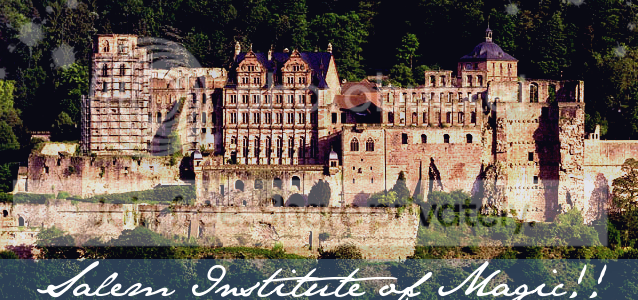
Wizarding America is much more modern that it's European counterpart. They are not stuck in the past by centuries of traditions. Instead of isolating themselves from the non-magical world, they kept up with the scientific and technological advances of the non-magical world, integrating it into their way of life. While Wizarding Britain may not have electricity, Wizarding America has magic-compatible computers. They do not use owls as messengers, or quills to write, and consider Wizarding Europe rather...quaint. While there are purebloods and old families, they do not essentially control the society as it is in other places. American wizards as a whole do not put much stock in that blood nonsense. They know that magic is connected to a recessive trait - a rare mutation of certain chromosomes - rather than 'purity of blood'. The Wizarding government does not use Obliviators, considering wiping someone's memory to be a violation of human rights. And after sll, if a non-magical sees something they shouldn't and doesn't buy the official cover story as most do (it really is surprising how many people are not only willing, but happy to ignore what's going on right in front of them), it's not as if they could go to the press - they'd be laughed out. The American Wizarding government also allows a much wider range of magic - instead of condemning certain kinds of magic as 'Dark', they acknowledge that magic isn't inherently good or bad, but determined by the intent of those who wield it. Magic is a tool, and, like all tools, must be handled properly. It is for this reason that the first two weeks of American wizards and witches' 8-year education is dedicated to wand safety. The children's education begins at age 12 because it is thought that most 11-year-olds aren't quite mature enough to handle the great power and responsibility that comes with a wand. The Salem Institute of Magic offers an education in both magical and non-magical subjects, for eight years, with the goal of teaching its students to not only function, but be able to thrive in both societies. Transfiguration, Charms, and Potions are taught alongside English, Mathematics, and Science. There are classes for both magical and non-magical history (though you'd be surprised how often the two are intertwined) and later the students are allowed to choose one magical and one non-magical elective from a list including Study of Magical Creatures, Divination, Ancient Runes, Astronomy, Art, Music, Drama, and more. The students are divided into four houses, but for rooming and sports purposes only. Instead of house points, each student has their own personal points, the addition or removal of which affect certain privileges. Points can be removed for breaking the rules, and earned for academic excellence, but not taken or given frivolously. (Such as being taken for 'being an insufferable know-it-all' or awarded for 'the best-played game of chess this school has seen in a long time'.) The four houses are the Wolverines, the Gophers, the Owls, and the Coyotes. Each house has its own Quidditch team, and games are played every other Sunday. There is no snitch or seeker, though - American Quidditch is reformed. (Though the professional teams do train seekers for international games, as most other countries do abide by the snitch version of the game) So now that that is done, here - have some Chocolate Frogs (or would you prefer Red Vines?) and hurry to your seat. The Feasts’ about to start, welcome to the Salem Institute of Magic!



 Reply
Reply
