|
|
|
|
|
|
|
|
|
 Posted: Thu Sep 15, 2011 5:23 pm Posted: Thu Sep 15, 2011 5:23 pm
Below are listed the known animals. Keep in mind that information may be updated or corrected at any time, so look back here whenever you have the time. Who knows, it could give you life-saving information.
|
 |
|
|
|
|
|
|
|
|
|
|
|
|
|
Posted: Thu Sep 15, 2011 6:23 pm
Animal Name:Ramma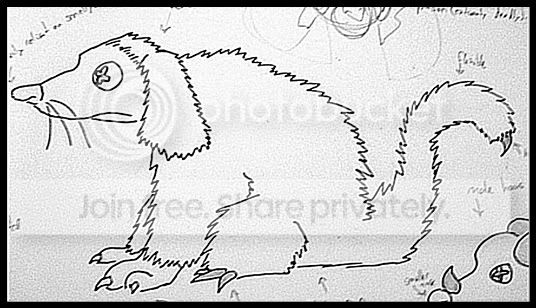 Coloration: Bright reds, yellow, and orange fur colors, do to their venomous nature. Their fur is soft, and thick, making it a very desirable trade item. Size: Rammas are about the size of sheep back on earth, but smaller. Their shoulders come up to a humanoids knee, roughly. Special traits: Rammas have double-pupiled eyes that look like Xs or +s up close. This gives them a larger range of vision, and possibly helps them see in larger ranges of color to tell healthy leaves apart from unhealthy ones. Their front feet are agile paws, while the back are sharp hooves for digging into the bark of a tree as they climb it. They have venomous fangs, so leave them alone unless you want to end up dead or paralyzed on the forest floor. Diet: Herbivore Habitat: Rammas live where there are trees. Their main diet is tree leaves, along with a few choice bush growths. Danger Level: Deadly, they have a venomous bite, thanks to two small fangs between their 'clipping' front teeth and 'grinding' back teeth. It is possible to build up an immunity to such poison through months of careful dosing, however. Is it Tameable?: Yes Edible: Yes Gender Differences: Males have shorter floppy ears, two 'ram' horns and one extra horn for gouging above their nose. Males are also known to be more aggressive. Behavior: Rammas are herd animals. They live in small groups, usually from three to a dozen. Walking around on all fours on the ground, rammas are quick with their front paws and back hooved feet to go from tree to tree. They are most comfortable above the ground, a small 'claw' on the tip of their flexible tails to help them more easily climb, along with their strong back clawed feet. Through many years of careful taming, rammas have become a lifestock animal for many of the native groups. The colors of their bright fluffy coats are highly prized, and rammas are often sheared once a year in the spring so the fur can be sold to weavers who make clothing out of it. Like sheep, they are easily herded by a knowing shepherd and are quite tame when handled properly. In the wild, herd groups usually are led by one elder female. Dominant males have also been known to take charge in lack of the proper 'queen' figure. They call to one another in short, squeaking sounds and barks, often like 'Eep! Eep eep!' They are not known to flee, but do retreat when another animal shows fatal aggression. With young, they usually have one lamb each breeding season, and the young holds on tight with tail and paws to mother's back until old enough to climb for itself, but still remains in the family group for at least another year before moving on.
|
|
|
|
|
|
|
|
|
|
|
|
|
|
|
|
|
|
Posted: Thu Sep 15, 2011 7:12 pm
Animal Name:Striped Deer Coloration: Brown/maroon pelts with black stripes. Special features: This creature is mostly a deer. With fangs. And a very aggressive attitude. Size: Stands shoulder-to-shoulder with huminoids. Diet: Herbivore, and carrion feeder. Habitat: Do to their antlers, these creatures usually inhabit areas of forest or small clearings were trees grow far apart and there is nothing to get their horns stuck in. Unfortunately, that means the cleared area around Neo-America matches this description. Keep an eyes out for these beasts. They are also attracted by the trash we through out. Danger Level: Potentially Threatening; Those fangs aren't just for show. These deer are nothing like the meek beasts back home. They will stand their grown and kill you if you don't seem to be much of a threat. Is it Tameable?: Possibly. I wouldn't recommend trying. Edible: Yes Gender Differences: None besides the sexual organs. Females also have antlers--which led to some confusion initially--and are just as aggressive as their male counterparts when defending food, territory, or young. Behavior: These deer don't live in herds. They appear to live solitary lives, though sometimes they happen to be seen in groups of two or three. They graze on grass, and also long-dead flesh when they find it.
|
|
|
|
|
|
|
|
|
|
|
|
|
|
|
Posted: Thu Sep 15, 2011 7:35 pm
Animal Name: Bush Pig 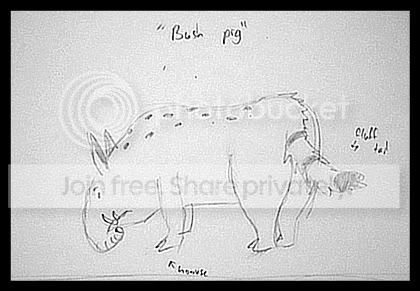 Coloration: Tan to brown. The spots and stripes are commonly black, sometimes white or dark brown. Special traits: Their noses are in fact short trunks, all the better for getting at food with. Fluffy, fluffy tails, sometimes considered a good luck charm. Diet: Herbivore Habitat: Common in forest, but also a very adaptable animal that eats many kids of vegetation. Where there are roots, fruit, grass, berries, or any other edible plant, these pigs are sure to be rooting around and eating it. Danger Level: Potentially Threatening; like the wild boar, these creatures use their tusks for stabbing and tearing along with biting when cornered. Is it Tameable?: Yes Edible: Yes Gender Differences: Males generally have larger tusks, and more impressive fluffy tails. These tails are what they use to attract mates, along with their strength. Behavior: These animals behave very much like the wild boars back on earth. They are more active when it's cool at night and twilight, but do move around during the day. They can travel in groups, but scatter when threatened. Regular bush pigs are roughly at your knee. But big boars have been known to have a shoulder height at a man's hip and are very formidable prey. Females produce large litters, from 3-6 per birthing.
|
|
|
|
|
|
|
|
|
|
|
|
|
|
|
|
|
|
Posted: Thu Sep 15, 2011 8:03 pm
Animal Name: Tree Mouse 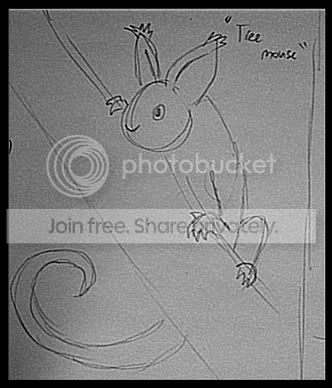 Coloration: Shades of brown and orange. Sometimes black or white individuals are known, or those with calico coats. Size: The same as a large rat. Diet: Herbivore; they eat mostly fruit, nuts, and berries. Habitat: Forest dwellers. Like squirrels and small monkeys, they can travel on the ground, but live mostly in the trees. Danger Level: Harmless Is it Tameable?: Yes, they've often been tamed to be pets. Edible: Yes, but they have as much meat as a squirrel: not much. Gender Differences: Males often have brighter colored fur than females; its what attracts their mates. Behavior: Tree Mice are very social, living in group colonies that often all live within the same 'home' tree. They can be playful and curious, which sometimes lands them in trouble. They have small thumbs for climbing, and can use these little hands to work at opening particularly hard nuts by using rocks. Females have one to two young at a time, and the little ones ride on mother until their able to climb fast enough alongside her.
|
|
|
|
|
|
|
|
|
|
|
|
|
|
|
Posted: Fri Sep 16, 2011 5:12 am
Animal Name:Night Flier or Flappers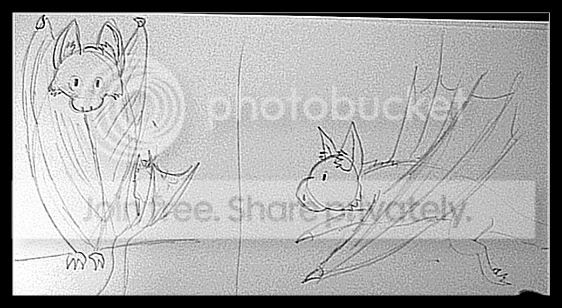 Coloration: Black limbs and ears, but brown fur on the body. Sometimes, specimens have been known to be all-black. Thier long tails have an extra 'wing' on the tail, like a fan, to assist with flight. Size: Of a domestic cat. Diet: Omnivore Habitat: Nocturnal, so they only come out at night. During the day, they roost in caves and the hollows of fallen trees. They can live in many environments. Danger Level: Harmless Is it Tameable?: Yes. They used to be greatly sought out as pets. But, after a few generations, the population became thinned from an unknown disease. Edible: No. Some of the fruit they eat is partially toxic, so their bodies are in turn toxic to everything else. Gender Differences: None. Behavior: Flappers (or Night Fliers, as they're commonly known by both names) are related to the Tree Mouse, but are more cat-like in their behavior. They purr, and hiss, but are usually good tempered if raised tame. At night, it is considered good luck to see a Flapper pass you by. At one time they were considered connected to an old god, being messengers and signs of good fortune. They only have one to two young at a time. If there are two kits, one likely dies early on, because the mother only produces enough milk for one. Their eyes are slit-pupiled, also like a cats, and their wing 'thumbs' act as their hands in most situations, being very flexible. Because of this, they can easily walk around on all fours when on the ground. Like cats, wild Flappers are feral. Even if they are sometimes friendly for a bit of food, like feral cats they will never trust a species besides their own. To tame one, the Flapper must be constantly exposed to humanoid presence after birth and handled constantly to grow used to touching. No wild-born Flapper will ever tame, unlike Tree Mice, who tame easily regardless of age.
|
|
|
|
|
|
|
|
|
|
|
|
|
|
|
|
|
|
Posted: Fri Sep 16, 2011 9:41 am
Animal Name: Skull Hound 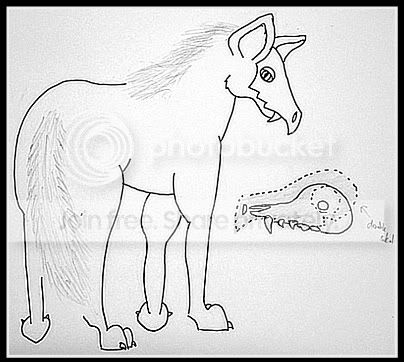 Coloration: Black Mane/tail fur, light yellow/white fur color. Size: The size of a large dog. Special Traits: The second growth of bone covering it's head that serves as a battering ram and helmet. Diet: Carnivore Habitat: This is a wide-ranging predator that travels all over, but mainly inhabits the forests and swamps. Danger Level: Deadly, it's not a carnivore for nothing. Using speed, fangs, and it's 'bashing' helmet, this pack animal hunts with the utmost seriousness. Once you're targeted, you're prey. Is it Tameable?: Yes. But, like the Flapper, only at a young age. Otherwise, they're feral. Edible: Yes, but the skull and pelt are more valuable than the unapetizing meat. Gender Differences: None. Behavior: Skull Hounds are pack creatures and hunt together. They act like wolves and are very expressive with their body langague that uses both their tail, posture, and large ears. Females go into heat once a year and later have a littler from 2-6 pups. They usually do so in a den; in wooded areas and near a fresh source of water. The pack does not move on from this area until the pups are old enough to travel and when their second 'skull' grows in more. Packs can range in size from a mated pair to as many as a dozen indivuduals or more, depending on how much game can suport them in their range. One pack usually has a territory of 14-22 square miles.
|
|
|
|
|
|
|
|
|
|
|
|
|
|
|
Posted: Fri Sep 16, 2011 1:44 pm
Animal Name:Swamp Lizard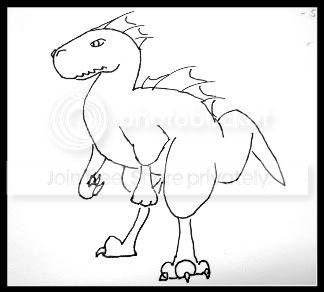 Coloration: Deep greens with splashes of brown, giving them a 'camo' colored appearance that helps them blend with their dark, wet surroundings. Size: About the same as a wild turkey. Diet: Carnivore Habitat: The swampy parts of the foreest and in some marshes as well. Danger Level: Harmless; they're predators, but small ones. Easily frightened off. Is it Tameable?: No Edible: Yes Gender Differences: Males have colorful 'crest' fins on their heads, while females only have back fins. Behavior: These creatures hop from the many tree roots of the forest swamp, and swim well. They live solitary lives, eating fish and smaller animals when they can. Males and females only come together to mate, but there is no parental behavior. The female lays the eggs on a relatively dry mound of mud, covered in a leafy warm nest, and leaves once they hatch.
|
|
|
|
|
|
|
|
|
|
|
|
|
|
|
|
|
|
Posted: Fri Sep 16, 2011 4:38 pm
Animal Name: Chita 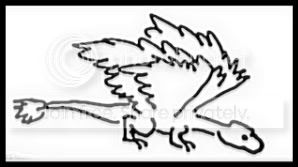 Colors: Rainbow. Wings are multi-colored while skin/scales are one color. Size: Small-bird sized. Diet: Omnivore; it eats berries, nuts, and bugs. Habitat: Flying around just about everywhere. Danger Level: Harmless Is it Tameable?: Yes. Like birds, they can be kept in cages and fed. Though, if let out, they will likely 'fly the coop.' Edible: Yes. Not much to eat there though. Gender Differences: None. Behavior: These are the 'birds' of Neo-America. Chitas fly around, eat, get eaten, and chatter like songbirds. They aren't very smart, thanks to their small skull, and aren't a very interesting species once you've got the basics of them. Females make nests in trees for their small white eggs, feed the young until their fledged, then fly off. The courting dance/song the males use is a bit interesting though, with a lot of head-bobbing and wing-flaring.
|
|
|
|
|
|
|
|
|
|
|
|
|
|
|
Posted: Sat Sep 17, 2011 5:09 pm
Animal Name: Green-back Wyvern What Does it Look Like?: 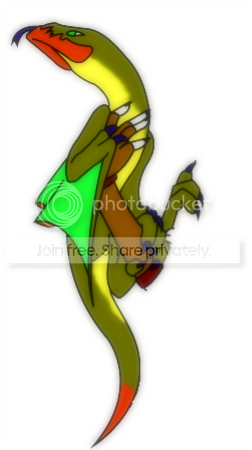 Size: Roughly the size of large domestic cat Diet: Carnivore Habitat: These reptilian creatures are nomadic. They never stay in one place for too long, which is why it is rare to see them. Though a few lucky souls have been able to study them. Danger Level: Deadly. Their tough scales are very hard to penetrate and they are quick, agile creatures, sharp claws can do some serious damage. Plus, their bite is very venomous and they can produce a loud, high pitched roar that can be heard from long distances and stall any predator, though they have none. Is it Tameable?: Not normally since they are so rare for natives or humans to see them. But if you can befriend one, they are very tameable. There is a two percent chance that could happen. Edible: No. Unless you wish to have a painful death. Gender Differences: The females are slightly larger and have a deeper toned roar. They are less aggressive then the smaller males. The males are more attractive and highly aggressive, especially during mating season. Females can lay up to two eggs at a time but one will not make it. Behavior: They travel in flocks of 8-10 Wyverns, depending on succession of breeding. When left alone, the dragon-like creatures are practically harmless. When their temporary territory has been invaded, they are very, very aggressive. They aren't very sociable with any species but their own. Except when that Wyvern was not born in their flock. Their matriarch won't accept any 'outsiders'. Mating season happens one month a year. And mating is a very loud process. Only to keep other Wyverns and other animals away. When the female lays her eggs in the nest made by the male, she doesn't leave that spot until they hatch since wyvern eggs can be a delicacy to certain animals. The male Green-back takes care of his mate, acting as a dutiful, caring husband. Though, a male usually has more than one mate at one time. This can prove to be difficult for said male since he would have to hunt for more than one. Once the Wyvern eggs hatch, the mother and father take turns caring for them. Again, can be difficult for males. This is why there are more than females than males. As the hatchlings grow, they start to compete for their parents' attention. One will bully the other for food, causing one to starve to death then be eaten by the strong sibling. Once they can fly on their own, they hunt with the flock. Sometimes, the baby Wyvern will eat their exhausted father. Wyverns have no room for weaklings. Survival of the fittest, after all.
|
|
|
|
|
|
CupcakeOfEros Vice Captain
|
|
|
|
|
|
|
|
|
|
|
|
|


 Reply
Reply