




Mavdoc
3D Model Creation
After being approved in the concepting phase, environments and props move on to become actual 3D models.
Following the concepts as a reference in building, the objects are modeled in Maya or a similar 3D modeling package.
As soon as the polygons are created in the form of the object, the UVs are laid out. These are basically coordinates that every surface uses to determine where on the texture that face will be mapped. UVs are points that directly correlate to each vert (or point) that make up a 3D model. Think of "UV" as pretty much X and Y on a 2D plane; horizontal and vertical.
The texture(s) used for any given object or scene contain all the surfaces that will "skin" the model, making it look lifelike with all the varied patterns and colors that comprise it. In the farmhouse image, several of the polygons that make up the overhang are selected, and the corresponding UVs shapes highlight in the texture.

Full size
The Null Chamber scene shows many of the Maya tools and dialog boxes used when working with 3D models. These include windows that display all the nodes (individual objects) in a 3D scene, UV and texture displays, and the attribute editor which is used for a variety of tasks like giving information on the file path and options for textures like shown.

Full size
All the textures in the game are actually hand painted to give that cartoony look. Most videogames today use actual photographs to create their textures.
As you could guess, modeling, UV layout and hand painting textures for every single object in the game whether it's a pebble or expansive jungle ruins takes an immense amount of work. It's much more than we could handle internally at Gaia, so we get help through modeling outsourcing companies. We've worked with two both out of China: Vykarian and Pearl Digital.
After receiving the completed 3D models from these outsourcers, there's usually an amount of cleanup, optimization or just general tweaking that's involved internally to make the models look more like the concepts, or just better in general.
Even though we have outside help, some areas and props in the game were actually created totally in house, while many others were created internally through manipulation and repurposing of existing models.
Next up will be some asset organization, then moving on to the process of rendering out these 3D models--
Previous topics:
Overview of Environment Art Pipeline
Concept to Flash Implementation
Prop Concepting
After being approved in the concepting phase, environments and props move on to become actual 3D models.
Following the concepts as a reference in building, the objects are modeled in Maya or a similar 3D modeling package.
As soon as the polygons are created in the form of the object, the UVs are laid out. These are basically coordinates that every surface uses to determine where on the texture that face will be mapped. UVs are points that directly correlate to each vert (or point) that make up a 3D model. Think of "UV" as pretty much X and Y on a 2D plane; horizontal and vertical.
The texture(s) used for any given object or scene contain all the surfaces that will "skin" the model, making it look lifelike with all the varied patterns and colors that comprise it. In the farmhouse image, several of the polygons that make up the overhang are selected, and the corresponding UVs shapes highlight in the texture.
Full size
The Null Chamber scene shows many of the Maya tools and dialog boxes used when working with 3D models. These include windows that display all the nodes (individual objects) in a 3D scene, UV and texture displays, and the attribute editor which is used for a variety of tasks like giving information on the file path and options for textures like shown.
Full size
All the textures in the game are actually hand painted to give that cartoony look. Most videogames today use actual photographs to create their textures.
As you could guess, modeling, UV layout and hand painting textures for every single object in the game whether it's a pebble or expansive jungle ruins takes an immense amount of work. It's much more than we could handle internally at Gaia, so we get help through modeling outsourcing companies. We've worked with two both out of China: Vykarian and Pearl Digital.
After receiving the completed 3D models from these outsourcers, there's usually an amount of cleanup, optimization or just general tweaking that's involved internally to make the models look more like the concepts, or just better in general.
Even though we have outside help, some areas and props in the game were actually created totally in house, while many others were created internally through manipulation and repurposing of existing models.
Next up will be some asset organization, then moving on to the process of rendering out these 3D models--
Previous topics:
Overview of Environment Art Pipeline
Concept to Flash Implementation
Prop Concepting
And this one was just posted now:
[ JK ]
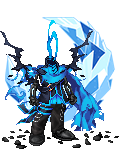
Today we're revealing one of our new boss monsters in zOMG. Originally, we were planning to use this boss for the DMP area, but we've since moved him elsewhere due to the fact that that area will be designated for vampires.
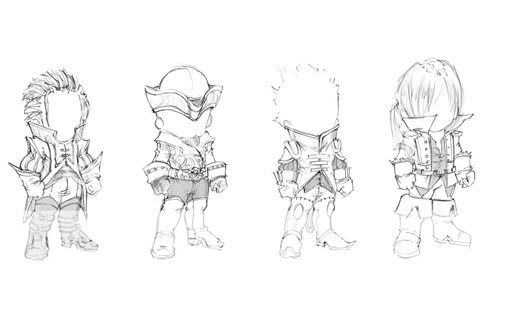
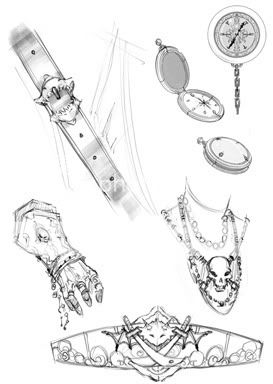
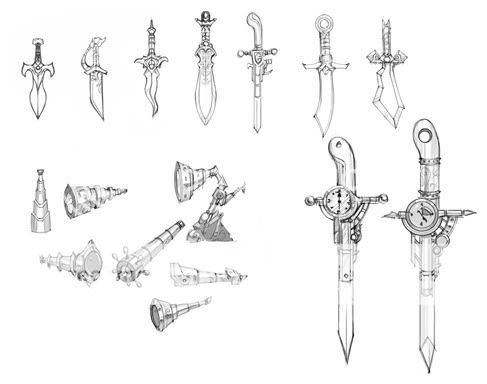
Here are some concepts...
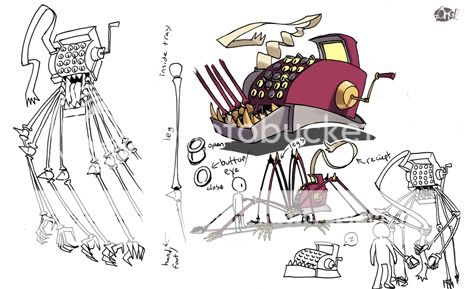
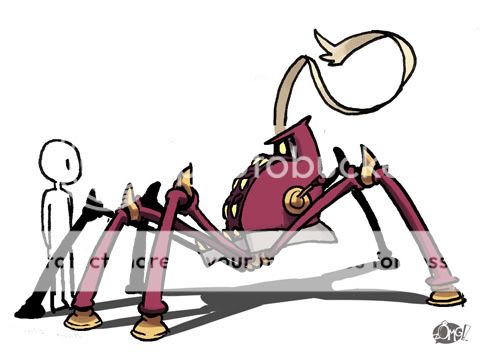
The design went through several iteration like most of our monster concepts. We also spend extra time and effort for bosses since they usually require more gameplay and visual FX.
Most monsters require 1-2 weeks to finish, but bosses usually take up to 4 weeks to complete. We'll explain the zOMG animation pipeline later on. smile
Here are some concepts...
The design went through several iteration like most of our monster concepts. We also spend extra time and effort for bosses since they usually require more gameplay and visual FX.
Most monsters require 1-2 weeks to finish, but bosses usually take up to 4 weeks to complete. We'll explain the zOMG animation pipeline later on. smile

THEY EVEN HAVE VIDEOS:
http://www.youtube.com/watch?v=y4L5_7WqshA&eurl=http:/2Fwww.youtube.com/user/johnsk7#p/a/u/1/y4L5_7WqshA&feature=player_profilepage
http://www.youtube.com/watch?v=d7pKahPVY4c
ISNT THAT JUST BLOODY BRILLIANT?
What do you expect for chapter 2?