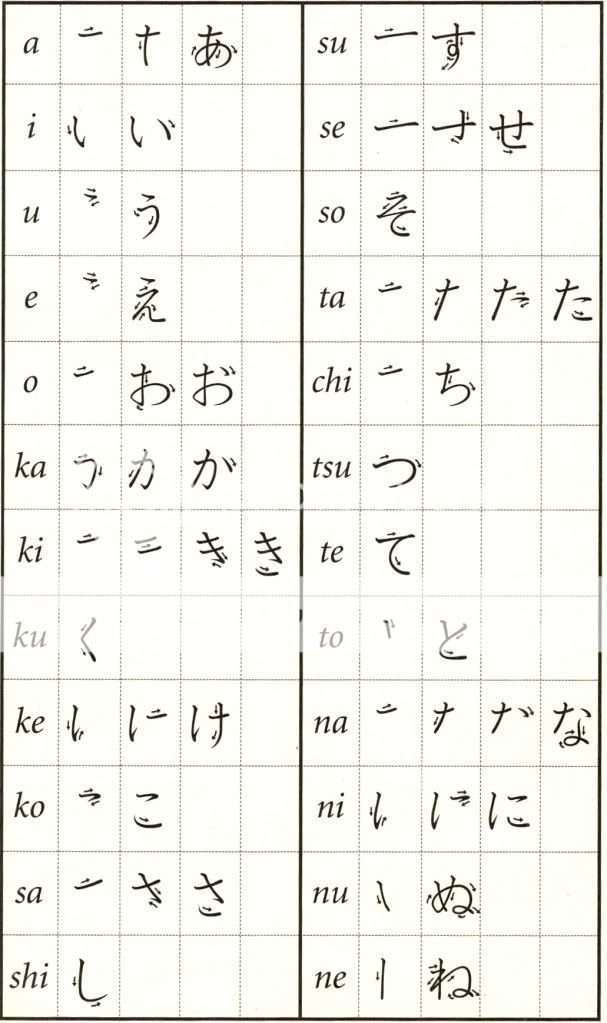
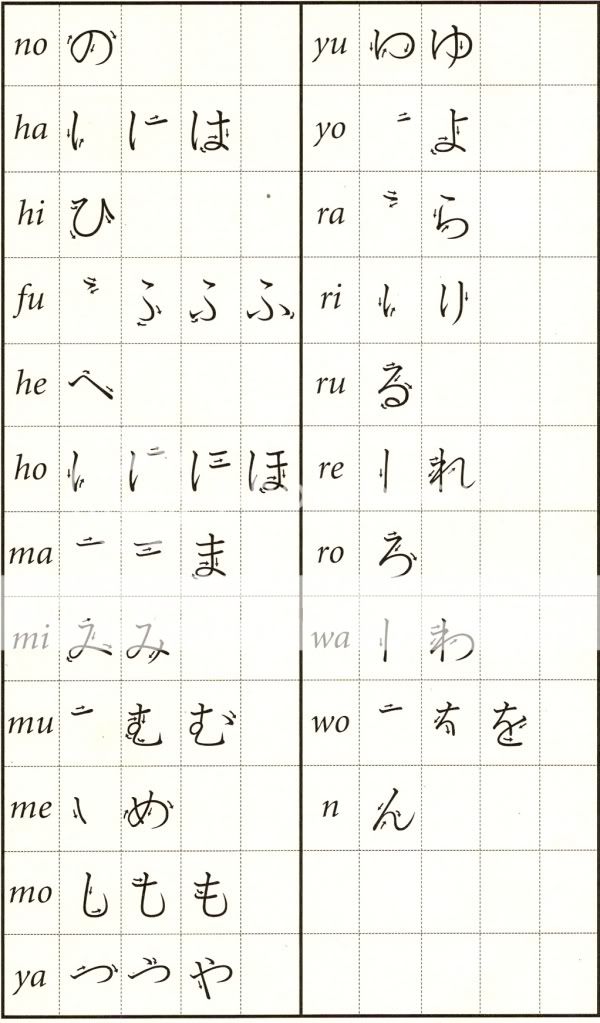
Post #5: ExamplesFor those of you that enjoy reading manga, you can get a lot of practice reading hiragana and katakana. In the manga world, hiragana is used for onomatopoeia produced from humans, such as yawning and laughing, as seen in the examples below. Sounds that are cause as a result of human actions, like explosions, are written in katakana.
Example 1: Onomatopoeia: Yawn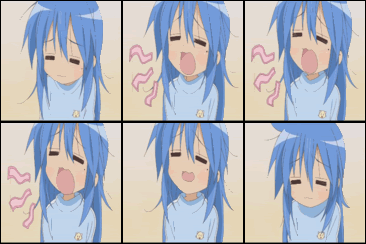 ふわあ。
ふわあ。fuwaa...
(Onomatopoeia for a yawn.)
In manga, you would notice a つ character used quite often. It used to indicate that the sound stops abruptly or ends sharply. However, its rare to find this usage outside of manga/comic books.
Example 2a: Onomatopoeia: Laugh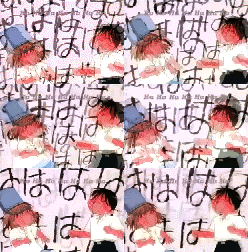 あははははははははははは。
ahahahahahahahahahahaha
(Onomatopoeia for laugh.)
Example 2b: Onomatopoeia: Laugh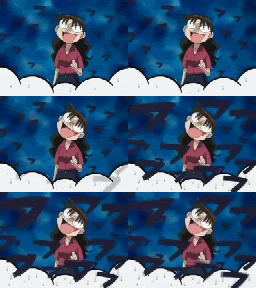 へへへへへへへへへへへへ。
hehehehehehehehehehehehe
(Onomatopoeia for laugh.)
Example 3: Particles and Desinences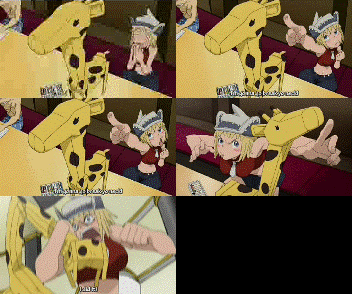 ぼくが壊した!
boku ga kowashita!
me SP break!
I broke it!
The hiragana syllabary is characteristically used to write the units that make up the "skeleton" of sentences and the desinence.
が (ga) marks the subject.
ぼく boku ("I") performs the action.
The desinences tell us whether a verb is conjugated in the present tense, past tense, etc.
した (-shita) indicates past tense.
壊 (kowa) is the kanji for "to break"
Thus,
壊した (kowashita) means broke.
Example 4: Cohabitation of Hiragana, Katakana and KanjiThe best depiction of this is the one included in the Mangaland book. And, just a reminder, mangas are read in the traditional style, vertically and from right to left.
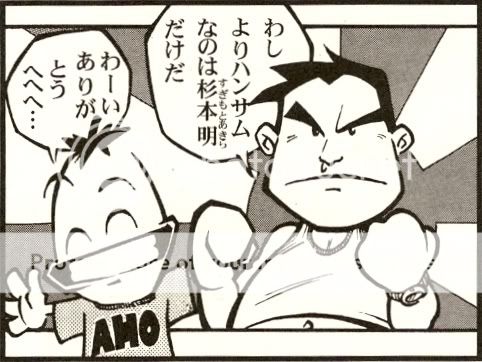 すぎもとあきらわしよりハンサムなのは杉本明だけだ
washi yori hansamu na no wa sugimoto akira dake da
I more handsome than sugimoto akira only be
Only Akira Sugimoto is more handsome than me.
わーい ありがとう へへへ。。。waai arigato he he he...
wow! thanks he he he
Well thanks! He, he, he.
The break down: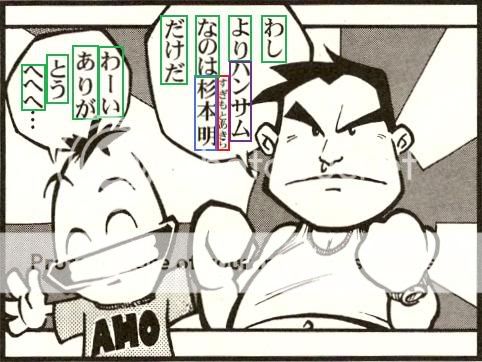 Color Guide:
Green: Hiragana
Purple: Katakana
Blue: Kanji
Red: Furigana
As you can see, this example uses all three Japanese writing forms. The majority of the text is written in hiragana, with two exceptions.
ハンサムHansamu, which comes from the English word handsome, is written in katakana, and
杉本明 Sugimoto Akira, written in kanji. Please note, that Japanese/Chinese names are almost always written in kanji.
I'm sure by now you may have also noticed the small hiragana characters above the kanji. These are furigana.
There is estimated to be over 45,000 to 50,000 kanji, however, only about 3,000 are normally used. With this in mind, there is a list (Jōyō Kanji or "common use kanji) which are those that can be used in the press, such as newspapers and manga. If a kanji is used that is not included on this list, then its reading must be given in furigana.
Side notes:• Ahō
(あほう) on the boys shirt means fool/silly.
• For Japanese names, the surname (or family name) is said first then the given namen (the name your parents give you).
• If you notice, wa here is written
は. Wa in this instance is a topic particle. The word it follows is the topic. We will go into particles later.


 Reply
Reply