|
|
|
|
|
|
|
|
|
 Posted: Wed Nov 28, 2007 10:01 am Posted: Wed Nov 28, 2007 10:01 am
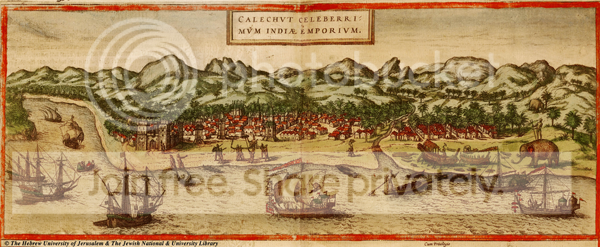
Did you know that black pepper used to be worth its weight in gold? Did you know that at one time Nutmeg and Mace came from an island called "Run" and that the island was fought over by the English and the Dutch from 1611 and 1615?
Spices may seem trivial today but they were very important in the past. Today many spices are very important commercially and religiously. This thread will open your eyes to the world of the
Spice Trade
|
 |
|
|
|
|
|
|
|
|
|
|
|
|
|
Posted: Mon Dec 03, 2007 11:52 am
Spice Profile 0001: Nutmeg (and Mace)
Scientific Name: Myristica fragrans, Gronov.
Commonly Found: Banda Islands, Malayan Archipelago, Molucca Islands, and cultivated in Sumatra, French Guiana
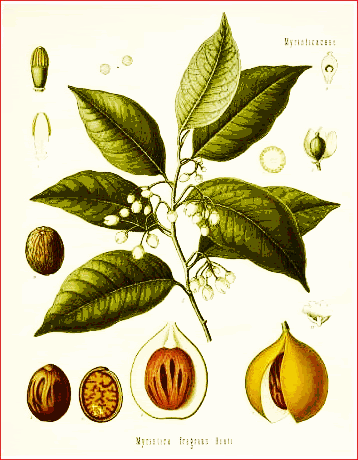 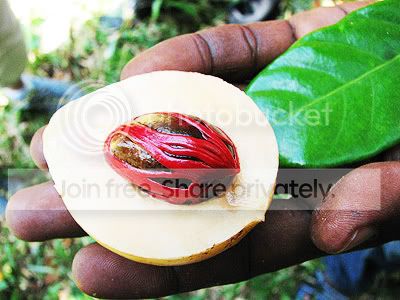
History: (Directly quoted from Wikipedia.org) "There is some evidence that Roman priests may have burned nutmeg as a form of incense, although this is disputed. It is known to have been used as a prized and costly spice in medieval cuisine. Saint Theodore the Studite ( ca. 758 – ca. 826), was famous for allowing his monks to sprinkle nutmeg on their pease pudding when required to eat it. In Elizabethan times it was believed that nutmeg could ward off the plague, so nutmeg was very popular. Nutmeg was traded by Arabs during the Middle Ages in the profitable Indian Ocean trade.
"In the late 15th century, Portugal started trading in the Indian Ocean, including nutmeg, under the Treaty of Tordesillas with Spain and a separate treaty with the sultan of Ternate. But full control of this trade was not possible and they remained largely participants, rather than overlords since the authority Ternate held over the nutmeg-growing centre of the Banda Islands was quite limited, therefore the Portuguese failed to gain a foothold in the islands themselves.
"The trade in nutmeg later became dominated by the Dutch in the 17th century. The British and Dutch engaged in prolonged struggles and intrigue to gain control of Run island, then the only source of nutmegs. At the end of the Second Anglo-Dutch War the Dutch gained control of Run in exchange for the British controlling New Amsterdam (New York) in North America.
"The Dutch managed to establish control over the Banda Islands after an extended military campaign that culminated in the massacre or expulsion of most of the islands' inhabitants in 1621. Thereafter, the Banda Islands were run as a series of plantation estates, with the Dutch mounting annual expeditions in local war-vessels to extirpate nutmeg trees planted elsewhere.
"As a result of the Dutch interregnum during the Napoleonic Wars, the English took temporary control of the Banda Islands from the Dutch and transplanted nutmeg trees to their own colonial holdings elsewhere, notably Zanzibar and Grenada. Today, a stylised split-open nutmeg fruit is found on the national flag of Grenada.
"Connecticut gets its nickname ("the Nutmeg State", "Nutmegger") from the legend that some unscrupulous Connecticut traders would whittle "nutmeg" out of wood, creating a "wooden nutmeg" (a term which came to mean any fraud)."
Miscellaneous Facts:
"At one time, nutmeg was one of the most valuable spices. It has been said that in England, several hundred years ago, a few nutmeg nuts could be sold for enough money to enable financial independence for life." Wikipedia.org
"The first harvest of nutmeg trees takes place 7–9 years after planting and the trees reach their full potential after 20 years." Wikipedia.org
Uses: "Nutmeg is mostly used in cola drinks, in confectionery and holiday dishes, such as eggnog. However, the more aromatic mace is characteristically used in making sausages and other prepared meats, and in donuts, where it provides a recognizable flavor. The former magical and panacea-like properties have declined, and neither spice is utilized in medical practice today." Medicinal Spices Exhibit
Warning! "In low doses, nutmeg produces no noticeable physiological or neurological response. Large doses of 30 g (~6 teaspoons) or more are dangerous, potentially inducing convulsions, palpitations, nausea, eventual dehydration, and generalized body pain. In amounts of 5–20 g (~1-4 teaspoons) it is a mild to medium hallucinogen, producing visual distortions and a mild euphoria. Nutmeg contains myristicin, a weak monoamine oxidase inhibitor.
"A test was carried out on the substance that showed that, when ingested in large amounts, nutmeg takes on a similar chemical make-up to MDMA (ecstasy). However, use of nutmeg as a recreational drug is unpopular due to its unpleasant taste and its side effects, including dizziness, flushes, dry mouth, accelerated heartbeat, temporary constipation, difficulty in urination, nausea, and panic. A user will not experience a peak until approximately six hours after ingestion, and effects can linger for up to three days afterwards.

"A risk in any large-quantity (over 25 g, ~5 teaspoons) ingestion of nutmeg is the onset of 'nutmeg poisoning', an acute psychiatric disorder marked by thought disorder, a sense of impending doom/ death, and agitation. Some cases have resulted in hospitalization." Wikipedia.org
Sources:
Wikipedia.org
Medicinal Spices Exhibit
Botanical.com
|
|
|
|
|
|
|
|
|
|
|
|
|
|
|
|
|
|
Posted: Mon Dec 03, 2007 12:23 pm
Spice Profile 0002: Vanilla
Scientific Name: Vanilla planifolia (Plumier ex. Mill., 1754)
Commonly Found: Madagascar, Comoros Islands, Reunion, French Polynesia, Tahiti, Indonesia, Malaysia, Mozambique, Seychelles, Uganda, Guatemala, Mexico

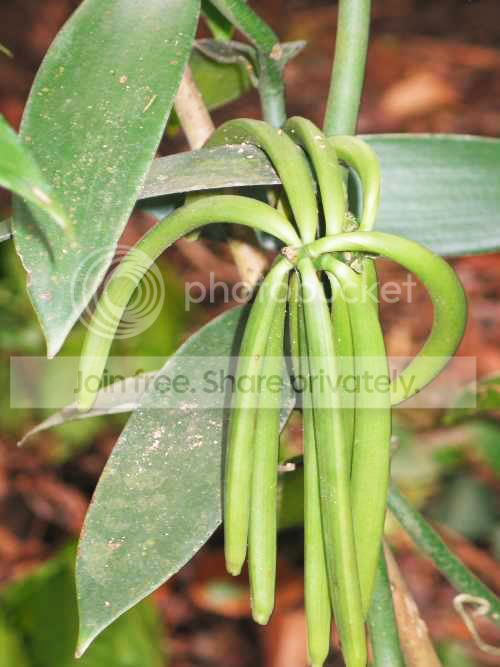
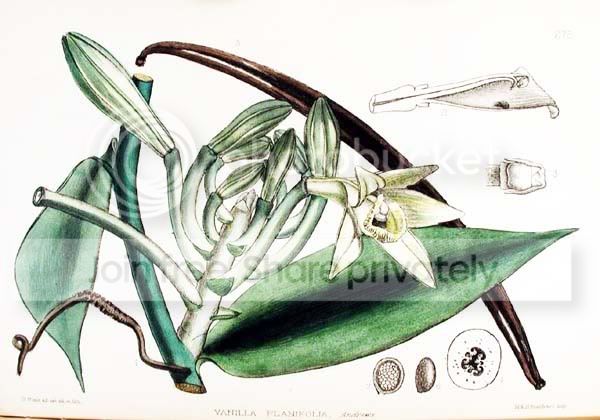
History: (Directly quoted from Wikipedia.org) "The first to cultivate vanilla were the Totonac people, who inhabit the Mazantla Valley on the Gulf Coast of Mexico near present-day Vera Cruz. According to Totonaca mythology, the tropical orchid was born when Princess Xanat, forbidden by her father from marrying a mortal, fled to the forest with her lover. The lovers were captured and beheaded. Where their blood touched the ground, the vine of the tropical orchid grew.
"In the fifteenth century, Aztecs from the central highlands of Mexico conquered the Totonac, and the conquerors soon developed a taste for the vanilla bean. They named the bean tlilxochitl, or "black flower", after the mature bean, which shrivels and turns black shortly after it is picked. Whereas most tribes paid tribute to the Aztecs in the form of maize or gold, the Totonaca sent vanilla beans to the Aztec kings.
"Vanilla was completely unknown in the Old World before Columbus. Spanish explorers who arrived on the Gulf Coast of Mexico in the early sixteenth century gave vanilla its name. The Spanish and Portuguese sailors , explorers brought vanilla into Africa, Asia in the 16th century. They called it vainilla, or "little pod", The word vanilla entered the English language in the 1754, when the botanist Philip Miller wrote about the genus in his Gardener’s Dictionary.
"Until the mid-19th century, Mexico was the chief producer of vanilla. In 1819, however, French entrepreneurs shipped vanilla beans to the Réunion and Mauritius islands with the hope of producing vanilla there. After Edmond Albius, a 12-year-old slave from Réunion Island, discovered how to pollinate the flowers quickly by hand, the pods began to thrive. Soon the tropical orchids were sent from Réunion Island to the Comoros Islands and Madagascar along with instructions for pollinating them. By 1898, Madagascar, Réunion, and the Comoros Islands produced 200 metric tons of vanilla beans, about 80 percent of world production.
"The market price of vanilla rose dramatically in the late 1970s, due to a typhoon. Prices stayed stable at this level through the early 1980s despite the pressure of recently introduced Indonesian vanilla. In the mid-1980s, the cartel that had controlled vanilla prices and distribution since its creation in 1930 disbanded. Prices dropped 70 percent over the next few years, to nearly US$20 per kilo. This changed, due to typhoon Huddah, which struck early in the year 2000. The typhoon, political instability, and poor weather in the third year drove vanilla prices to an astonishing US$500 per kilo in 2004, bringing new countries into the vanilla industry. A good crop, coupled with decreased demand caused by the production of imitation vanilla, have pushed the market price down to the $40 per kilo range in the middle of 2005.
"Madagascar (mostly the fertile region of Sava) accounts for half of the global production of vanilla. Mexico, once the leading producer of natural vanilla with an annual 500 tons, produced only 10 tons of vanilla in 2006. An estimated 95% of “vanilla” products actually contain artificial vanillin, produced from lignin."
Miscellaneous Facts:
How Vanilla is Processed
"1. Harvest-The pods are harvested while green and immature. At this stage, they are odourless.
2. Killing-The vegetative tissue of the vanilla pod is killed to prevent further growing. The method of killing varies, but may be accomplished by sun killing, oven killing, hot water killing, killing by scratching, or killing by freezing.
3. Sweating-The pods are held for 7 to 10 days under hot (45º-65ºC or 115º-150ºF) and humid conditions; pods are often placed into fabric covered boxes immediately after boiling. This allows enzymes to process the compounds in the pods into vanillin and other compounds important to the final vanilla flavour.
4. Drying-To prevent rotting and to lock the aroma in the pods, the pods are dried. Often, pods are laid out in the sun during the mornings and returned to their boxes in the afternoons. When 25-30% of the pods' weight is moisture (as opposed to the 60-70% they began drying with) they have completed the curing process and will exhibit their fullest aromatic qualities.
5. Grading-Once fully cured, the vanilla is sorted by quality and graded." Wikipedia.org
"Artificial vanilla (containing vanillin and ethylvanillin) is acceptable to most tastes, and therefore the export of true vanilla may continue to decline, since the culture and manufacture of the quality product is expensive and relatively non-competitive. Moreover, its value as an exotic medicine is no longer accepted. Thus the role of the vanilla bean has declined in significance, with over 95% of the world’s supply of vanilla flavor being synthetic." Medical Spices Exhibit
Uses: "Today, it may fulfill its latter function when used in high quality baked goods, confectionary and desserts, although most users regard it more prosaically as a delicious flavor that may help digestion. Vanilla is used to flavor tobacco and as a fragrance in the cosmetic industry. It is of interest that sensitive workers in the vanilla industry may develop vanillism, resulting in headaches and skin rashes." Medicinal Spices Exhibit
Sources:
Wikipedia.org
Medicinal Spices Exhibit
|
|
|
|
|
|
|
|
|
|
|
|
|
|
|
Posted: Sun Apr 06, 2008 10:57 am
Spice Profile 0003: SaffronScientific Name: Crocus sativus, L.Commonly Found: Spain, Austria, Italy, Greece, France, Iran, Kashmir 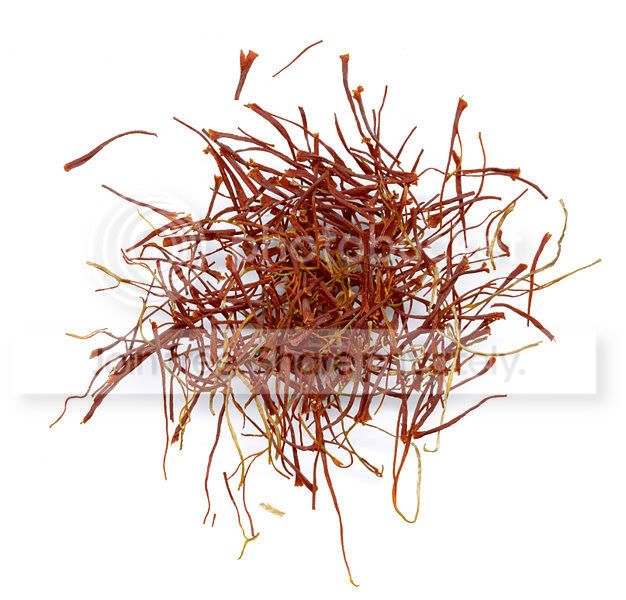 History: History: (Directly quoted from Wikipedia.org) "The history of saffron cultivation reaches back more than 3,000 years.[9] The wild precursor of domesticated saffron crocus was Crocus cartwrightianus. Human cultivators bred wild specimens by selecting for unusually long stigmas. Thus, a sterile mutant form of C. cartwrightianus, C. sativus, emerged in late Bronze Age Crete. Experts believe saffron was first documented in a 7th century BC Assyrian botanical reference compiled under Ashurbanipal. Since then, documentation of saffron's use over the span of 4,000 years in the treatment of some 90 illnesses has been uncovered. Saffron has been used as a spice and medicine in the Mediterranean region since then, with usage and cultivation slowly spreading to other parts of Eurasia as well as North Africa and North America." Saffron's History in the Mediterranean: (still from Wikipedia)"Minoans portrayed saffron in their palace frescoes by 1500–1600 BC, showing saffron's use as a therapeutic drug. Later, Greek legends told of sea voyages to Cilicia. There, adventurers hoped to procure what they believed was the world's most valuable saffron. Another legend tells of Crocus and Smilax, whereby Crocus is bewitched and transformed into the original saffron crocus. Ancient Mediterranean peoples—including perfumers in Egypt, physicians in Gaza, townspeople in Rhodes, and the Greek hetaerae courtesans—used saffron in their perfumes, ointments, potpourris, mascaras, divine offerings, and medical treatments." Saffron's History in Asia: (from wikipedia)"Saffron-based pigments have been found in 50,000 year-old depictions of prehistoric beasts in what is today Iraq. Later, the Sumerians used wild-growing saffron in their remedies and magical potions. Saffron was thus an article of long-distance trade before the Minoan palace culture's 2nd millennium BC peak. Saffron was also honored in the Hebrew Song of Solomon. Ancient Persians cultivated Persian saffron ( Crocus sativus 'Hausknechtii') in Derbena, Isfahan, and Khorasan by the 10th century BC. At such sites, saffron threads were woven into textiles, ritually offered to divinities, and used in dyes, perfumes, medicines, and body washes. Thus, saffron threads would be scattered across beds and mixed into hot teas as a curative for bouts of melancholy. Non-Persians also feared the Persians' usage of saffron as a drugging agent and aphrodisiac. During his Asian campaigns, Alexander the Great used Persian saffron in his infusions, rice, and baths as a curative for battle wounds. Alexander's troops mimicked the practice and brought saffron-bathing back to Greece." Saffron's History in Europe: (from wikipedia)"During the 14th century Black Death, demand for saffron-based medicine skyrocketed, and much saffron had to be imported via Venetian and Genoan ships from southern and Mediterranean lands such as Rhodes. The theft of one such shipment by noblemen sparked the fourteen-week long "Saffron War". Cultivation and trade then spread to Nuremberg, where epidemic levels of saffron adulteration brought on the Safranschou code, under which saffron adulterers were fined, imprisoned, and executed. Soon after, saffron cultivation spread throughout England, especially Norfolk and Suffolk. The Essex town of Saffron Walden, named for its new specialty crop, emerged as England's prime saffron growing and trading center." Miscellaneous Facts:"Iran ranks first in the world production of saffron, with more than 81 percent of the world yield." Wikipedia.org"A pound of dry saffron (0.45 kg) requires 50,000–75,000 flowers, the equivalent of a football field's area of cultivation." Wikipedia.org"Saffron prices at wholesale and retail rates range from US$500/pound to US$5,000/pound (US$1100–US$11,000 per kilogram)—equivalent to £250/€350 per pound or £5,500/€7,500 per kilo." Wikipedia.org"Saffron types are graded by quality according to laboratory measurements of such characteristics as crocin (colour), picrocrocin (taste), and safranal (fragrance) content." Wikipedia.orgUses: "Saffron is widely used in Iranian (Persian), Arab, Central Asian, European, Indian,Turkish, Moroccan and Cornish cuisines." Wikipedia.org"Currently some herbalists claim it has anti-cancer and other remarkable properties, but there is no evidence to support such beliefs." Medicinal Spices ExhibitSources: Wikipedia.orgMedicinal Spices Exhibit
|
|
|
|
|
|
|
|
|
|
|
|
|
|
|
|
|
|
|