First Year's, as aforementioned, is located in the East Hall.
Part of Marie Laveau's contract with her distanced daughter was a marriage between ancient traditional Western and African thought.
The dormitory system follows the Grecian principles of rhetoric, and divides it's students into three houses; Ethos, Pathos, and Logos. Each house represents a certain set of ideals and way of thinking that determine which house a student, at their second year, will arrive in. As a salute to her ancestor's wishes, Renee chose the house mascots according to voodoo tradition; the brave and loyal Cockerel for Ethos, the lucky and insolent black cat for Pathos, and the calm and wise serpent for Logos. This strange marriage of cultural tradition from two distinct parts of the world is one of the many unique appeals of the school.
Below are brief descriptions of the houses, as well as their colors and mascots.
ETHOS-"Ethos (plurals: ethe, ethea) is a Greek word originally meaning "accustomed place" (as in ??ea ?pp?? "the habitat of horses", Il. 6.511) "custom, habit" that can be translated into English in different ways. Some possibilities are 'starting point', 'to appear', 'disposition' and from there, 'character'."-Wikipedia
The Ethos house is located to the far right chamber behind the main campus, marked by the red and white painted entrance. It's symbol is a cockerel, a theme presenting itself on the building, from the fire-breathing Albanian flock that calls it's cavern home, to the many sconces and decorative paintings done on the cave walls. The building itself is tall, white, and fairly modern in appearance, and has three stories- the first floor being the study hall and breakfast area (the school only dines together at lunch and dinner). The second being the recreation, living, and meeting hall (this is also where the house's quidditch and quadpot team meet), and the top floor housing the girls and boys dormitories and toiletry facilities.
The head of House is Mary Adams, a rather tall and broad shouldered woman and owner of the fierce and rare fire-breathing hens, whose constant companion is the rooster Oliver.
Colors: red and white
mascot: cockerel
PATHOS-"is one of the three modes of persuasion in rhetoric (along with ethos and logos). Pathos appeals to the audience's emotions. It is a part of Aristotle's philosophies in rhetoric.
Lit. - passion." -Wikipedia
Pathos house is a located in the centermost chamber behind the school, beneath shade of a few of the stately oaks. The glowing moss hanging from the trees illuminates the spot where the house is, so it wouldn't be completely lost in the darkness. The dorm is surrounded by an ancient looking wrought-iron fence. The house is white itself, but it has deep purple trimming. The inside of the house is furnished nicely with the house's colors, black and purple. The furniture consists of period peices made to look like those they had in plantation times. So it won't be too dark, the house has lavender colored curtains and drapery, as anything darker would just be too depressing. The layout is pretty much the same as every other house. However, there is a nifty fun porch with wicker tables and chairs and a few rocking chairs for students to sit at to enjoy the view. The house also has a living mascot. Jerome Renaud owns a black cat named Jonquil that he lets roam around the school grounds, however, it mostly keeps to Pathos House, liking to sneak underneath the porch, only to jump out and attempt to scare the students as they go off to wherever they go. Also, each bed has mosquito netting instead of curtains, because, even though there are no mosquitos, it just kind of fits with the mood of the house.
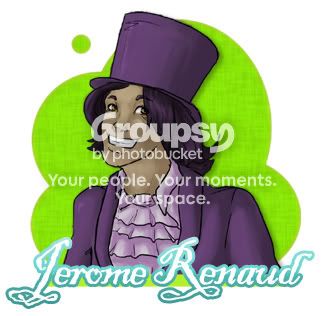
The head of Pathos House is Jerome Renaud. He is tall, dark, and devastatingly handsome. He wears stylish purple robes and has a soft spot for big, fancy hats and sleek,stylish walking canes. Has his hair done in the bohemian fashion of the victorian times.
colors: purple and black
mascot: black cat
head: Jerome Renaud and he will wear purple robes and have a fancy hat and cane and be generally fabulous

LOGOS-"Logos is an important term in philosophy, analytical psychology, rhetoric and religion.
Its semantic field extends beyond "word" to notions such as "thought, speech, account, meaning, reason, proportion, principle, standard", or "logic". In English, the word is the root of "log" (as in record), of "logic," and of the "-ology" suffix (e.g., geology)." -Wikipedia
colors: grey and blue
mascot: snake
In the center of the garden resides the moss covered Logos house. The building itself is an almost white-grey color with brilliant blue trim. Though the foundation is cracked somewhat with age it is perfectly safe and protected by many enchantments. The cracks and various plant life covering it only gives the house character and a sense of antique beauty. The inside is made up of plush couches and chairs, perfect for extensive readers who have trouble getting comfortable, with well polished silvery grey wood legs and frames. The delicate detail even extends to the wooden craftsmanship of the borders on the walls. They take the shape of fine blue and grey scales running along the walls only to end in a head or a tail in various corners of the house. If there was one thing the Logos house takes pride in it is the collection of bookshelves embedded into the walls filled from floor to ceiling with any reading material imaginable; be it for school or for fun. However, the books like to move around so there is no real system of organization. A summoning spell or the enchanted ladder that glides along the shelf are the only ways of reaching the higher books.
While there are few other rooms for breakfast and dormitories, there is one very mysterious room that is often overlooked and hard to find most students find entertaining. The Riddle Room can be found by pulling a certain book on the shelf (hard to find since the books move so often) and a small space in the wall opens just large enough for one person to slip through at a time. It is a rather small room containing a table, rug, chairs, various trinkets, wizard chess board, ect. The only problem is, the room is completely upside-down. The only way of being able to properly walk on the ceiling, without the danger of all the blood running to your head, is to yell out the answer to the riddle carved on the floor (or rather, the ceiling) and then attempt walking up the wall once you think you are correct. If you succeed, you should walk up as normal. If you fail, you’ll end up with a nasty fall and a will to study a little harder since the riddle changes each day. It’s a great hangout for upper classmen to get away from some of the newer and perhaps more annoying students.
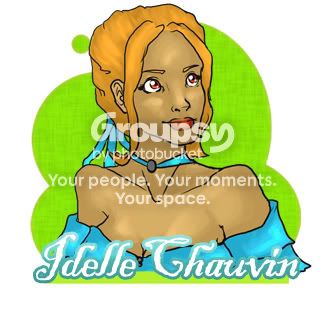
The head of house is Potions teacher Idelle Chauvin. Though she comes off as very strict and unpleasant she has a big heart and is very fond and protective of her house students. She is a stickler for manners and was raised in a very proper southern family.

Firstly, all students will be custom, with the exception of race. Rare/unique species will normally be obtained through
auctions only, and can be obtained otherwise by my discretion. Otherwise, you may aquire a human student from a flatsale, contest, auction; whatever, but it will be yours in looks and everything else you desire within reason.
Secondly, you also get to set your student's stats. We'll be using the D&D system for that (because it's easy and relatively painless). What thismeans is that your students have the following ability scores:
Abilites
Strength (STR)- How strong your character is. Pretty straightforward. In a duel it may seem useless as your wand skills are generally more important, but in other situations it can be a handy tool (HINT HINT QUIDDITCH PEOPLE).
Dexterity (DEX) How fast your characte's reflexes are. This will be used to determine wether or not you, say, dodge a spell. Or a bludger.
Constitution (CON)- How healthy/fortuitous your character is. This number represents your hit points and your ability to withstand physical truama (such as extreme cold. OR bludgers.)
Intelligence (INT) how much smartz your char be. Also affects your spell success rate and the number of spells your character can learn per level.
Wisdom (WIS) - How wise you is. This will essentially determine the rate at which your character gains experience.
Charisma (CHA) - How much people like you. It really helps when you're trying to sweet talk your way out of a situation. Doesn't help much against a bludger.
For the record, average for a human adult is 10.
This means that if you leave a stat at 8, you will recieve a penalty to all actions related to that stat.
Penalties, you ask? But what about bonuses? I'M GLAD YOU MENTIONED THAT.
Characters recieve a +1 bonus for every 2 points over 10 points to all actions involving that stat.
Following that logic, a 12 gives you +1, a 14 gives you +2, a 16 gives you +3, and an 18 gives you a whopping +4. This is just so you don't run around giving yourself odd-numbered stats; it doesn't really do you any good. : P
Those characters whose races are other than human will have adjusted base stats.
Now, how do you change your base stats, you ask? Through a magical process called...
THE POINT BUY SYSTEM
Your character will being with a score of
EIGHT (that's 8 ) in every stat. To raise that stat, you have to spend points.
Each character is given
24 points to start off with (I may lower this later, I'm not sure). Below is a table with the point cost of each ability score, which has a maximum at level one of 18.
ABILITY SCORE/COST
8/0 This is your base stat level.
(From this point on, it costs +1 to increase one ability level.)
9/1
10/2
11/3
12/4
13/5
14/6
(From this point on, it costs +2 to increase one ability level.)
15/8
16/10
(from this point on, it costs +3 to increase one ability level.)
17/13
18/16
Confusing? Let me explain.
Sample
Let's say I want to create a student named Maxine. Now, Maxine isn't a very smart girl, but she's strong and fast. I know I don't want to leave any of my stats at 8, because that is below average and causes penalties.
So what I begin with is this.
MAXINE
STR 8
DEX 8
CON 8
INT 8
WIS 8
CHA 8
Points: 24
Now, I know Maxine is strong, but she's also a girl, so she can't be
too strong, otherwise she'd be kind of scary. So I want to give her a nice round score of 14. If I look at the chart, 14 costs 6 points.
Wow, I think to myself. A +2 bonus to all actions involving that stat, and it only costs 6 points? I decide to give myself a 14 in Constitution (CON) and Dexterity (DEX) as well.
Now Maxine looks like this.
MAXINE
STR 14
DEX 14
CON 14
INT 8
WIS 8
CHA 8
Points: 6
With those six points, I decide to fill out the rest of Maxine's stats, so that she doesn't incur any penalties for having an abnormally low ability score.
The final result is this:
MAXINE
STR 14
DEX 14
CON 14
INT 10
WIS 10
CHA 10
Points: 0
There you have it. A nicely rounded out (albeit fairly physical) character, through a (mostly) painless stat system.
If that doesn't make sense, I can explain it to you personally. XD
On to the next topic.
I haven't fully fleshed this out, but your characters will advance in two ways.
1.) By learning spells through completeing 'homework' roleplay (there will be a limit to how many you can complete each week).
Your character will learn spells and abilities through your completion of homework roleplays that the staff members will write and make avaliable to you at all times. Harder spells/abilities will require more than one roleplay. These may be group or private, and the type will be specified in the prompt.
Some of these will be real 'homework' pieces, while others will be considered 'in class' roleplay that must be completed under the teacher's supervision.
You may only complete quests for classes in which you are currently enrolled, and you may only be credited for those of which you have the appropriate materials. Also, some quests may require prequisties, ranging from completion of prior quests (either a certain quest or simply having completed x amount of quests) to a level/stat requirement.
Items such as books and other materials will be discussed in the item section a bit further down.
Enrollment info: You must complete at least 1 roleplay a month for any classes in which you are currently enrolled. If you fail to do so, you have to wait for staff approval to re-enroll in a class, and you may be given remedial homework assignments.
Abilities include everything from riding a broom to learning how to calm an angry basilisk. Spells should be pretty straightforward.
These spells and abilities will be very useful in the next form of character advancement, which are...
2.) QUESTS. This is how your character gains experience points, extra galleons, and maybe even a nice item or two. The more experience points you get, the closer you get to leveling.
When you gain a level you gain
NEW ARTS!!!, as well as bonuses based on what skills you utilized most when attaining the experience. You will be asked to submit (probably in a special area of the guild) the roleplays that led up to your leveling and their experience value. A staff member will determine your stat award.
Some quests are private, some are group, some are supervised and some will be metaplot free-for-all events. An experience point value, as well as a treasure/reward rating will be given for each quest.
More information about treasure ratings can be found NEXT~
Each starting character will be given a yet-to-be-decided amount of galleons to spend on school supplies, et cetera. New Orleans is a fairly magical place, and the school keeps a list of the current costs of all practical non-treasure items.
You must posess the complete supply list to get credit for any homework assignment.
That being said, items will probably be listed by class to save you time. To purchase an item, let a staff member know and we will add it to your inventory and deduct the appropriate galleon amount.
TREASURE RATINGS: I haven't decided on pricing, but Treasure ratings will be from 1-5, 1 being lowest and 5 being the best. The higher the treasure rating, the better rewards you stand to gain from that quest.