|
|
|
|
|
|
|

MASH HACKELVOSH Vice Captain
|
 Posted: Sat Jul 18, 2009 10:17 pm Posted: Sat Jul 18, 2009 10:17 pm
Subject: 2 - How To Look
One of the questions asked is, "What is the best art?" or
sometimes its modified form, "I wanna kick butt and don't want fancy-moves
stuff, what art should I choose?" Well, the answer is, "We don't know."
There's much debate over what exactly is the "best art" or what is an
"effective art." It comes down to a lot of questions such as, "Best for
what?" and "Best for you or best for me?" In the end, it's a question
you're going to have to answer for yourself through personal exploration
and hard work. Since you're looking for a Martial Art to start, you should
look for the ones that are available to you. Simply put; it doesn't matter
if it's the ultimate kick-butt art, if you can't find a school near enough
to take classes at. With that thought in mind, you should look to see what
schools are available in your area and make your selection from those. If
you are looking for a specific art, you are still restricted to what's in
your area, so go ahead and look anyway. I guess the best art is mixing it up, take what's important and throw what's not.... Coz that's what I do in real life.

|
|
|
|
|
|
|
|
|
|
|
|
|
|
|
Posted: Sat Jul 18, 2009 10:27 pm
Subject: 3 - Rank
One of the most misunderstood things about martial arts is rank. Different
people in the martial arts world have different feelings about the use of
ranking in the martial arts. Some feel it is all important, some that it
is of no import whatsoever, and others that it is a valuable tool not to be
given too much weight outside of its limited context. What you should know
is that most martial arts have a ranking system but many do not and that
rank within one system does not equate to skill within another system even
though the systems may be similar. Just because you know how to drive a
car doesn't mean you know how to operate a back hoe.
The most common ranking systems are the Japanese and the Korean systems.
The Japanese systems start with sub-"Black Belt" or Kyu ranks and work from
highest to lowest as skill increases, typically from 10th Kyu up to 1st Kyu
and then "Black Belt" or Dan rankings, from 1st Dan and going up to 9th
Dan. 9th Dan is typically reserved for the (one) highest ranking
instructor of the art, usually in Japan.
The Korean system works much the same way, simply substitute "Gup" for
"Kyu."
You should also know that some Occidental systems have a rank system, but,
when they do, they usually do not follow the 10th-1st sub-black belt then
1st Dan-9th Dan ranking that Asian systems do. Frequently Occidental
systems will rank a practitioner by number of wins in competition or a
combination of skill level rankings and competition wins. Savate schools
will typically operate in this manner. Other Occidental arts use an
archaic ranking system that includes 4 or 5 ranks starting with "Scolaire"
(Scholar) and culminating with "Maestro" (Master).
Be aware that the color of a belt as a rank in one system does not
translate to the same rank in another system. A "Green Belt" in one system
is usually not the same rank as a "Green Belt" in another system. The same
goes for Kyu/Gup ranks. As stated earlier, a Kyu/Gup rank in one system
does not equate to the same skill as an equally numbered Kyu/Gup rank in
another system. Simply put, you can not compare a 5th Kyu in "Karate" with
a 5th Gup in "Taekwondo" and they probably wear different colored belts.
At this point, it should go without saying that a "Black Belt" in one
system isn't really comparable with a "Black Belt" in any other system. It
only represents a certain level of skill obtained within _that_ system;
exactly what skill level that represents is entirely up to the instructors
who define _that_ system.
Again, don't be overly concerned with the rank of the instructor. You
likely will be unable to differentiate between a 3rd Degree Black Belt and
a 9th Degree Black Belt for many years. Further, it is held by many in the
martial arts world that you can learn a lesson from anyone, even the
lowliest practitioner. Learn the lessons that the instructor has to offer.
A final word of warning on the rank of the instructor. Beware claims of
inflated or high rank. It is not unheard of for a martial artist to break
away from his parent organization or instructor and award himself "9th Dan"
and "create" his own art. More then one instructor has made the leap for
3rd Dan to 9th Dan in this way with no real increase in his skill or
teaching ability. Further, some organizations have been known to grant
additional rank to instructors for "services to the art" such as opening a
school in an area previously unreached by that art or for some other notable
promotion of the art.
Beware any school where the instructor seems uneasy about you talking to
the students without the instructor standing right there. It's also not a
good sign if the instructor seems nervous, self-conscious, or hostile,
about you watching him/her teach, or if the students themselves seem
fearful or nervous around the instructor.
Finally, the natural question asked is, "How fast?" ...How soon will you
get your coveted Black Belt? How long before you can "defend" yourself?
How much time before you can kill everyone in your neighborhood without
breaking a sweat?
...We don't know...
Or rather, to be more precise, it depends. Each statement is a different
goal, though they all seem to be related. Again, a "Black Belt" means
different things to different martial arts systems. To some it means
"you've got the basics and are now ready for a little bit of a challenge."
To others, "You are competent in the system enough to be let out without a
chaperone." To others still, "you know enough to be able to defend against
the unskilled or moderately skilled." And to others yet, "you're an
'expert' in the same way that a new trade skill grad is an 'expert' but not
the same as a 20 years experience 'expert'." Remember, "Black Belt" is only
meaningful within the context of the system you're studying. That being
said, it is not unreasonable to expect that, with modest effort, the
coveted "Black Belt" may be achieved within 4 to 7 years of practice. Many
systems track, even require minimums of training or "mat" time between
promotions. It is thought to be more meaningful to talk of the number of hours
spent "on the mat" (ie, training), than to speak of the "number of years."
Simply put, if Seth spends 2 hours a day, twice a week, training to achieve
"Black Belt", and Naomi spends 4 hours a day, 5 days a week, then d**k
is going to sweat for five long years to rack up 1040 total hours of
training, but Naomi will have done that by the end of her first year.
As to the issue of being able to "defend yourself," that all depends upon
the skill level of the person or persons attacking you, your skill level,
weapons involved, and a myriad of other variables. The stories of students
with one class under their belts defending themselves are true, likewise
the stories of "Black Belts" being beaten up. There are just so many
variables involved that the question is near meaningless. However, the
more diligently you train and the more time you put into your training, the
more likely that, if the unhappy time ever comes, you will be able to
successfully "defend" yourself.
V V V V V V V V V V V V The BEST MARTIAL ARTIST V V V V V V V V V V
 "Don't try him at home" ^_^ "Don't try him at home" ^_^
|
|
|
|
|
|
MASH HACKELVOSH Vice Captain
|
|
|
|
|
|
|
|
|
|
MASH HACKELVOSH Vice Captain
|
Posted: Sat Jul 18, 2009 10:45 pm
What are you looking for in a Martial Art? If you know what you want out
of it, you'll have a better idea of what "kind" of art to look for.
Typical answers include:
Better Physical Fitness
Street Useful Self Defense
Sport Competition
Striking Techniques (Punching/Kicking)
Joint Lock Techniques
Grappling Techniques (some similarities to wrestling)
Pressure Point Techniques
Traditional/Oriental Weapons
Street/Common Weapons
Mental & Emotional/Spiritual Development
Attractiveness/Fluidity of Movements (this is very subjective)
Traditional "Feel"
Speed of Advancement/Ease of Learning Techniques
Brief Descriptions of these:
Better Physical Fitness:
Some people's primary motivation in a Martial Art (MA) is improving their
Physical Fitness. To them, if they can learn a MA while getting fit, so
much the better.
Street Useful Self Defense:
A primary motivation for many is the ability to truly be able to defend
themselves in a street confrontation against typical street techniques and
weapons.
Sport Competition:
Many arts contain a greater or lesser degree of competition and some will
encourage their students to compete in local and national MA sporting
events in competition restricted to that particular MA and in various open
competitions. Awards and medals are sometimes given. Arts that emphasize
competition too much are thought by some to sacrifice some of the self
defense value to ingrained competition safeties. Arts that are well known
for their sport value include Tae Kwon Do (TKD), Judo and Kendo.
Striking Techniques:
This is more a facet of a MA and typically describes punching and kicking
techniques. Some arts emphasize this to a greater or lesser degree with
some focusing on it almost to the exclusion of all other techniques and
with some teaching nearly none of it. Arts that are well known for their
striking techniques include most Korean arts like Tang Soo Do and Tae Kwon
Do, and Okinawan/Japanese Karate.
Joint Lock Techniques:
This is more a facet of a MA and typically describes techniques that lock,
restrict, manipulate, or sometimes break and dislocate the joints of the
aggressor. Some arts emphasize this, to a greater or lesser degree, with
some focusing on it almost to the exclusion of all other techniques and
with some teaching nearly none of it. In arts that teach a variety of
other techniques, joint lock techniques are typically thought of as an
"advanced" teaching and are typically reserved for higher ranks. Arts that
are well known for their joint lock techniques include Aikido, Pencak
Silat, and Japanese Jui Jitsu (such as Aikijitsu and others).
Grappling Techniques:
This is more a facet of a MA and typically describes techniques that are
similar to wresting in many ways and include throws and groundfighting
techniques (what to do when one or more combatants are at least partially
on the ground and not standing). Some arts emphasize this to a greater or
lesser degree with some focusing on it almost to the exclusion of all other
techniques and with some teaching nearly none of it. Arts that are well
known for their Grappling/Groundfighting are Judo, Brazilian Jui Jitsu, and
some other types of Jui Jitsu.
Pressure Point Techniques:
This is more a facet of a MA and typically describes techniques that
manipulate pressure points on the human body. These "points" can in some
cases cause a great deal of pain and some practitioner say that Pressure
Point manipulation can slow down the aggressor, cause limbs to go numb,
stun or even kill an aggressor outright (though this is an extremely
advanced technique not taught to everyone and is still open to controversy
in the MA and Medical world). Some arts emphasize this to a greater or
lesser degree with some focusing on it almost to the exclusion of all other
techniques and with some teaching nearly none of it. Arts that are well
known for their Pressure Point techniques include some types of Kung Fu
(there are over 50 well know Kung Fu forms), and some types of Jui Jitsu.
Traditional/Oriental Weapons:
This is more a facet of a MA and typically describes techniques with
weapons not considered to be militarily effective, or street convenient by
today's standards. These weapons would include sword, spear, bow, and
staff. Some arts emphasize this to a greater or lesser degree with some
focusing on it almost to the exclusion of all other techniques and with
some teaching nearly none of it. Arts that are well known for their
Traditional/Oriental Weapons techniques include many forms of Kung Fu, many
Okinawan Karate forms, and some Japanese forms such as Kendo, Kenjutsu, and
Iaido.
Street/Common Weapons:
This is more a facet of a MA and typically describes techniques with
weapons considered to still be militarily effective, or street convenient
by today's standards. These weapons would include knife, club,
cane/half-staff. Some arts emphasize this to a greater or lesser degree
with some focusing on it almost to the exclusion of all other techniques
and with some teaching nearly none of it. Arts that are well known for
their Street/Common Weapons techniques include many forms of Kung Fu, many
Okinawan Karate forms, and some Japanese forms, and especially Indonesian
forms such as Pencak Silat, and Philippines forms such as Kali, Arnis, and
Escrima.
Mental & Emotional/Spiritual Development:
This is often considered a strong benefit of taking MA's. Many instructors
advertise their MA directly to parents as a way of increasing children's
Self Confidence, Socialization Skills, and Personal Well Being. Spiritual
development is a strong component of many but not all MA's. The Japanese
word "Do" (when applied to a MA) is considered to mean "way" or "path" to
Spiritual Enlightenment or personal understanding (Koreans arts ending in
"Do" have a similar meaning). In general, any Japanese art ending in Do
will have to a greater or lesser degree a Spiritual or Self Improvement
aspect, while Japanese arts ending in Jitsu are primarily concerned with
martial abilities and will have little or no concept of Spiritual
Enlightenment or Self Development, except as is important and added by the
instructor. This is largely dependent upon the instructor in any system.
Arts known for their emphasis on Spiritual Development include many forms
of Kung Fu, especially Shaolin Kung Fu, taiji and certain Japanese "Zen"
martial arts such as the Aikikai form of Aikido. (note: lots of
generalizations here)
Attractiveness/Fluidity of Movements:
This is one that's as hard to pin down as the Spiritual aspect. Suffice it
to say that some arts just look prettier than others. A master in most any
MA is going to have a fluidity and grace of movement, however that is not
always true of the students. As a gross generalization, typically,
"circular" arts will appear more fluid and graceful than "linear" arts. A
simplistic definition of circular vs. linear is that each variation tends
to have a greater emphasis on movements and techniques in its "category."
Thus circular arts will tend to have a lot of sweeping circular and rounded
movements, while linear arts will tend to move in more direct lines. Also
as a gross oversimplification, linear arts tend to be "hard" (direct and
force/impact oriented) while circular arts tend to be much more "soft"
(redirect and control oriented). One more gross oversimplification,
circular techniques tend to be more difficult to master than linear.
Striking arts tend to be more linear and Joint Lock & Grappling arts tend
to be more circular. Examples of largely circular arts are Aikido and
certain Kung Fu forms (Baguazhang / Pa Kua Chang). Examples of largely
linear arts include Tae Kwon Do and Karate. An example of a very exciting
and fluid art is Chinese Wu Shu.
Traditional "Feel":
This describes the feel of the "weight of tradition" that is attractive to
some Martial Artists. Some MA players like to feel like they are
participating in a tradition thousands of years old and readily accept
ancillary aspects of MA study such as bowing and foreign terminology. Most
MA's have an aspect of "tradition" to them, especially the Asian arts
(i.e., Chinese, Korean, Thai Lander, Japanese) and almost all MA's have a code
of etiquette to follow while in the training hall. Frequently there are
rituals involved, some with religious significance, some merely as a show of
respect for the founder or the instructor. Some MA's require a uniform and
some (such as Capoeira or Pencak Silat) may not, at the instructor's
discretion. In general, how "traditional" an art feels is almost entirely
dependent upon the local instructor. Any given art has instructors who
prefer an informal environment or a more formal one. Generally, the
further back the roots of the art stretch, the more instructors there are
that will prefer a formal or semi-formal environment though this is
anything but a hard rule. Further, societal origins will tend to have an
effect on the formality of the training environment. Japanese arts for
instance tend to be more formal in nature as the Japanese society has a
long standing history of formality in the minutia whereas arts that are
American in inception (there are a few) will tend to be very informal since
the American society is a largely informal society.
Speed of Advancement/Ease of Learning Techniques:
There are really two separate issues here, though many people equate them.
A common question is "how long must I study before I know the art?" or
alternately "how long must I study before I get a Black Belt?" Whereas,
another common question is "how long must I study before I can defend
myself?" The nature of these two questions is different. Most people
equate Black Belt with having achieved Martial Arts godhood. This couldn't
be further from the truth. The actuality is, typically, Black Belt (or
First Dan) is where a student is finally gaining a base level of competency
and understanding in his art. One description that I recently read was to
think of a Black Belt as if it were a Bachelors degree from college. It is
an expert level, but not a Doctorate level, or even a Master's Degree.
Those are more typically associated with higher Dan ranks. This is an apt
description since in most reputable MA's, it should take between 3 and 5
years practice to be awarded a Black Belt. It is not unheard of for a
reputable school to produce an occasional black belt in 2 to 3 years,
however, this person is either unusually dedicated and practices on a
nearly daily basis or is a Martial Arts Prodigy. Any school that promises
you a Black Belt in under 3 years or routinely produces Black Belts in 2
years is what's sometimes referred to as a "Black Belt Factory" or a school
that "Sells Black Belts" And should be avoided. That being said,
the question still remains "how long must I study before I can defend
myself?" If home defense is your only goal, buy a gun and learn to safely
use it. You can become proficient in the safe use of firearms in a far shorter
time than a MA, and firearms are typically much more effective. Why do
you think the Military uses them? Or perhaps you should buy a dog.
Statistics show that less than 5% of homes that own _any_ sort of dog will
_ever_ be burglarized (this includes those hairless rat-dogs the
Chihuahua). If this is not an alternative for you or if you are also
concerned about protecting yourself where you can not, for various reasons,
take your gun or your dog, then perhaps a MA is for you. How much study it
takes for you to become effective at defending yourself is a component of
many different things, including the art its self, your aptitude at
learning it, and the abilities of the person attacking you. The stories of
Black Belts being beat up by untrained drunks are true. And also, the
stories of new students using the MA to successfully defend themselves
against rapists and murderers are also true. Whatever the case for your
aptitude, the more effort and practice you put into learning your chosen
MA, the better you will be at defending yourself and your family.
|
|
|
|
|
|
|
|
|
|
|
|
|
|
|
Posted: Sat Jul 18, 2009 11:25 pm
Muai Thai:
Muay Thai is the popular Thai kickboxing and is a mixture of several techniques employed in the rest of the forms of martial arts. Most of the times it is termed as the “science of 8 limbs” simply because almost all parts of the body are employed during the fight. The forehead, the fists, elbows, knees, and feet are often used as the weapons. It has been around for more than 2000 years and is basically regarded as the oldest variant of martial arts. Muay Thai was once called the martial art of the kings because of the fact that in 1914 the sons of the King Sen Muajng Ma fought until their death for the throne of their father.
Muay Thai fighters are expected to be strong and powerful since all the movements can really be energy-draining. Muay Thai training then enhances the fighter’s adaptability, strength, and stamina. More so, here are some very important techniques to learn.
 
The Thai Clinch. This Muay Thai technique is exclusively used for this martial art. The fighter holds the opponent through the head, body, or neck. He then presses his forearm on the collar bone of the opponent. The typical clinching technique applied in Muay Thai is the tapping of the head downward before releasing a throw. He can also cause the opponent to lose balance by throwing him to his left.
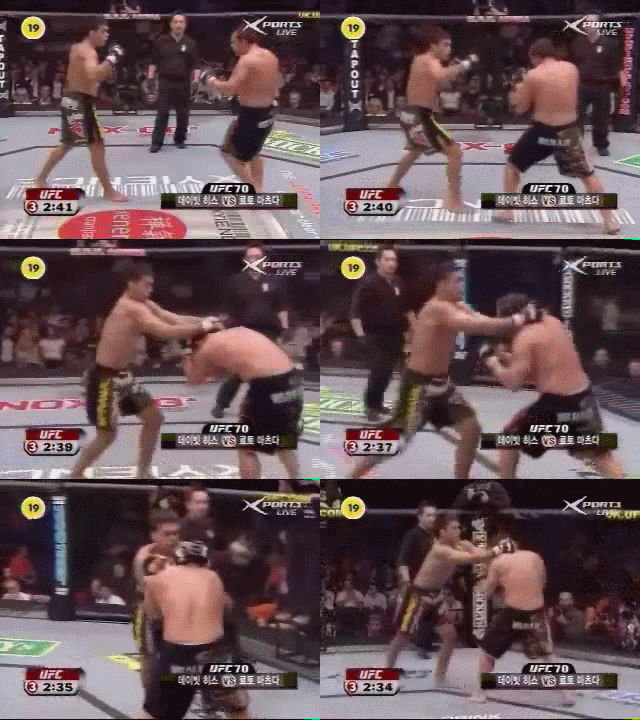 
The Kru. This one is a tedious technique to learn that calls for hard work during the training. This Muay Thai training technique requires the tradition that the fighter needs to respect his trainer by means of the Wai Kru ritual.
Some important elements employed for the Muay Thai training techniques are running, stretching, and shadow boxing. A Muay Thai fighter must have the “never say die” attitude at all cost.
The Techniques of Muay Thai
Muay Thai as a martial arts discipline makes use of the body parts for weapons. The parts of the body which are the head, elbow, fists, feet, and knee comprise the Na-wa arwud. However, in these days, Muay Thai fights no longer permit the fighter to use the head. In attacking and defending, the fighter employs a little quantity of grappling or that which is known as The Clinch.
The techniques of Muay Thai are divided into two categories—the Luk Mai or that which is known as the Minor techniques and the Mae Mai or the Major techniques. The very reason why Muay Thai is held to be distinct from the other variants of martial arts is because it utilizes the whole body movement while the hip can either be rotated fully or partially for every block, kick, and punch executed.
The PUNCHING techniques include the straight punch, swing, hook, upper cut, spinning back fist, cobra punch, upper cut, and the over head punch. Judges add less to the scores of the Muay Thai fighters who often use the punches as they are less powerful.
The ELBOW techniques are the elbow slash, upper cut elbow, horizontal elbow, forward elbow thrust, spinning elbow, reverse horizontal elbow, elbow chop, mid air elbow strike, and the double elbow chop.
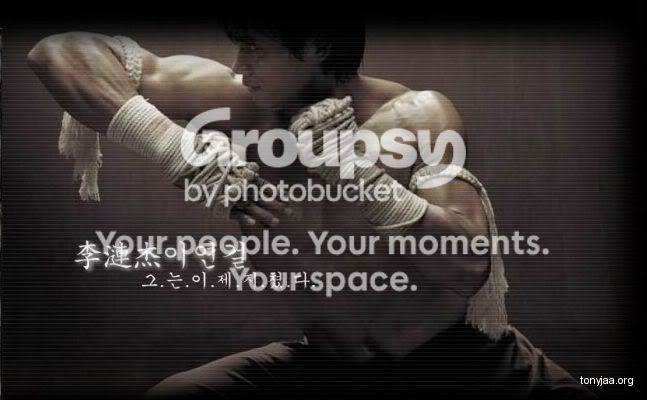
The KICKING techniques are the nutcracker kick, straight kick, diagonal kick, roundhouse kick, spinning kick, axe hill kick, half spin half knee kick, jump kick, and step up kick. The most commonly used though are the kick and the foot jab.
  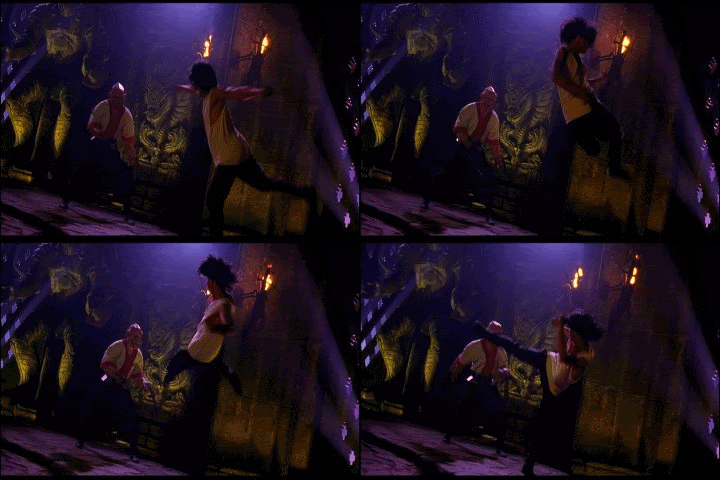 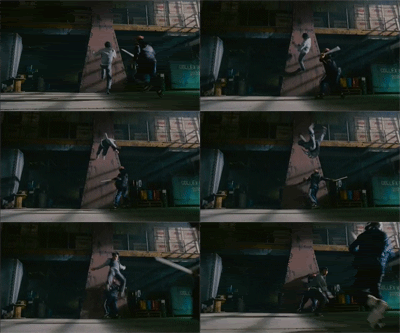  
The KNEE techniques include the straight knee strike, diagonal knee strike, horizontal knee strike, curving knee strike, knee slap, flying knee strike, step up knee strike, small knee strike, and the knee bomb.
   
Meanwhile the FOOT techniques are the sideways foot thrust, straight foot thrust, reverse foot thrust, slapping foot thrust, and the jumping foot thrust.
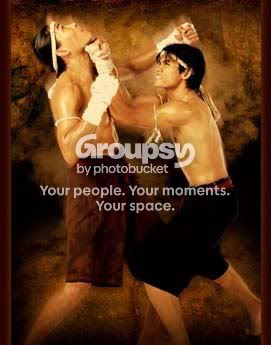
Muay Thai is one sport that requires a fighter’s adaptability, stamina, and strength.
|
|
|
|
|
|
MASH HACKELVOSH Vice Captain
|
|
|
|
|
|
|
|
|
|
MASH HACKELVOSH Vice Captain
|
Posted: Sat Jul 18, 2009 11:32 pm
HAND WRAPS
Why is it so important to wrap your hands before putting your boxing gloves on? Hand wraps, the second most important gear apart from gloves, are used to keep your hands and wrist safe.
In some type of boxing, only use hand wraps as the only protection, which is called “Bounded Fist Boxing”, but it is much more dangerous and deadly than any other types that use gloves. Why?
Hand wraps can helps shielding your bones and tendons, and holding your wrists and thumbs. Bounded Fist Boxing is dangerous enough. I don’t have to mention what it would be like, bare bones hitting someone’s face.
Good hand wraps should be made of good quality of elastic material that will shape your hands and also can let air through. Cotton made is recommended. The generally lengths are 120” and 170”.
Which one you need that would depend on the size of your hands and you boxing gloves. Smaller size might be available in some shops.
Nowadays there are many types, styles and colors of hand wraps you can choose.
 
Next we want to show you how to properly wrap your hands. Mark that improper use may cause more injury to your hands and wrists instead of protecting them.
Here is our step-by-step of how to wrap your hand. Remember that you can use any other methods out there that most suit you.
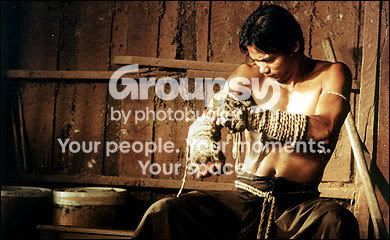
First hold your hand out, face it downward and soothingly stretch out your fingers. Start by placing the thumb loop around your thumb. Make sure which side is up and down, some wraps have “this side up” written on it. And do not twist the wrap during the whole process.
Then wrap it across the back of your hand and go around your wrist a couple times high enough to hold your wrist well. Do not wrap your hand too tight to blog your blood circulation.
After that, bring it transverse the back of your hand and go around your palm, and then around your knuckles a few times. From the knuckles, cross the back of your hand to wrap around your wrist again making “X”. Repeat the “X” a few more times.
From your wrist, now it’s time to start wrapping around each finger, starting with the thumb. Wrap around your thumb and go on top of the back of your hand again to your wrist and go around your wrist. Repeat that one more time before you do the same with the rest of the fingers in order. Index, middle, ring and pinky.
Then from your wrist, again wrap around your knuckles. Finish this by wrapping your wrist and fasten your wrap’s hook.
You can alternate the times you wrap in some steps above. It might seem hard for the first time, wrapping your hands also need practice.
Before we go, here are some last tips:
1.
Always feel comfortable with your wraps on. You must rewrap again, if it’s too tight or too loose.
2.
We suggest you to have at least 2 pairs of hand wraps so you will always have one when the other is being washed.
3.
If our instruction is not clear enough, you might want to follow your trainer for the first time step-by-step. Bear in mind that a proper use is really essential.
|
|
|
|
|
|
|
|
|
|
|
|
|
|
|
Posted: Sun Jul 19, 2009 12:10 am
*Rolls into Dojo unseen in my ninja gear*(masked so my identity is not known)
*sneaks up behind mash and gets him in a not so tight chokehold, as to play with him*
Guess who!
|
|
|
|
|
|
|
|
|
|
|
|
|
|
|
|
MASH HACKELVOSH Vice Captain
|
Posted: Sun Jul 19, 2009 12:27 am
x_KoalaRawr_x *Rolls into Dojo unseen in my ninja gear*(masked so my identity is not known)
*sneaks up behind mash and gets him in a not so tight chokehold, as to play with him*
Guess who! Oh!! what r u doing? please seat on the floor and listen while I'm teaching.. ^_^ *unlocked her hands easily and quickly* *gently throws her up ahead and catches her*
|
|
|
|
|
|
|
|
|
|
|
|
|
|
|
Posted: Sun Jul 19, 2009 12:32 am
*ninja gear comes off and shows my normal outfit revealing me.
Hi Mash.
Haha.
I got bored.
Haha.
So do you do Martial Arts for real?
|
|
|
|
|
|
|
|
|
|
|
|
|
|
|
|
MASH HACKELVOSH Vice Captain
|
Posted: Sun Jul 19, 2009 12:48 am
x_KoalaRawr_x *ninja gear comes off and shows my normal outfit revealing me.
Hi Mash.
Haha.
I got bored.
Haha.
So do you do Martial Arts for real? yes I do.. ^_^ why won't you read my profile.. so you'll know.. ^_^ I mean my gaia profile... ^_^
|
|
|
|
|
|
|
|
|
|
|
|
|
|
|
Posted: Sun Jul 19, 2009 12:50 am
Thats So Cool. ^-^
Ive been trying to get my mom to teach me for years.
But she keep procrastinating.
She went to the NBL Championship in DC and got 5th in the world for continuous sparring!!
I look at the plaque everyday and pretty much drool.
Haha.
^-^
|
|
|
|
|
|
|
|
|
|
|
|
|
|
|
|
MASH HACKELVOSH Vice Captain
|
Posted: Sun Jul 19, 2009 1:07 am
Well Class I hope you learned something from me...
Class Dismissed... ^_^
Ms. Raven.. Thank you for visiting my class... Though you are a teacher here.. ^_^* walks out* Goodbye Ms. Raven ^_^
|
|
|
|
|
|
|
|
|
|
|
|
|
|
|
Posted: Sun Jul 19, 2009 6:25 am
*bamboo sword comes flying and sticks against door frame next to mash*
*distantly said: oops! sorry!*
|
|
|
|
|
|
|
|
|
|
|
|
|
|
|
|
xXx AF-1-BB xXx Vice Captain
|
Posted: Sun Jul 19, 2009 12:43 pm
omg he write so much and i must read its just to tempting... i love to read but it better not be boring sides i think youteach your students to much brother -giggles- okay now i am off to my room
|
|
|
|
|
|
|
|
|
|
|
|
|
|
|
Posted: Sun Jul 19, 2009 11:15 pm
Arelia_AmaChocolata II-iLik Lik-II II-iLik Lik-II Arelia_AmaChocolata *walks in holding the wall* "hi guys" >.> -takes out my sword and jumps upon tree above her- "you!.....what do you want"  o.0 "uhmmm...it's the dojo...i came to practice what i can..." *looks at you strangely and taps sword to make it flip to my hand* "and i think you need to work on your grip." ;P *gives sword back and slowly walks past you* "i dont feel like fighting today either." *puts hand on forehead* "wat da f**...did she just touch my head"he said in his mind -slices tree and puts his sword in his case...clips it and it falls-
|
|
|
|
|
|
|
|
|
|
|
|
|
|
|
|
|
|
|