|
|
|
|
|
|
|
|
|
 Posted: Thu Mar 17, 2005 6:14 am Posted: Thu Mar 17, 2005 6:14 am
gah... I'm finally back whee
sorry for the silence, but there were stuff I had to get in order... sweatdrop anywayz, I'll keep on updating new stuff (though less frequently as I'd like coz classes have started and I'm now working as a freelance science writer 3nodding )
|
 |
|
|
|
|
|
|
|
|
|
|
|
|
|
Posted: Thu Mar 17, 2005 11:34 am
Welcome back snowe_lotus!!!
Glad to see you've sorted some things out!
|
|
|
|
|
|
Fashionable Conversationalist
|
|
|
|
|
|
|
|
|
|
|
|
Posted: Thu Mar 24, 2005 10:55 pm
I'll give a short lil' bio on Jaco, my idol. <3  Name: Name: John Francis Pastorius III a.k.a. "Jaco" Pastorius Instrument: Electric bass Style: "Punk jazz" as Jaco himself called it, not quite sure what he meant by that. Short introduction: Though Jaco's career only lasted for a short while, he made sure that he made a great name for himself before his time was up. He is regarded as one of the greatest bass players in the world, both by himself and by others. His style of play was a mix of R&B, Carribbean island, bebop, fusion, and many of others. Jaco's career started to really pick up while working with Pat Metheny in the 1970's on the album Bright Size Life. He went on to be recruited by Joseph Zawinul into the fusion band Weather Report. One of his most well-known pieces is "Birdland," in which Jaco plays a series of artificial harmonics to kick off the song. But Jaco had some serious mental problems. They really started to pick up when he got into Weather Report. His health never got better, but only worse. Jaco was well known later in his life, not for his great playing, but for his public displays. Picking fights in bars with the largest guy there was something Jaco later did quite often. After picking the fight, he would stand straight at attention and let the guy deck him to the floor. He would hang around with the homeless in the alleys and be found sleeping on a sidewalk by his colleagues. "Get up, man, what're you doing to yourself?" they would ask, but all they would get from Jaco is non-sense. Jaco ended up pushing away all of those people by his behavior. Finally in 1987, Jaco had crossed the line with his antics. Trying to get into a bar in Fort Lauderdale, Jaco got into a conflict witht he bouncer. The bouncer, being a martial arts master, severely beat Jaco, leaving him in a puddle of blood on the ground with a broken jaw, a concussion, one eye nearly beaten out of his head, and many other wounds. Jaco later died September 21, 1987. General impression(if any): The biggest reason that I love Jaco so much is his playing. It's phenominal. It always seems that he's able to bring the right touch in at the right place just when it's needed. His use of so many techniques also incites me to do the same, and not just follow one field of play. We're both double-jointed int he thumbs and Catholic. 3nodding It's really hard for me to describe him. I suggest you listen to him for yourself, maybe then you'll know what I'm gettin' at. Recommended recordings: Weather Report - Birdland Weather Report - A Remark You Made Jaco Pastorius - Continuum Jaco Pastorius - Amerika Jaco Pastorius - Donna Lee Pictures of the artist(s):   Source: Jaco: The World's Greatest Bass Player Source: Jaco: The World's Greatest Bass Player by Bill Milkowski is where I read all of this information. I suggest reading it if you want to find out more about Jaco. It costs 'bout $15.00 and is 160 pages or so. [PM me and tell me what you think about my little bio about Jaco if you would. Thanks. biggrin ]
|
|
|
|
|
|
|
|
|
|
|
|
|
|
|
Posted: Sat Mar 26, 2005 9:43 pm
we need a bari player, and how bout a less known one. besides mulligan pepperadams, ronnie cuber, and nick brignola. lets bring out good ol' serge chaloff Instrument: baritone sax Style: bop Short introduction: One of the great baritone saxophonists and the first major soloist on that instrument to emerge since Harry Carney (he preceded Gerry Mulligan), Serge Chaloff was a drug addict during his prime years, resulting in broken friendships and lost opportunities. After playing with the orchestras of Boyd Raeburn (1944-1945), Georgie Auld (1945-1946), and Jimmy Dorsey (1946-1947), he found fame as one of the "Four Brothers" with Woody Herman's Second Herd (1947-1949). After a stint with Count Basie's octet (1950), Chaloff returned to his native Boston, where he eventually worked on kicking his dangerous habit. Ironically, when he finally got off drugs, Chaloff contracted spinal paralysis and he played his final recording session (a reunion of the Four Brothers in 1957) seated in a wheelchair. Mosaic's 1993 limited-edition four-CD Serge Chaloff box set has all of his sessions as a leader, and his exciting solos still put him near the top of his field. General impression(if any): great person to listen to, swingin and all ' Recommended recordings/famous works: blue serge, boston blowup, and others http://www.allmusic.com/cg/amg.dll?p=amg&searchlink=SERGE|CHALOFF&uid=CAW010503270039&sql=11:tijxlffe5cqy~T0
|
|
|
|
|
|
|
|
|
|
|
|
|
|
|
|
|
|
Posted: Sat Mar 26, 2005 9:47 pm
one more. Name/Group name: harry carneyInstrument: bari sax Style: swing Short introduction: Although he was not the first jazz baritone saxophonist, Harry Carney achieved his goal of making the instrument "necessary" in a big band. His tone was huge and definitive, and his style mixed together Coleman Hawkins and Adrian Rollini; he was also one of the first jazz musicians to master circular breathing (which he generally used to hold an endlessly long note). Early on, he played piano, clarinet, and alto before deciding on baritone. Carney joined Duke Ellington's Orchestra when he was 17 in 1927, and remained for over 46 years, passing away in 1974 a few months after Ellington. Although he originally doubled on alto for Duke, added bass clarinet in later years, and traditionally took the clarinet solo on "Rockin' in Rhythm," he otherwise stuck exclusively to baritone. Other than two obscure record dates as a leader, Harry Carney can only be heard on Duke Ellington-associated recordings, but he has many short solos and his presence was always felt in the ensembles. General impression(if any): wonderful tone, strive to play like him in a bigband setting Recommended recordings/famous works: harry carney with strings, moods for girl and boy, and any other ellington band recordings http://www.allmusic.com/cg/amg.dll?p=amg&uid=MIW010503270044&sql=11:qvaxlf0e5cqu~T0
|
|
|
|
|
|
|
|
|
|
|
|
|
|
|
Posted: Thu Mar 31, 2005 5:44 pm
[ Message temporarily off-line ]
|
|
|
|
|
|
|
|
|
|
|
|
|
|
|
|
|
|
Posted: Mon Apr 04, 2005 6:49 am
((Sorry for the sudden absence again sweatdrop with school work piling up, I just can't find time to do stuff I really want crying ... but anyway... I'm back with another round of new profiles... this time... featuring Ladies in Jazz... xd sorry to those who don't like jazz vocals... sweatdrop
And I loves Jaco... heart his birdland is really something... whee ))
|
|
|
|
|
|
|
|
|
|
|
|
|
|
|
Posted: Mon Apr 04, 2005 7:13 am
Name: Dinah Washington 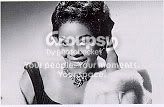 Style: Jazz, blue to light pop and R&B Short introduction: One of the most versatile and gifted vocalists in American popular music history, Dinah Washington made extraordinary recordings in jazz, blues, R&B and light pop contexts, and could have done the same in gospel had she chosen to record in that mode. But the former Ruth Jones didn't believe in mixing the secular and spiritual, and once she'd entered the non-religious music world professionally, refused to include gospel in her repertorie. Washington 's penetrating, high-pitched voice, incredible sense of drama and timing, crystal clear enunciation and equal facility with sad, bawdy, celebratory or rousing material enabled her to sing any and everything with distinction. Washington played piano and directed her church choir growing up in Chicago. For a while she did split her time between clubs and singing and playing piano in Salle Martin 's gospel choir as Ruth Jones. There's some dispute about the origin of her name. Some sources say the manager of the Garrick Stage Bar gave her the name Dinah Washington ; other say it was Hampton who selected it. It is undisputed Hampton heard and was impressed by Washington, who'd been discovered by manager Joe Glaser. She worked in Hampton 's band from 1943 to 1946. Some of her biggest R&B hits were written by Leonard Feather , the distinguished critic who was a successful composer in the '40s. Washington dominated the R&B charts in the late '40s and '50s, but also did straight jazz sessions for EmArcy and Mercury, with horn accompanists including Clifford Brown , Clark Terry and Maynard Ferguson, and pianists Wynton Kelly , a young Joe Zawinul and Andrew Hill. She wanted to record what she liked, irregardless of whether it was considered suitable, and in today's market would be a crossover superstar. "What A Difference A Day Makes." From that point forward nearly all of her recordings were slow ballads with accompaniment from faceless orchestras that would not have been out of place on a country record! Although she did have a few more hits (including some duets with Brook Benton), Washington's post-1958 output has not dated well at all, unlike the music from her first 15 years of recordings. However she was only 39 and still in peak musical form when she died from an accidental overdose of diet pills and alcohol in 1963. Dinah Washington remains the biggest influence on most black female singers (particularly in r&b and soul) who have come to prominence since the mid-1950's. Virtually all of her recordings are currently in print on CD's including a massive reissue series of her Mercury and EmArcy sessions. -- Ron Wynn and Dan Morgenste, All-Music Guide General impression(if any): One thing's for sure... I began listening to Dinah Washington from her "What A Difference A Day Makes" onwards... In fact, from the orchestration etc, I initially thought she was a country singer until I found her other works. Her voice, though tinged with a slight rasp is pleasant to listen to and accentuated with her emotive form of phrasing. Most of her later music is a pleasant listen on a lazy summer afternoon by the sea with a glass of iced tea... 3nodding Recommended recordings/famous works: "What A Difference A Day Makes" the album
|
|
|
|
|
|
|
|
|
|
|
|
|
|
|
|
|
|
Posted: Mon Apr 04, 2005 7:28 am
Name: Cassandra Wilson  Instrument: Guitar/Vocals/Piano Style: Various styles... (anyone care to pinpoint again? sweatdrop ) Short introduction: Although her recording career has been somewhat erratic, Cassandra Wilson became one of the top jazz singers of the '90s, a vocalist blessed with a distinctive and flexible voice who is not afraid to take chances. She began playing piano and guitar when she was nine and was working as a vocalist by the mid-'70s, singing a wide variety of material. Following a year in New Orleans, Wilson moved to New York in 1982 and began working with Dave Holland and Abbey Lincoln. After meeting Steve Coleman, she became the main vocalist with the M-Base Collective. Although there was really no room for a singer in the overcrowded free funk ensembles, Wilson did as good a job of fitting in as was possible. She worked with New Air and recorded her first album as a leader in 1985. By her third record, a standards date, she was sounding quite a bit like Betty Carter. After a few more albums in which she mostly performed original and rather inferior material, Cassandra Wilson changed directions and performed an acoustic blues-oriented program for Blue Note called Blue Light 'Til Dawn. By going back in time, she had found herself, and Wilson has continued interpreting in fresh and creative ways vintage country blues and folk music up until the present day. During 1997 she toured as part of Wynton Marsalis' Blood on the Fields production. Traveling Miles, her tribute to Miles Davis, followed two years later. Belly of the Sun appeared in 2002. ~ Scott Yanow, All Music Guide General impression(if any): Though her musical output has been rather erratic sometimes, I simply love her slow ballads and jazz standards. Her throaty alto has a sort of magnetism that draws upon something deep inside you... In addition, props to her for pulling off a wonderful version of Strange Fruit. Being rather particular on that song, I tend to find her version just as soul-wrenching as that of Billie Holiday... She's gonna be the next artist I'll be stark-raving mad over... xd Recommended recordings/famous works: Strange Fruit, "Glamoured" the album Note: Info obtained from Cassandra's BiogBlue Note's Artist PageLinks with Samples: Cassandra Wilson's Glamoured
|
|
|
|
|
|
|
|
|
|
|
|
|
|
|
Posted: Wed Apr 06, 2005 1:06 am
Went out to get Glamoured yesterday and it's fantastic... xd I'm reccomending it to all fans of really smooth stuff... her vocals are so thick and lush that you can cut it with a knife... whee
I heart Cassandra Wilson whee
|
|
|
|
|
|
|
|
|
|
|
|
|
|
|
|
|
|
Posted: Wed Apr 06, 2005 7:51 am
[ Message temporarily off-line ]
|
|
|
|
|
|
|
|
|
|
|
|
|
|
|
Posted: Wed May 11, 2005 12:13 pm
On Martin Taylor...
1. I would consider him swing. I just consulted AMG and they agree with swing, and say that he's also crossover jazz. Seems relatively accurate to me, though I agree, his music is very diverse.
2. I find it funny that Martin Taylor is an acoustic guitar player, and that both his first and last name are names of leading acoustic guitar producers.
|
|
|
|
|
|
|
|
|
|
|
|
|
|
|
|
|
|
Posted: Sat May 21, 2005 9:57 pm
Name/Group name: Herbie Hancock (no one took this???)
Instrument: Piano, ba*natches
Style: I don't really know... new-style jazz... I guess. even tho it's old...
Short introduction: Herbie Hancock Quartet is the band Herbie Hancock usually plays in... it's insane some of the stuff he does... he played in "two pianos" with Chick Corea... I don't have the full thing downloaded... he has AMAZING intros, usually, like on the (new version) "Watermelon Man" there are these whistles... dl it and find out... his piano/bass lines are great! You can't stop playing them once you learn how... download "Chameleon" with Jaco Pastorius (the greatest bass player EVER!!!) if you need an example of that! I play tuba in my marching band, and "Chameleon" is one of our pep band songs (songs played at sports games)... he released an album called "Ken Burns Jazz" I believe... He had one also called "Fat Albert Rotunda." This features one of his more... difficult works, called Jessica... which will be my jazz band final... It has F# major scale, E half-diminished, and a load of other difficult improvisation scales... but his chromatics and super-fast fingers while improvising are his signature keys...
General impression(if any): AMAZING!!! MY IDOL!!!! I believe he's African-American, but he inspired me to play jazz piano!!! I mean, WOW!!! you MUST HEAR HIM FOR YOURSELF!!!
Recommended recordings/famous works: "Watermelon Man (new version)", "Chameleon with Jaco Pastorius", "Rockit," and "Fat Albert Rotunda, Jessica" (this one I couldn't find a good recording of, but I'm sure there's one out there...)
Pictures of the artist(s): NONE... if someone could get one, I would be appreciative...
Links: none... not really that researched, I am afraid...
Sources of information provided: not sure what this means??? I just know this stuff from my friends and pieces handed out by my Jazz instructor... does that count... you can find stuff about him online, I'm sure...
|
|
|
|
|
|
|
|
|
|
|
|
|
|
|
Posted: Fri May 27, 2005 9:44 pm
BitchesBrew John Mclaughclin born 1940 plays Guitar First worked with miles davis on A tribute to jack johnson, a silent way, and most notably Bitches Brew. He has also worked on On the corner. After Bitches Brew he created a band that would be labeled hard rock if ti wasnt for there brillantly structered songs chords and skills. Itw as called Mahavishnu orchestra. It amde 3 cds then broke up. It then reformed 2 years later with a new linup besides john. Jean Luc Ponty was featured playing violin on this new lineup. At the hight of their succes though the guitarist who found religion in eastern culture decided to break up the band. He then formed Skatki with 2 indian percussionist and an indian violinist. The british guitarist obviously looked out of place in the Eastern music band but he still shredded up his speccially designed acoustic guitar. After a few years that band also broke up. throughout the 80s John was in a string of prog bands and briefly resurecting mahavishnu. in the 90s he played with a trio and did a lot of acoustic work. Facts may be wrong i may have forgotten what he has done and dont feel like looking it up wow i didnt no that i love the album a tribute to jack johnson. it was the first miles album i ever got
|
|
|
|
|
|
|
|
|
|
|
|
|
|
|
|
|
|
Posted: Mon Jul 25, 2005 7:20 pm
Name/Group name:Tim Aucoin (pronounced ouquinn) Instrument:String bass (combo includes him, sax, trumpet, piano, and drums) Style:upbeat swing jazz Short introduction:There are many musicians I could reccomend, but I'll reccomend the orchestra teacher who teaches at my school. His CD "Swing First, Think Later" is INCREDIBLY GOOD. BIG reccomendation. get it. General impression(if any):really good Recommended recordings/famous works: "Swing First, Think Later" Pictures of the artist(s):  Links: His home page I can't figure out how to shrink the image, sorry
|
|
|
|
|
|
|
|
|
|
|
|
|
|
|
|
|
|





 Reply
Reply