<center>


</center>
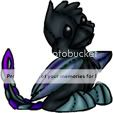
The Avaji are best known as the cute and cuddly sidekicks. They were first discovered high in the mountains and were slowly taken down to adjust to the difference in the elevations before being publically put on the market. They were named for the rather soft fur of their coat, which is known as "Ji" on the black market. You can read more about this in the story section.
<center>
Anatomy</center>
Avaji are very mouse like in appearence but are more closely related to rabbits than anything else. They have strong hindlegs which are made specifically for bouncing, an ability they use to get away from their enemies. They tend to run around on all fours though as well, and will usually sit up on their hindlegs to view the area around them. Their especially long tails are not so prehensile and are somewhat stiff so as to provide balance during leaps.
The female Avaji have two antennae that stick out of their head, which are extremely sensitive to touch and change in their environment. These antennae act as feelings which can also be used to investigate objects more closely. As adults the females have a mane on the backs of their necks.
Adult male Avaji have a pair of horns rather than antennae. These are used to attract mates; the bigger and more elaborate the color of the horn, the better seed he would be able to produce. The horns are also used for fighting as Avaji live in colonies and the strongest of the males leads them. Unfortunately, these horns have no other use than what has already been listed and can be considered somewhat useless overall.
<center>
Social Living</center>
As extremely social creatures, Avaji tend to live, in the wild, in groups - known as
clusters - of up to forty with normally a minimum of five to ten. These clusters do not seem to have a heirarchy and no Avaji answers to another; things such as betrayal do not exist in the world of Avaji as there is no sense of good verus evil.
However each Avaji is required to watch out for one another. In the clusters the mothers will all take care of their own young and the males will generally ward off predators despite that they are on the lower end of the food chain. As a whole though all Avaji will keep an eye out for one another and always come to a fallen comrade's aid.
<center>
Geology and Eating Habits</center>
All Avaji are primarily vegetarians. They will occassionally eat insects but would much prefer a piece of fruit or a nut above anything else. Like a rabbit they can be fed pellets and still live a long and healthy natural life. However, depending on where they live it can also affect their eating habits and they retain sensitive digestion systems so they can get sick pretty easily, which is why it's important to moderate what they eat.
Avaji are found, in the wild, in high elevated mountain regions. Because of this it takes an extremely long time to bring some back down to be sold here. If they are moved too quickly, they willd die because of the sudden air and elevation changes.
<center>
Types</center>
The world is a big place and so the types of Avaji are numerous. So far we've discovered only three types.
Quote:
 Normal Avaji
 are the general types found around here, and what we tend to sell the most. They vary in colors, from naturals to ones a child could possibly come up with. The females are a bit bulkier than the males and have feelers on their head. The males have horns; both sexes grow to be about a foot in length, which is including their tail which is used for balance and is not very prehensile.
 Angel Avaji
 are the one of the two special magical types found. They go by different names such as "Toy Avaji," "Conscience Avaji," or "Shoulder Avajis." The Angel types are very kind hearted and just, always putting others before themselves. As their nicknames suggests, these creatures act as the good sided conscience for their owners, and as such, are capable of speaking, with anyone. However, unlike their normal counterparts, they are extremely small, normally only measuring up to about three inches in height, making them the perfect fit for pockets. They also have the uncanny ability to vanish in a cloud of glitter if trouble comes their way.
 Demon Avaji
 are the exact opposite of the Angel Avaji. They encourage bad behavior, and feed off the negative energy that comes as a result. Just like their counterparts, they are small and have the ability to speak. These fellows tend to vanish in a cloud of smoke and brimstone though. They aren't very loyal, however, and can be quite troublesome.
<center>
Mating and Raising Kits</center>
Avaji can breed two weeks after they've become adults. All pairs must be male and female, and they do not normally mate for life. However, the father is very attentive of the infants and helps to care for them until they're able to survive on their own.
Female Avaji are pregnant for two weeks, and during this time can become grumpy and easily agitated, as well as withdrawn. Don't be surprised if she runs off to a new nesting ground.
Both the mother and the father assist in raising the babies, which are called kits. They are normally inactive for the first week of their life. After that week though they are ready to play.
<center>
Lifespan</center>
Quote:
 Baby Avaji (Inactive)
 are born after two weeks of conception. They are about three inches in length and spend the first week of their lives sleeping in their nest with their mother. Sometimes they'll be active but for the most part aren't.
 Baby Avaji (Active)
 When a baby Avaji becomes active, one week after being born, it grows about an inch or two. Since they're young, they're full of energy and are often bounding about, exploring. Their tails haven't grown out yet so they're also extremely clumsy.
Adult Avaji become mature one week after having become active. By now it becomes more defined whether or not they're male or female. The only difference is mostly the size, the bulk, and their horns: the males have actual horns where as the female have feelers.


 200
200
 300
300
 200
200




 </center>
 </center><img src="http://img.photobucket.com/albums/v102/penna/thread/sidebar_3.jpg" align=right>
 </center>
 </center>
 Owl Pennas are the largest of the three with a height of a foot to a foot and a half, and a wing span as large as four feet. The females are generally larger than the males and far more dangerous and riley to handle. Despite that the Owl Pennas are the wilder of the three species, when handled from birth by humans, they can be the most excellent companion.
 Cockatoo Pennas are the second largest, normally. They can range in a variety of heights from as small as five inches to as tall as a foot, as well as colors. They are well known for their ability to mimic and are the only Pennas that have this ability. They cannot hold intelligent conversations with their owners, but can be taught basic commands like you would to a dog. This ability makes them extremely loud and irritating though, especially around dusk and dawn when they are most active.
 Sparrow Pennas are the smallest of the Pennas. They can only grow to maybe eight inches in height, the smallest having been recorded at about four. This gives them a severe disadvantage in the wild, and are often found to be the prey of Owls, even in captivity this is possible so keep a close eye on them.
 Hawk Pennas were recently discovered. However, we only have one in our aviary at the moment so we do not have much information.
 Faery Pennas were another recent discovery on our part. We only have one, unfortunately, and he was caught after he had already hatched from his egg. He is currently in the care of Miss Karasu over at the Ieldi H.Q. and we're hoping to learn more. We've discovered though that the Faery Pennas are generally about six inches tall, have very well defined personalities all their own, have four legs instead of two, and an entirely different set of wings. At least this one does; he even comes with feelers! We've also reached the assumption that all Faery types have Elements.
 </center>
 Chick to Young Adult -- Your Penna remains a chick for two weeks before maturing into an adult. Again, the more care you give it the faster it can grow, but it will not take less than one week. At this stage they are relatively weak and cannot fly too well, but will practice the use of their wings and therefore must be watched.
 </center>






 </center>



 </center>